

“In times of crisis, we too easily become the thing we fear.” — René Girard
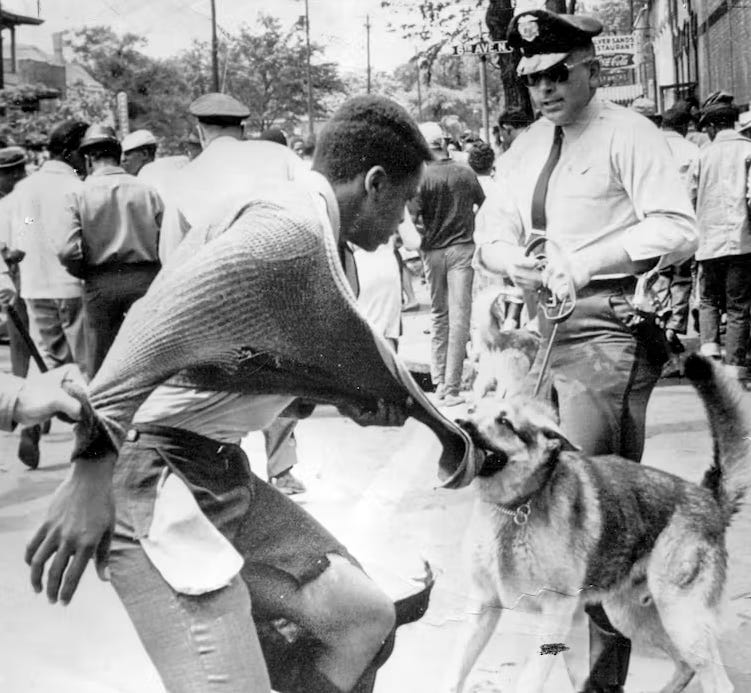
As we watch the escalation of hate speech from the U.S. President and his officials,1 alongside the continued institutionalization of oppression, I find myself increasingly concerned about what comes next. The language of contempt always paves the way for violence. Before bodies are harmed, words are weaponized.
This week, I’d like us to spend time meditating on how fear works in the human experience. Yesterday, we explored the anatomy of fear—how it distorts the individual soul. Today, we turn to its collective movement: how fear, once shared, becomes something larger than any one person’s emotion.
Fear rarely stays solitary. It looks for company. When enough frightened people gather together, fear changes shape. It becomes justification. Policy. Punishment.
Collective fear is the most dangerous kind because it feels righteous. It turns insecurity into story: We are under threat. They are to blame. We must defend ourselves. Once that narrative hardens, cruelty begins to sound like duty.
History knows this pattern by heart. The witch trials. The pogroms. The lynchings. The scapegoating of immigrants. Every generation swears it would have done better — and then repeats the pattern with different names.
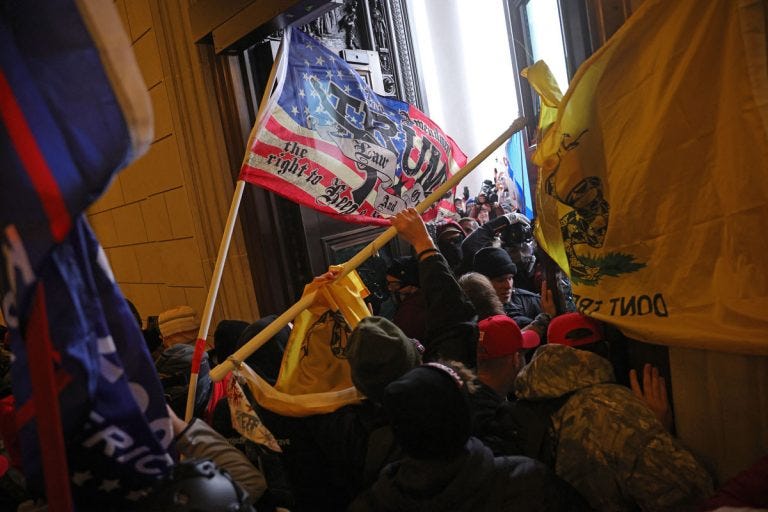
The French philosopher René Girard described this as the mimetic cycle of violence—societies resolving their inner anxiety by uniting against a victim. The crowd feels pure again, for a moment. But the peace it creates is counterfeit. It’s built on a corpse.2
Theologically, this is the opposite of incarnation. Instead of God-with-us, fear insists on us-against-them. Instead of solidarity, it builds scapegoats. It crucifies what it does not understand.
The Gospels expose that logic by letting it play out. Jesus absorbs the collective fear of his time—religious, political, economic—and refuses to return it. The resurrection is not divine revenge. It’s divine refusal: You can kill love, but you can’t make it hate you back.
That is the antidote to collective fear: communities willing to hold the anxiety of their age without projecting it onto someone else. This is why genuine spiritual community is revolutionary: it gives us practice in metabolizing fear into compassion before it spills into violence.
White fear, political fear, economic fear—they are all symptoms of the same wound: we have forgotten how to live without enemies. But the invitation of the Spirit is not survival through domination; it’s aliveness through belonging.
When fear becomes a crowd, love must become a movement.
We are in this together,
Cameron
Reflection Questions
How have you seen fear become collective in your lifetime—through media, politics, or religion?
Who or what has been made the scapegoat in your community’s story of safety?
What would it look like for your congregation, classroom, or circle to practice holding fear without transmitting it?
A Prayer for the Day
A Prayer For the Healing of the Crowd
Spirit of truth,
when fear gathers in our streets and sanctuaries,
teach us to stand still.

When the mob demands a scapegoat,
may we remember the face of the one we crucified
and hear again your words: “Lord, forgive them.”

Unlearn in us the reflex to blame.
Rewire us for mercy.
Give us the courage to stand in the middle space—
where fear dissolves and love takes on flesh.

Amen.
Spiritual Practice
Interrupting the Cycle
This week, notice one conversation—online, in your faith community, at work—where fear is spreading: an “us” and “them,” a rumor, a threat narrative.
Pause. Don’t correct immediately. Instead, breathe once, deeply. Ask a question that names reality without shaming: What are we afraid might happen?
Listen. Let the silence stretch long enough for reflection to replace reaction.
Then, if you can, offer an alternative story, one rooted in belonging.
This is small-scale spiritual nonviolence. It’s how collective fear loses its fuel.
A Note from Cameron
Gentle Shift, Rooted in Gratitude
Dear friends,
Over the past few years of writing these meditations, so many of you have written back to me, expressing gratitude, sharing your own reflections, and reminding me that these words are landing where they’re needed. I can’t tell you what that means to me.
Some of you have even sent letters by mail—Susan from Mountain View tucked in a sheet of stickers “to bring joy” along with a $20 bill; Erika and Mark sent a note and a donation to Convergence in appreciation for these reflections. Hundreds of you leave notes of appreciation in the comments. Each gesture reminds me that what we’re building here is more than a mailing list. It’s a community of kindred spirits, seeing one another through a very trying time.
At the end of each meditation, I remind us that “we are in this together.” I truly feel that from you.
Today, I’m making a gentle shift and turning on the paid subscription option for this Substack. There’s no obligation—these meditations will continue to arrive in your inbox freely. But if this space has become part of your rhythm, and you wish to help sustain it, your support means a great deal.
Together we make the world a bit kinder, more creative, and more generous. Thank you for walking this path with me.
With deep gratitude,
Cameron
Upcoming Events That Might Be of Interest…
January 6, 13, 20, 2026 - Protest and Action Chaplaincy Training with Rev. Anna Galladay. This live, online training offers a framework for providing compassionate, grounded spiritual care during protests, advocacy gatherings, and social movements. Learn more here.
January 15, 2026, 7-8pm EST - FREE Online Webinar: When the Internet Hurts: The Hidden Online Dangers Facing Our Teens and How Faith Communities Can Respond, Join me in conversation with Sharon Winkler, survivor parent and nationally respected youth online-safety advocate. Sharon’s son, Alex, died at age 17 after experiencing cyberbullying and algorithmically targeted pro-suicide content. Since then, Sharon has dedicated her life to helping parents, educators, and faith leaders recognize online dangers and build safer communities for young people. Register here.
February 11th and 25, 2026 - Join Our “Building a Culture of Leadership Within Congregations” Cohort facilitated by Rabbi Benjamin Ross and me! A two-session course for ministers and faith leaders ready to strengthen how their congregations and ministries identify, develop, and support leaders. Learn more here.
July 19-24, 2026 - Join me and amazing co-facilitator, Victoria, on retreat in the back-country of beautiful Wyoming. The Art of Wilding is a 5-Day Expedition for Women Leaders. We will spend the week reconnecting to nature, exploring our inner landscapes for change, and engage the wisdom of spiritual teachings. Click here to learn more.
I drafted a Strategic Framework for Congregations as we move into the coming years of increased authoritarianism around the world. If interested, you can download it here.
Fun Things My Friends Are Up To…
I get to work with such amazing, creative people. This new section is my way of celebrating them—no paid promotions, just joy in what they’re creating.
Do you know the great folks at Spiritual Wanderlust? They are giving us with such great courses and teaching. I’m excited about this series on the mystics.
Joshua Michael Schrei is the producer of the “The Emerald” podcast. It is SOOOOO good. Here is one of my recent favorite episodes, but all of them are worth listening to. Fix a hot cup of tea, settle in and enjoy every minute!
Brian McLaren just published his first sci-fi book, The Last Voyage. It’s the first book of a three part series. It’s brilliant, important and such a fun read. We should have a book club session on this one.
Dr. Luther E. Smith, Jr. is the Professor Emeritus of Church and Community at Emory University (and was my seminary professor a long time ago). He has a new book out that I’m excited about: Hope Is Here! Spiritual Practices for Pursuing Justice and Beloved Community.
If you are a leader or member of a congregation looking for consulting support in visioning, planning, hiring or staffing, please consider Convergence.
https://www.newsweek.com/trump-clashes-with-abc-reporter-rachel-scott-11176473 and how can we forget his calling Somali immigrants “garbage?”
It’s worth noting that when Trump’s rhetoric becomes impossible to justify, the right-wing media distracts by looking for black and brown people to blame. The latest target is former MSNBC anchor, Joy Reid. I encourage you to read this brilliant piece by Dr. Stacey Patton to explore what is going on here.
Cameron's analysis is cogent and her heart is warm and wise. From a back pew in this chapel: Jesus' love didn't become a movement until after His resurrection, and the crucifixion of Jesus of Nazareth and crowd's choice of Jesus Barabbas and his methods of violence and punishment emerged from the dynamics she expresses. The Lamb has won; it was not, never has been, a tranquil walkover.
When words weaponized,
fear fed, fueled, wildfire widespread.
Violent end way.
...
Personal panic
plus punishing policies.
Peace-blocking pathway.
...
“Us-against-them,” scare
lies, lures our lowest instincts.
“God-with-us” all, truth.