

“Put not your trust in princes, in mortals, in whom there is no help.” — Psalm 146:3
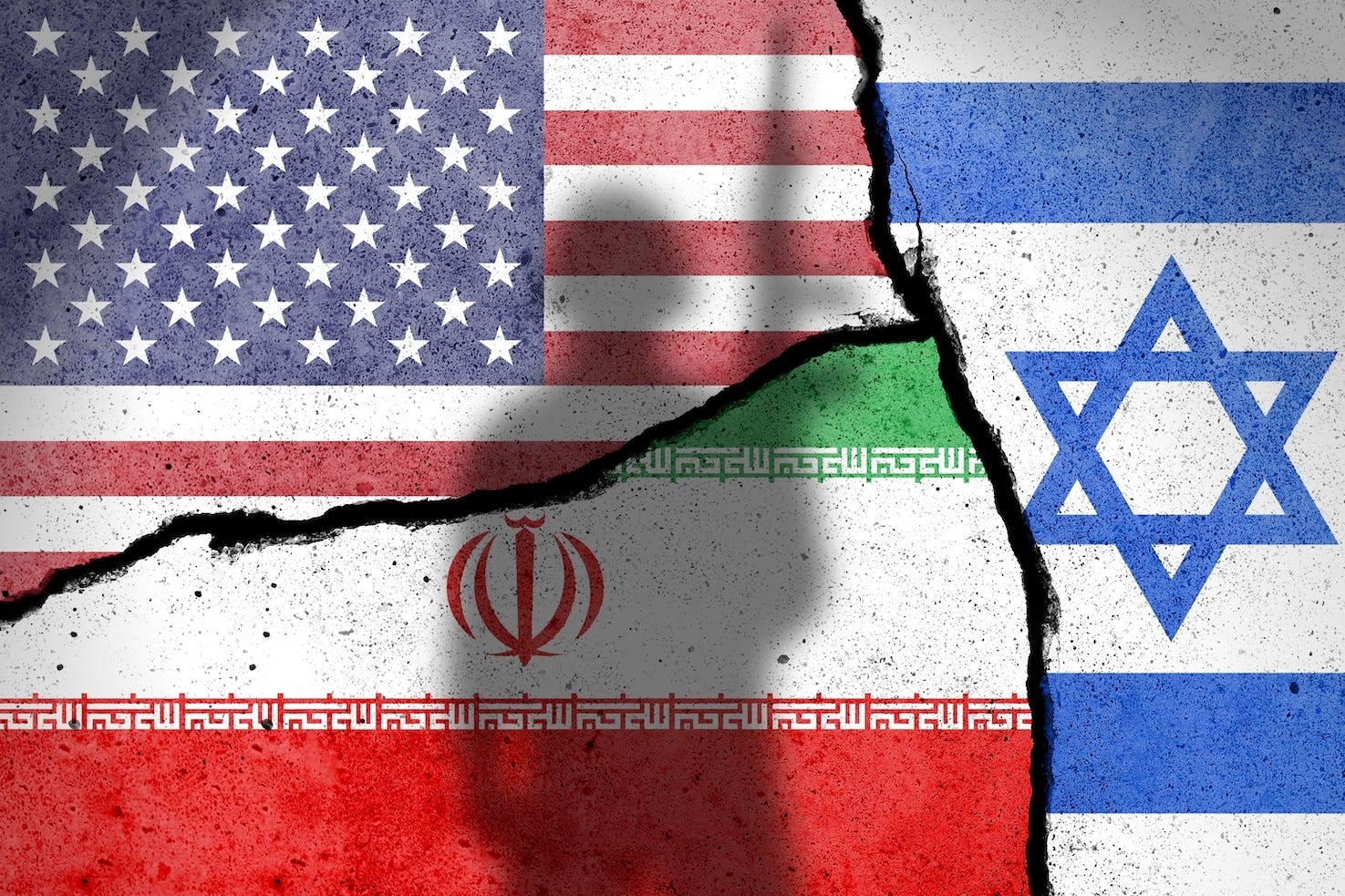
In the early hours of March 1, Iranian state media confirmed that Supreme Leader Ayatollah Ali Khamenei was killed in a joint U.S.–Israeli military operation that targeted his compound and other high-level Iranian leadership sites. The strikes have already inspired retaliatory missile and drone attacks, claimed casualties on all sides, and triggered mourning, protests, and international diplomatic responses.
The administration launched this operation without congressional authorization and without presenting clear evidence of an imminent nuclear threat. Once again, we find ourselves pulled toward open conflict in the Middle East with no articulated strategy for what comes next.
This is not simply a foreign policy decision. It is a constitutional moment.
Article I of the Constitution grants Congress the power to declare war. The framers placed that authority deliberately outside the executive branch because they understood that war expands presidential power quickly and dramatically. They had studied history. They knew that fear consolidates authority faster than any other force.
When military action proceeds without congressional authorization, the concern is not partisan. It is structural. It raises the question of whether constitutional restraint still governs executive power in moments of crisis.
But there is another layer to what we are witnessing.
Shortly after the State of the Union, historian and professor, Dr. Timothy Snyder, warned that foreign war interacts with domestic authoritarianism in predictable ways.1 A government at war can urge the public to rally and treat dissent as betrayal. It can also shape electoral conditions in ways that benefit those already in power. In either case, war narrows civic space. Critique becomes suspect. Loyalty is measured by silence.
This pattern does not require conspiracy. It requires opportunity.
War easily becomes ritual.
A threat is announced. A strike follows. A declaration of success is made. The public is told the action was necessary. The next threat emerges. The cycle repeats. Each turn of the loop reinforces executive power and conditions citizens to live in a state of permanent emergency.
The ritual depends on urgency. It depends on fear. It depends on the claim that there is no time for deliberation. And yet deliberation is precisely what constitutional democracy demands in matters of war.
We must also ask whose interests are being served. The rivalry between Iran and a coalition of Israel and Gulf Arab states is longstanding. Regional dynamics are complex and deeply rooted. When the United States intervenes militarily, we must discern whether we are acting in a clearly defined national interest or entangling ourselves in the ambitions of regional actors whose strategic goals may not align with ours.
Given the documented financial relationships between the Trump administration and certain Gulf states, questions about motive are not reckless. They are responsible. When private enrichment and public force begin to blur, democratic accountability erodes. The armed forces of the United States cannot become instruments of personal advantage without corroding the republic itself.
But beyond constitutional process and geopolitical rivalry lies something more sobering.
War, once ritualized, reshapes the soul of a nation.
It trains citizens to equate strength with escalation. It conditions us to mistake motion for strategy. It encourages leaders to perform dominance rather than practice restraint. It makes fear feel normal.
The prophets of Israel warned against rulers who trusted in chariots rather than justice. They did not deny that nations face danger. They insisted that security divorced from righteousness eventually devours itself. A people who abandon truthfulness and restraint in the name of protection lose both.
The region is volatile. The stakes are real. Civilians now suffer first and most. Service members carry the burden of decisions made far from the blast radius. Markets will fluctuate. Alliances will strain. The human cost will not be abstract.
The question before us is not whether the world is dangerous. It is whether our commitment to constitutional order, public deliberation, and moral clarity can survive a politics that thrives on crisis.
Authoritarian drift rarely announces itself dramatically. It normalizes itself. It teaches citizens that unity requires silence. It recasts caution as weakness and dissent as betrayal.
Patriotism is not obedience to a leader. Patriotism is fidelity to the Constitution and to the common good. It is the courage to insist that war requires deliberation. It is the steadiness to refuse fear as a governing philosophy.
If we allow war to collapse our capacity for thoughtful self-government, the damage will not remain overseas. It will reshape our civic life for decades. The ritual of escalation feeds on our fear. It weakens when citizens remain clear-eyed and constitutionally grounded.
We are called to remain awake.
We are in this together,
Cameron
Reflection Questions
Where do you feel the pressure to “rally” rather than think?
How do you distinguish patriotism from political loyalty?
What practices help you remain discerning in moments of collective fear?
A Prayer for the Day
A Prayer for Discernment in a Time of War
God of justice and restraint,

Guard our hearts from fear that clouds our judgment.
Strengthen our commitment to law, accountability, and the common good.
Protect those whose lives will be most directly affected by decisions made far from their homes.
Give us courage to speak with clarity and humility.
And teach us to love our nation without surrendering our conscience.

Amen.
Spiritual Practice
Practicing Discernment
Today, practice disciplined attention.
Read one source that challenges your assumptions and one that confirms them. Notice your body’s response to each. Pay attention to when your heart rate rises or your breath shortens. Fear often bypasses discernment.
Then take ten slow breaths and ask yourself:
What would faithfulness require of me here?
Discernment begins when we slow the reflex to react.
Upcoming Events That Might Be of Interest…
My team and I launched a new experiment we are calling “The Commons.” It’s an online space centered around communities of practice: groups of people who share a common concern, set of problems, or passion for a topic, and deepen their knowledge and expertise by interacting on an ongoing basis. At the moment, I am leading a book study on Brian McLaren’s book, Life After Doom, on Tuesdays. Join the community here.
March 17, 23, 31 and April 7, 2026, 7-8:30pm ET - Rev. Dr. Matthew Fox and I will be hosting another 4-part series on “Visions for the Common Good.” This series will include sessions with David Abrams, Randy Woodley and Lynne Twist! All sessions are recorded, and you will get the link if you can’t make it. Learn more here.
March 26, 2026, 7–8:30pm ET – FREE WEBINAR - I will be joined by Ruth Dearnley, OBE, Founder and President of Stop the Traffik in London (see her TED Talk), for a critical conversation titled “Stop the Exploitation of Children: Disrupting Modern Slavery at Its Source.” As Board Chair of Stop the Traffik USA, this work is deeply personal to me. We cannot rescue our way out of trafficking; we must prevent exploitation by disrupting the systems and financial flows that profit from vulnerability — and congregations have a vital role to play. Ruth will share how technology is exposing trafficking networks, and Diane will highlight what cities like Philadelphia are learning, including insights related to the World Cup. All who register will receive the recording. Learn more and register here.
I drafted a Strategic Framework for Congregations as we move into the coming years of increased authoritarianism around the world. If interested, you can download it here.
Fun Things My Friends Are Up To…
I get to work with such amazing, creative people. This section is my way of celebrating them—no paid promotions, just joy in what they’re creating.
The need for us to persevere and contribute grows ever more challenging as the horror and cruelty escalates, created by leaders with “malevolent incompetence.” Dr. Margaret Wheatley is offering a “Bundle for Good” for shipping within the U.S. She will send you seven copies of Perseverance, and one copy of her book of poems, Opening to the World as It Is. She’s including the poetry book as another means to support you personally. You can learn more here.
The Convergence Music Project is hosting a songwriting event on March 19-21, 2026 in Nashville. No songwriting experience is required, so feel warmly welcome even if you've never written a song before. There will be plenty of content also to further educate, inspire, and develop the gifts of advanced songwriters as well. Learn more.
Millions of people are seeking training in becoming Legal Observers for their communities vulnerable to ICE. Here is a recorded training that is helpful produced by the team at No Kings. If you know of other trainings, please post in the comments below.
The phenomenal team of “Singing Resistance” has gifted all of us a songbook of protest songs that groups are now using across the world. Here is the link. I am marching around my house singing these throughout the day. My dogs are very confused.
If you are a leader or member of a congregation looking for consulting support in visioning, planning, hiring or staffing, please consider Convergence.

I would say thank you for today’s meditation except for one small point and you’re not the only one stuck on a topic. The Constitution, everyone keeps bring up how Trump can’t do whatever because it’s against the Constitution and Congress has not authorized this policy, this executive order, the blowing up of boats, the kidnapping of a foreign leader or this war that he has just created. Trump and his Reich DO NOT care about the Constitution or the authority of Congress. To be very blunt, neither does Congress care about either. The only way to stop this insanity is through a PEOPLES REVOLUTION.
I'm afraid this is going to be another Viet Nam. I usually don't rely on AI for anything but today I asked the question, "how many years has the USA been in a conflict, war, etc. in our 250 years. The answer was 200 out of 250 years. SO, three quarters of our time has been fighting another country. YES, G. Charles MacDonald, we NEED a PEOPLE'S REVOLUTION,