

“Learn to do good; seek justice, correct oppression; bring justice to the fatherless, plead the widow’s cause.” — Isaiah 1:17
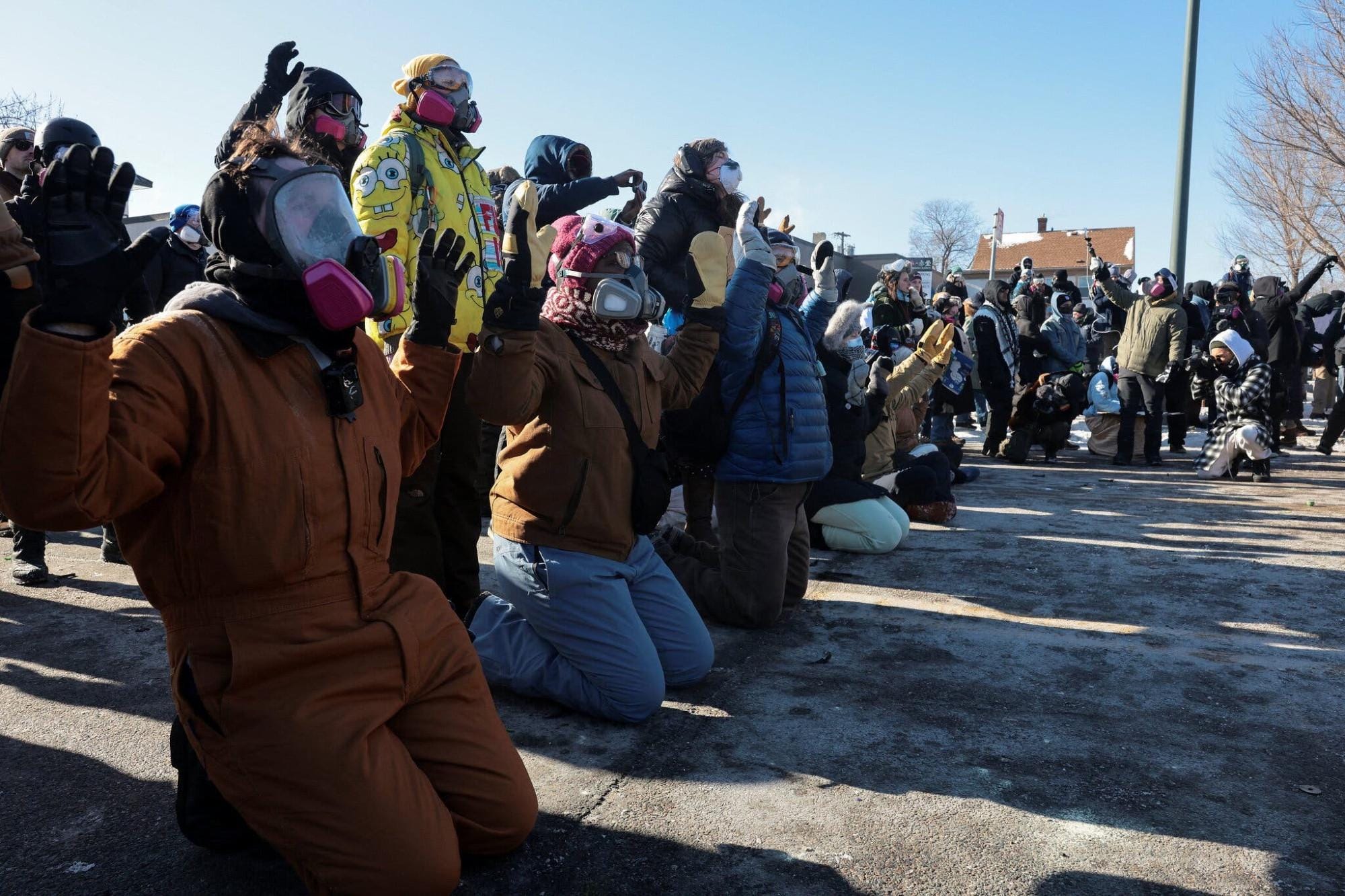
Grief has a shape, and in this country it is an old one. Grief has been carried across generations, etched into bodies, whispered in kitchens, preached from pulpits, sung in sorrow songs, and named again and again by African American, Japanese American, Indigenous and Latino communities who have never been allowed the luxury of believing that state violence is an anomaly. What we are witnessing now in Minneapolis did not begin here. It belongs to a long history in which federal power has moved into minority communities with force, impunity, and a story that insists the harm is justified.
The killings unfolding in Minneapolis are not a rupture from our past; they are an extension of it. They draw a straight line back through the terror of slave patrols, the violence of Jim Crow, the criminalization of Blackness, the militarization of policing, the raids and disappearances of indigenous and immigrant communities, the quiet normalization of cages, the routine erasure of human dignity in the name of law and order. When people in marginalized communities say, “This is not new,” they are not minimizing today’s grief. They are naming its lineage.
Still, grief arrives fresh each time.
It settles in our chest and spreads through our nervous system like cold moving into bone. This kind of grief — the grief that holds the names of Renee Good and Alex Pretti in its clasp — does not stay contained inside one city or one news cycle. It radiates outward. It presses on our collective conscience. It refuses to be filed away neatly as another tragic headline. What is happening in Minneapolis is not just a political crisis or a local uprising. It is a deep wound in the moral body of a nation that has never fully reckoned with the violence it authorizes in order to maintain control.
This grief is not only personal. It is ancestral. It is structural. It is the grief of communities who recognize a pattern and know its cost. It is the grief of people who have been warning us for decades that when a government trains itself to disappear certain bodies, it will eventually test that power on anyone who stands in the way.
That is the ground from which the protectors in Minneapolis are rising.
In the streets of that city this week, people did not gather simply as “protesters.” Many have begun calling themselves protectors,1 a shift in language that matters. Protest is an interruption. Protection is a standing-with. It carries the weight of community, not the weight of spectacle. It emerges not from detachment, but from relational exposure: people watching for one another, defending one another, refusing to let state force deny one other’s humanity.
This is not leader-led. Despite Republican fantasies of a well-organized radical left, no visible hierarchy stands at the fore. That is no accident. When people organize from the grassroots, from intertwined webs of shared life — neighbors, siblings, elders, newcomers, long-time residents — they weave a relational fabric that is resilient because it is communal, not centralized. It is not about one person speaking for many; it is about many people standing with one another.
Their anger is real. Their fear is real. Their grief is real. And it is all bound up with the lived reality of federal agents deployed in force, of ICE raids that feel like occupation, of violence that feels sanctioned rather than investigated. Denying or minimizing that grief would be a betrayal of moral clarity. A community does not rise in resistance when it feels safe. It rises when it feels endangered, unseen, and unheard.
Grief like this is orientation — it points us toward what has been wounded, toward what has been denied, toward what calls for redress. People in Minneapolis feel that orientation viscerally: not merely as sadness, but as a ground of shared responsibility. They do not wait for distant authorities to lead them. They do not fold into despair because the federal government insists on its own version of reality. They refuse to let fear alone direct their response. There is a fierce tenderness in that. They refuse to abandon one another.
In Christian scripture, Jesus walks into a community where borders are already breached: the leper, the outsider, the crowd hungry for healing. He does not restore order by strengthening empire. He restores connection: relationship before empire.
In Jewish teaching, the community that gathers at the gates of the city is responsible for one another’s safety, dignity, and rights. When they guard the vulnerable, they extend the justice that sustains the whole body.
Across many spiritual traditions, moral imagination emerges not from solitary reflection, but from shared action. Compassion in community is not an emotion; it is a movement toward the wounded. It is what the Zen Master, Thích Nhất Hạnh, meant when he taught that “beneath all differences of religion, nationality, and culture, there is a unity that binds all humanity together.”2 The protectors in Minneapolis are not simply resisting violence. They are embodying that unity by refusing to move alone.
This matters for all of us because resistance is not only measured by opposition; it is measured by presence. People are standing in subzero cold because they have tasted the bitterness of abandonment and refuse to let that be the last word. In their self-organization we see what caring without hierarchy looks like: networks of mutual aid, rapid-response teams, neighborhood watches, shared warmth, shared strategy, shared resolve. They are not waiting for permission. They are becoming the protectors they wish had been there for them.
Where grief is raw and fear is alive, the work of communal presence is spiritual resistance. It does not erase sorrow. It gives it form. It does not convert pain into optimism. It converts pain into witness, and witness is the ground of moral imagination.
In a world that often offers division, despair, or abstraction as responses, what is unfolding in Minneapolis offers another way we must all study: presence that refuses to turn away, community that organizes itself from within, families and neighbors weaving care into the very fabric of resistance. They remind us that when power forgets its stewardship, people remember theirs. They remind us that protection is not the job of a few leaders, but a calling to the many.
This is not merely protest.
This is protectorship.
This is communal allegiance to life.
This is how love resists.
We are in this together,
Cameron
Reflection Questions
Where do you feel the weight of this moment in your body, not just in your thoughts? What grief have you been carrying that has not yet had words?
When you hear people in Minneapolis call themselves protectors rather than protesters, what stirs in you? What would it mean for you to see your own presence, care, or resistance as protection?
What inherited stories about authority, safety, or belonging might this moment be asking you to unlearn?
How does witnessing self-organizing care and collective courage expand your imagination of what community — and spirituality — can look like in times of crisis?
A Prayer for the Day
A Prayer for The Protectors
O Source of Compassion and Courage,
we bring to you the faces, names, and stories that overwhelm our hearts.
We carry the weight of grief that will not stay silent.
We carry the ache of violence we never wished to know.

Meet us here —
not to erase our sorrow,
but to deepen our capacity to love through it.

We pray for those standing in the cold streets,
not as spectators,
not as followers,
but as protectors of one another.

Grant them strength when bodies tire,
clarity when hearts ache,
and vision when despair whispers of retreat.

Let their presence be a sanctuary
not just of protest,
but of care that refuses abandonment.

Teach us to protect —
our neighbors,
our communities,
our fellow travelers on this shared earth.

In each breath, let us remember:
We are not alone.
We are bound by shared vulnerability,
and thus by shared courage.

Amen.
Spiritual Practice
The Practice of Communal Presence
Today, find a moment to sit quietly and visualize the faces of people in your community: neighbors, friends, family, and even strangers you’ve never met. For two full minutes, hold that vision with careful attention instead of evaluation.
Then say, slowly: “May my presence be a sanctuary to others.”
Notice how your body responds to those words. Let the prayer move from your mind into your chest, then into your limbs.
This simple practice trains us to be present — not disconnected, not overwhelmed, not passive — but consciously aligned with life when it feels fragile.
Upcoming Events That Might Be of Interest…
February 5, 2026 - Margaret Wheatley and and I are launching a new online course called “Leading with Spirit,” a six-session journey into soul-grounded leadership designed to deepen your trust in guidance, nurture perseverance, and rekindle imaginal wisdom for our fractured world. Take a look at the course outline. We are really excited and hope you can join! Scholarship are available if needed. Learn more here!
February 11th and 25, 2026 - Join Our “Building a Culture of Leadership Within Congregations” Cohort facilitated by Rabbi Benjamin Ross and me! A two-session course for ministers and faith leaders ready to strengthen how their congregations and ministries identify, develop, and support leaders. Learn more here.
March 17, 23, 31 and April 7, 2026 - Mark your calendars! Matthew Fox and I will be hosting another 4-part series on “Visions for the Common Good.” We are finalizing details now, and the registration page will open soon.
July 19-24, 2026 - Join me on retreat in the back-country of beautiful Wyoming. The Art of Wilding is a 5-Day Expedition for Women Leaders. We will spend the week reconnecting to nature, exploring our inner landscapes for change, and engage the wisdom of spiritual teachings. Click here to learn more.
I drafted a Strategic Framework for Congregations as we move into the coming years of increased authoritarianism around the world. If interested, you can download it here.
Fun Things My Friends Are Up To…
I get to work with such amazing, creative people. This section is my way of celebrating them—no paid promotions, just joy in what they’re creating.
The cool folks over at Spiritual Wanderlust are launching a new program called “Night School.” It’s a twelve-month journey through the Dark, offering the rituals, practices, and companionship humans have long relied on in times of deep transformation. You will be accompanied by elders and teachers who have walked this terrain deeply, including James Finley, Barbara Brown Taylor, and Ronald Rolheiser. I think this looks amazing.
Randy Woodley is offering a 15-part series on his Substack which is teaching me so much about how democracy does and doesn’t work for people. Randy is a Cherokee descendant recognized by the Keetoowah Band, a recovering academic, and a storyteller. You should check out his work.
If you are part of a congregation, you should check out the great resources at Church Anew. They produce ready-made resources and formation materials. Amazing stuff.
If you are a leader or member of a congregation looking for consulting support in visioning, planning, hiring or staffing, please consider Convergence.
Thích Nhất Hạnh, Living Buddha, Living Christ (Riverhead Books, 1995).
Dear, Dear Cameron………. Your ability to articulate what so many of us feel is so extraordinarily bonding….
I live alone in a stone house I built on a hilltop in the woods. When I lit candles this morning for Renee, Alex and my sweet wife, I felt an overwhelming sense of community. I joined so many others…… and in the midst of my grief, I felt hope….. joy, and yes, community.
God bless you……. and my brothers and sisters who have joined together, knowing that Justice….. Kindness and Love will overcome the present darkness.
I sat drinking my morning coffee....pushing my cup aside as I took in the news about the latest killing in Minneapolis. I sat, feeling sick and saturated with horror and grief. I sat, a privileged white woman, who is informed about institutionalized racism as I can be, with the dawning realization of this is what is feels like and has felt like for decades to marginalized citizens in my town in my state and in my nation. And I was humbled. What you write today helps me articulate and understand this feeling. I thank you for it.