

“The only way to have a friend is to be one.” — Ralph Waldo Emerson
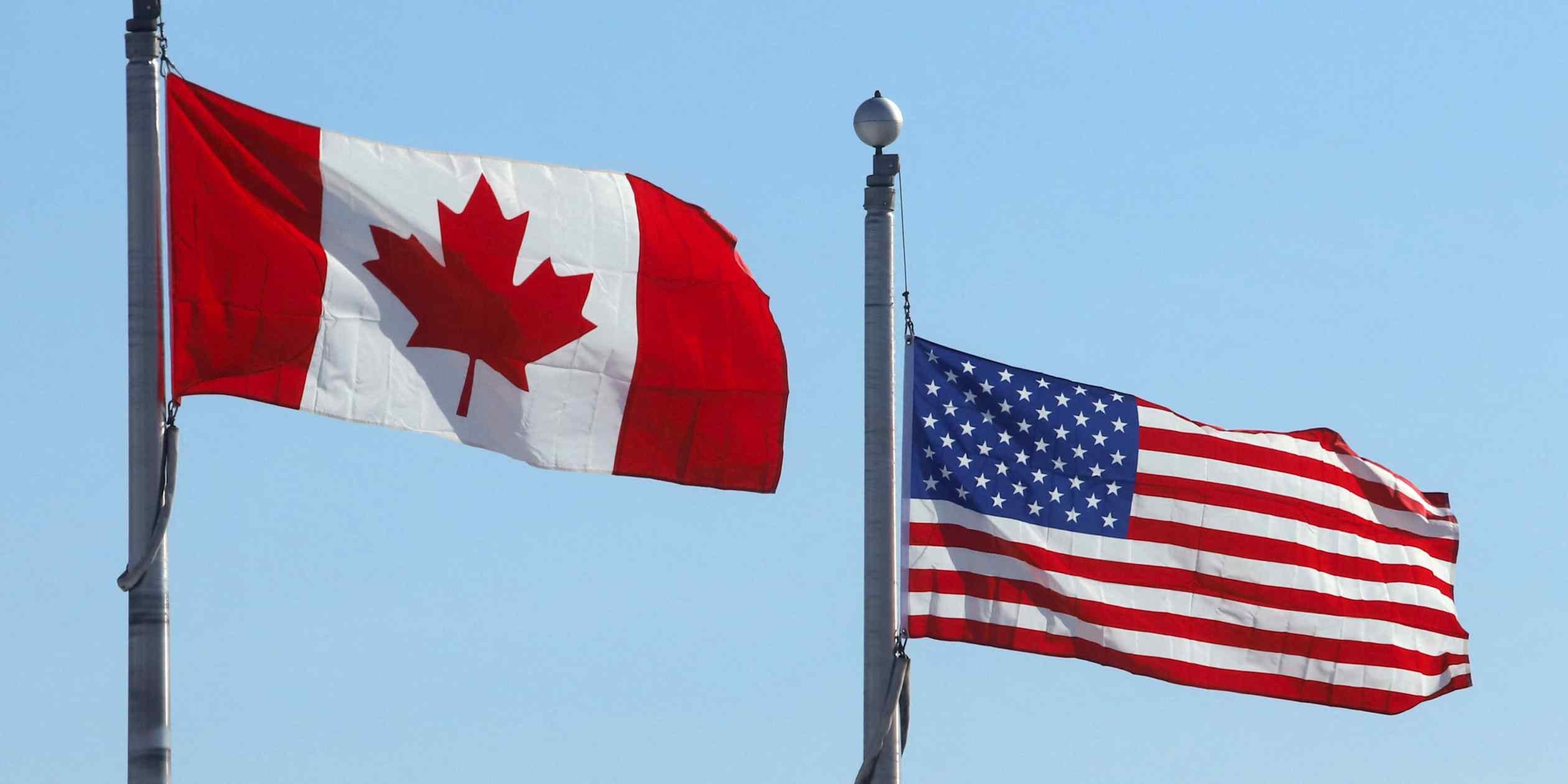
What is happening between the United States government and Canada is just…heartbreaking.
For most Americans, Canada has always been a constant presence. We share the world’s longest border. Our economies are closely connected. Families travel back and forth. We help each other fight fires. We share rivers, lakes, power grids, industries, defense agreements, sports leagues, music, culture, and even have friendly debates over which celebrities belong to which country.
Canadians came to our aid after September 11. When American airspace suddenly closed, the small town of Gander, Newfoundland, welcomed thousands of stranded passengers into homes, schools and churches. People cooked meals, offered showers, handed strangers the keys to their cars and made room for people they had never met. That’s what neighbors do.
Today, we are treating that neighbor like an adversary. The Trump administration has put 50 percent tariffs on billions of dollars’ worth of Canadian goods and is threatening even more tariffs on Canadian cars, auto parts, and steel. President Trump has told Canadian leaders to “fall in line.” His administration has asked for concessions that Prime Minister Mark Carney says would hurt Canadian industries and limit Canada’s ability to make its own decisions. Canada has refused. And Canadians are angry. I can’t blame them.
This weekend, U.S. Transportation Secretary Sean Duffy called Canada’s resistance “foolish.” He also pointed out Canada’s weaker military as a reason why Canada could not win a trade war with the United States.
Think about what has happened to the relationship when an American cabinet secretary finds himself reminding our closest neighbor that we have the bigger military.
There is something deeply wrong with this idea of strength. It assumes that every relationship is ultimately a contest of leverage. If I am bigger than you, you should yield. If I have something you need, I should use your dependence to extract concessions. If you resist, I should make the cost of resistance painful enough that eventually you submit.
We recognize this behavior immediately when it happens in a family. We call it bullying. Sometimes abuse. We certainly don’t call it friendship. Yet countries can get confused about moral principles that seem obvious in everyday life.
There are legitimate trade disagreements between the United States and Canada. Friends disagree. Countries negotiate vigorously over their interests. Canada has policies the United States considers unfair, and Canada has its own grievances with us. None of that requires pretending one country is innocent and the other guilty.
Disagreement is not the same thing as domination. A healthy relationship leaves room for the other person to remain fully themselves. Maybe one of the real tests of power is this: Can I have power without needing you to be smaller?
The question applies to nations, but it also applies to marriages, workplaces, congregations, friendships and families.
Can I disagree with you without humiliating you?
Can I have more resources without using your need against you?
Can I be stronger without making you afraid of my strength?
Can I hear “no” without interpreting it as an act of disloyalty?
Can I love someone whose interests are not identical to mine?
Our wisdom traditions have spent thousands of years trying to teach us this. The Hebrew scriptures tell people not just to tolerate neighbors but to seek justice with strangers. Islam puts great importance on how we treat neighbors; teachings say Gabriel spoke so often about their rights that Muhammad thought neighbors might even become heirs. Buddhism teaches us to practice metta, or loving-kindness, that extends compassion beyond those who help us. Jesus taught that loving your neighbor is tied to loving God.
None of these traditions imagines relationship as weakness. They understand something empire repeatedly forgets: relationship is a form of strength.
For generations, the United States possessed an extraordinary kind of wealth that rarely appeared on a balance sheet. We had friends. These friendships weren’t perfect. They weren’t free from self-interest or past mistakes. But they were alliances built over decades through trade, cooperation, mutual defense, diplomacy, cultural exchange, and many everyday human connections. That kind of trust takes generations to build. It can be destroyed astonishingly quickly.
Canadians are already changing their travel plans and what they buy. Their government is working to build new economic ties so they won’t have to rely as much on the United States. Prime Minister Carney said something Americans should listen to: “America has changed, and … we will not return to our old relationship.” I find that truth terribly sad.
There are losses that tariffs cannot measure. You can calculate the price of a car after a 50 percent tariff. You can calculate the value of steel crossing a border. You can calculate exports, imports, trade deficits and currency fluctuations. There is no easy economic model for the value of a neighbor who trusts you.
Maybe that is a takeaway here. For a long time, our culture has confused strength with dominance. We admire the person who wins the negotiation, closes the deal, crushes the competition, and leaves the room with more than everyone else.
But there are victories that leave us poorer. If you win the argument and lose the friendship, what exactly have you won? If you extract the concession and destroy the trust, was it a good deal? If you become powerful enough that your neighbors begin organizing themselves to be safe from you, are you actually stronger?
These aren’t only questions for Donald Trump. They’re questions for us. Nations eventually express the values their people tolerate.
Maybe this is a moment for Americans to say something very simple to our Canadian neighbors: We see what is happening. We understand why you are angry. We know friendship does not require submission, and millions of us still believe that the great privilege of having good neighbors is not the opportunity to dominate them. It is the responsibility to become good neighbors ourselves.
Canada is not our enemy. May we stop behaving as though we need one.
We are in this together,
Cameron
Reflection Questions
When you have more power than someone else, how does that power change the way you relate to them?
Where have you seen competition or the need to “win” damage a relationship that once depended upon trust?
What would it mean for you to become a better neighbor—to the people next door, to people across political or cultural divides, and to people beyond your country’s borders?
A Prayer for the Day
A Prayer To Teach Us to Be Good Neighbors
Spirit of Love,

You placed us in a world
where none of us survives alone.

Our rivers cross borders.
Our air ignores them.
Our economies intertwine.
Our histories overlap.
Our lives depend upon people
whose names we will never know.

Teach us to treat relationship as a gift
rather than an opportunity for leverage.

When we have power,
make us gentle with it.

When we have abundance,
make us generous with it.

When we disagree,
keep us curious enough to listen.

When we are afraid,
keep us from turning neighbors into enemies.

Forgive us for the times
we have confused dominance with strength
and winning with wisdom.

Bless our Canadian neighbors
and all those whose trust has been wounded.

May those of us in the United States
have the humility to recognize the harm being done in our name
and the courage to say that it does not represent the future we seek.

Across every border,
teach us again the ancient wisdom
that our well-being is bound together.

May we become trustworthy neighbors
in a world desperately in need of them.

Amen.
Spiritual Practice
Borrow a Cup of Sugar
There was a time when being a neighbor involved a certain amount of dependence. You ran out of sugar and knocked on someone’s door. Someone’s car wouldn’t start, so you asked for jumper cables. A storm came through and everybody emerged with chainsaws, extension cords, casseroles and opinions about how the power company should be run. Something important happens when we need one another.
So this week, instead of trying to become more self-sufficient, practice interdependence. Borrow something. Ask someone for help. Offer something you have without keeping score.
If you know your neighbors, knock on a door and have an actual conversation. If you don’t know them, introduce yourself. If there is someone nearby whose politics, religion, nationality, race, age or life experience differs from yours, become curious about their life before deciding what you think about them.
And sometime this week, reach across a larger border too. If you know someone in Canada, send them a note. Don’t defend American policy. Don’t explain what “most Americans” supposedly think. Don’t make them take care of our discomfort.
Simply say something like: I’m watching what is happening between our countries, and I’m sorry. I value the friendship between our peoples. I hope we find our way back to being good neighbors.
Then listen if they want to respond. The point of this practice is not niceness. It is remembering that interdependence is not weakness.
We live in an age that celebrates independence, leverage and self-sufficiency. But almost everything keeping you alive today arrived through relationship. Someone grew your food. Someone maintains the electrical grid. Someone purified your water. Someone made the medicine in your cabinet. Someone taught your children. Someone you will never meet helped create the device on which you are reading these words. We are already dependent upon one another. The spiritual work is learning to become worthy of that dependence.
Upcoming Events That Might Be of Interest…
My team and I launched a new experiment we are calling “The Commons.” It’s an online space centered around communities of practice: groups of people who share a common concern, set of problems, or passion for a topic, and deepen their knowledge and expertise by interacting on an ongoing basis. Join the community here.
August 25 - September 1, 2026, 12:30-1:30pmET - Book Club in The Commons - FREE - We are reading our next book, “I Eat The Stars” by Sarah Wilson. We will meet each Tuesday for 6 weeks. It’s such great fun. I hope you will be a part. All are welcome! RSVP HERE.
September 8, 2026, 12:30 - 1:30pm ET, ONLINE EVENT with NY Times Best-Selling author and journalist, Sarah Wilson!!! Sarah has just published her latest book I Eat The Stars: How to Live Fully and Beautifully in a Collapsing World. Join us for this one hour conversation where we will talk with Sarah about how we face collapse, how we find beauty and who we can become in these challenging times. Scholarships are available. REGISTER HERE.
September 8, 2026, 7-9pm ET, ONLINE EVENT - I’ll be hosting a powerful online gathering on The Black Madonna: Sacred Wisdom for a World in Crisis with Matthew Fox, Alessandra Belloni, and Christena Cleveland. We will explore the Black Madonna as a symbol of resilience, liberation, sacred feminine wisdom, and healing in a fractured world through conversation, story, music, and spiritual reflection. If you feel drawn toward a deeper encounter with the Divine Feminine and the ancient traditions that continue to nourish movements for justice and wholeness, I hope you’ll join us. Learn more and REGISTER HERE.
September 14, 7-8:30pm ET ONLINE EVENT - I’m delighted to share that Dr. Margaret Wheatley is releasing a newly updated edition of her beloved book Perseverance: A Companion for the Journey this October. Written for those committed to serving the world with compassion in difficult times, the book offers daily wisdom and practical guidance for navigating grief, anger, exhaustion, and uncertainty while remaining rooted in love, courage, and presence. Meg and I will be in conversation to explore what perseverance looks like in this moment of history and how we can sustain ourselves for the long work ahead. I hope you’ll join us for what promises to be a deeply meaningful conversation. REGISTER HERE.
September 17, 2026, 7-8:45pm ET - I will be joining Jackie Sussman for an online session on practicing eidetics as a part of our “Reclaiming the Power of Imagination” monthly series. Eidetic Imagery is a powerful tool for pastors, denominational leaders, coaches, and spiritual directors working with others, and for individuals seeking deeper integration and healing in their own lives. Jackie is a psychotherapist, author, and leading expert in Eidetic Image Psychology, and has spent over forty years helping leaders and individuals unlock creativity, uncover hidden strengths, and move through limiting patterns. During this session, she will lead a live Eidetic process shaped by mythic imagery, offering a direct experience of the work. REGISTER HERE.
October 6, 2026 - 7-8:30pm ET, ONLINE EVENT - Matthew Fox and I are teaming up again to launch a series called Journeying with the Mystics. The mystics have always emerged in times of uncertainty. They appear when old certainties are crumbling, when institutions no longer provide easy answers, and when people find themselves longing for a deeper experience of the Sacred. Join us for an 18-session exploration of the teachings of St. John of the Cross, Thomas Merton, Hildegard of Bingen, Kabir and Rumi, Meister Eckhart and more. This is more than a lecture series. It is an invitation into a living spiritual journey. REGISTER for the first session HERE!
October 18-21, 2026 - PREACH! 2026 Conference- I’ll be co-hosting PREACH in Minneapolis with Church Anew, a new gathering for preachers, storytellers, worship leaders, and spiritual communicators navigating what it means to speak with clarity, compassion, and courage in a changing world. If you’ve sensed that the preaching moment has changed and are longing for thoughtful community and renewed imagination for this work, I hope you’ll join us.
November 10, 7-8:30pm ET - I’ll be joined by theologian, writer, and professor Dr. Debra Rienstra for a special ONLINE conversation on Refugia Faith. In ecology, refugia are small places where life survives amid disruption, pockets of resilience from which life can eventually regenerate and spread. Debra invites us to consider what this might mean spiritually in an age of climate instability, political turmoil, institutional decline, and profound uncertainty. What if our congregations, communities, relationships, and even our own lives could become refugia, places where courage, compassion, beauty, wisdom, and possibility are protected and cultivated for whatever comes next? I hope you’ll join us for this timely and deeply hopeful conversation. REGISTRATION COMING SOON!
Fun Things My Friends Are Up To…
I get to work with such amazing, creative people. This section is my way of celebrating them—no paid promotions, just joy in what they’re creating.
My dear friend, Rev. Shawna Bowman has just launched a new podcast with musician Jennifer Knapp called “My Wise Friend Podcast.” They talk about it this way: “You might know Jennifer from her years as a touring musician and songwriter, weaving stories and songs together across the country. You might know Shawna from their work as an artist, speaker, and community leader exploring the intersection of spirituality, justice, and creativity. While our daily work looks different, we share a deep love for real talk, deep questions, and finding wisdom in unexpected places.” I am so excited about this! I hope you will check it out and support them. https://www.patreon.com/cw/mywisefriendpodcast
I’m delighted to celebrate the upcoming release of Wisdom Church: Abundant Life for Aging Congregations by my colleague, Rev. Dr. Anna Hall. Rather than seeing aging congregations as communities in decline, Anna invites us to recognize them as communities rich with wisdom, purpose, and possibility. Her book offers a hopeful vision for moving beyond anxiety about the future and embracing the unique gifts of older adults as beloved children of God. If your congregation is navigating these questions, this is a resource well worth reading. You can preorder the Kindle edition now, with delivery on August 17: https://www.amazon.com/Wisdom-Church-Abundant-Aging-Congregations-ebook/dp/B0HBXGYTWC
Starting again on September 7 for every Monday, 12pm ET - ONLINE WRITING GROUP - My dear friend, Meryl Marshall-Daniels, is leading a writing group open to all. This is a simple and spacious writing circle for people who want time to listen inwardly and put words on the page without overthinking, performing, or polishing. Meryl offers a prompt designed to invite reflection, imagination, and attunement to what is already alive within you. The practice honors writing as a way of listening, of letting images, memories, questions, and insights surface in their own time. Learn more here.
If you are a leader or member of a congregation looking for consulting support in visioning, planning, hiring or staffing, please consider Convergence.
I am your Canadian sister. My heart hurts. I am scared. Thank you for your truthful sensitivity.
I teared up reading this meditation. I am Canadian and realize we have millions of American friends who are appalled by what has been happening. Thank you for realizing we can not let ourselves be treated in this totally unacceptable manner.🇨🇦