

“Looking after yourself, you look after others; and looking after others, you look after yourself.” — The Buddha, Sedaka Sutta, SN 47.19, translated by Bhikkhu Sujato
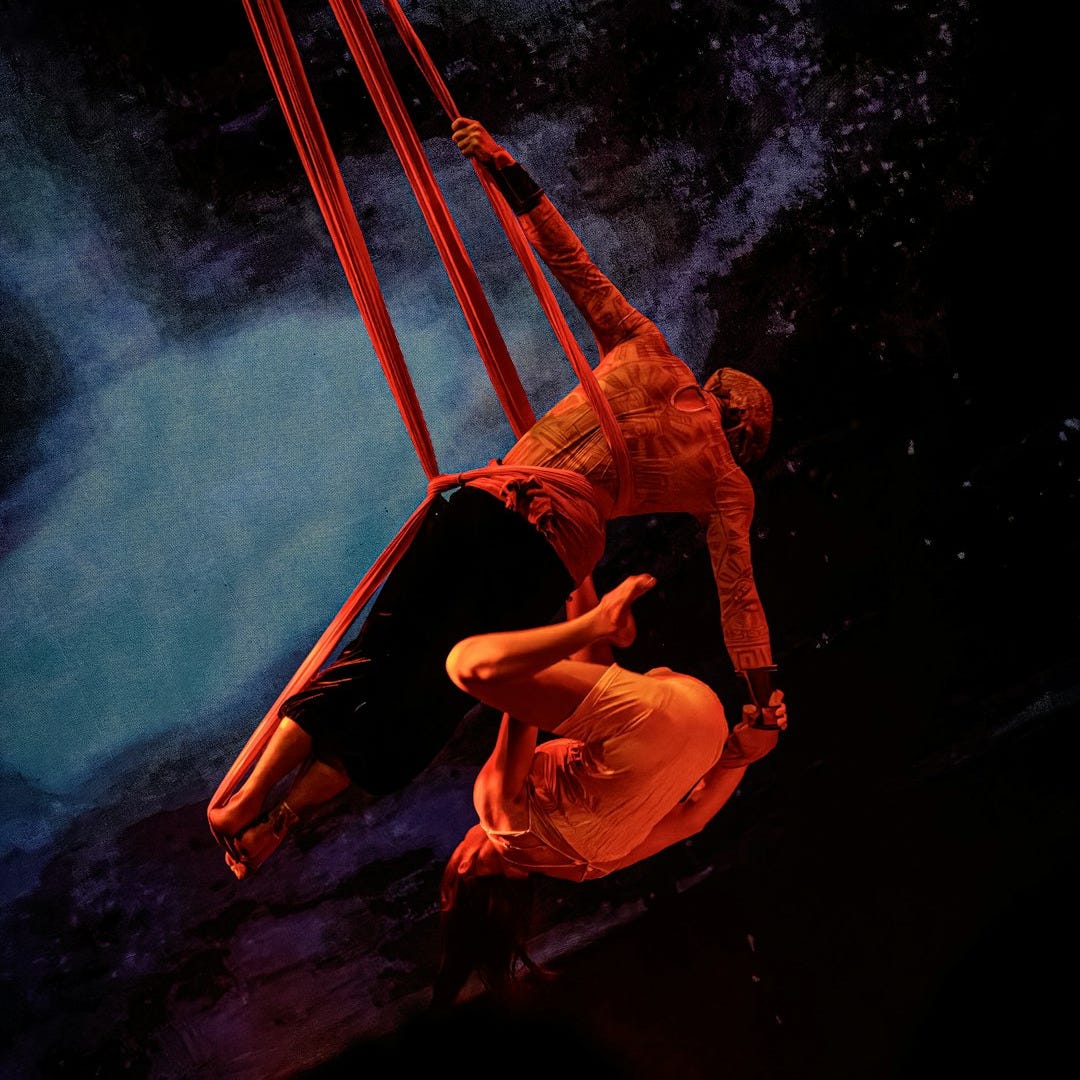
There is a wonderful story in the Buddhist tradition about an acrobat and his young apprentice.
The Buddha tells of a performer who makes his living by balancing on a tall bamboo pole. One day, he asks his apprentice to climb up and stand on his shoulders. They plan to perform their risky act, entertain the crowd, get paid, and hopefully come down safely.
Before they start, the teacher gives some advice. He tells his apprentice that they should each watch over the other. If they focus on protecting one another, they will both stay safe.
But the apprentice disagrees. She tells her teacher that each of them should focus on their own balance. If he looks after himself and she looks after herself, they can do their act and come down safely. The Buddha says the apprentice was right. The teacher wants to protect his apprentice, and she cares about him too. But she knows something important about their shared responsibility. If she gets too focused on watching her teacher and loses her own balance, they could both fall.
The Buddha uses this story to teach about mindfulness. When we pay attention to our thoughts, feelings, and actions, we are less likely to cause harm because of confusion or quick reactions. When we treat others with patience, compassion, and kindness, we also build those qualities in ourselves.
I find this teaching powerful because many of us see caring for ourselves and caring for others as if they are in conflict. We admire people who give their time and energy freely. We praise those who make sacrifices for others, especially in our communities and nonprofits. I have known very compassionate people whose willingness to help has changed lives, including mine.
But I have also seen those same people become tired, resentful, and even sick because they thought they could never stop giving. They paid so much attention to others’ needs that they lost track of their own.
Maybe you know what that feels like. We take on another task because someone needs help. We answer one more email because it feels urgent. We care for an aging parent, help a friend in need, or start another project because we don’t want to let anyone down. In the end, the people we love get only what is left of our attention after we have given almost everything away.
The apprentice on the bamboo pole gives us an important reminder. She is responsible for her teacher by paying close attention to her own balance. Her steadiness helps keep him safe.
The Vietnamese Buddhist teacher Thich Nhat Hanh expressed something similar when he said, “When you love someone, the best you can offer is your presence.”
I’ve been thinking about what it means to truly be there for someone when we are tired, anxious, or distracted. We might be there in person, but our minds are busy with many unfinished tasks. We may want to be kind, but sometimes our patience is worn thin.
Thich Nhat Hanh saw mindfulness as being open to life as it happens. We learn to notice what is going on inside us so we can meet others with more clarity and kindness.
This feels especially important today, when so much of public life pushes us to react quickly. News comes at us all the time. Leaders make statements that stir up fear or anger. Social media rewards fast judgments, and we are urged to respond before we really understand what happened.
When something troubling occurs, I want to respond. Sometimes that response is necessary. But I have learned that my first reaction is not always my wisest one. When I am tired or frightened, I can become less patient with the people closest to me and less capable of discerning what would actually help.
Mindfulness gives us a bit of space between what happens and how we react. It helps us notice when fear is shaping our judgment or when being tired makes us less generous than we want to be.
There’s another part of the acrobat’s story I value. The teacher and apprentice rely on each other, even though each has to keep their own balance. Neither can do the act safely without the other’s help.
I think about the communities we want to build, especially those focused on justice, compassion, and social change. We need people brave enough to act, but we also need communities where asking for help is seen as wise and where needing rest is respected, not seen as a lack of commitment.
We should also remember that not everyone can rest whenever they need to. Many caregivers, workers, and parents have demands that leave little time for themselves. Their well-being partly depends on whether their communities and institutions are willing to share the load.
I think of those two acrobats high above the ground. Their safety depends on staying aware of themselves and responding to each other. Every move matters because neither person’s life is just their own.
Maybe that’s what we are being asked to do today. We all balance responsibilities that others might not notice. Some of us are carrying more than we can handle. Others are finding that the people they rely on are struggling to stay steady too.
The Buddha reminds us that compassion grows through attention, patience, and choosing not to cause harm. These are qualities we build in ourselves and share with others.
May we pay more attention to our own lives, be more generous to those who depend on us, and be more open to receiving the care that helps us live. After all, we are much more likely to stay on that bamboo pole when everyone gets the support they need.
We are in this together,
Cameron
Reflection Questions
Where in your life have you become so attentive to the needs of others that you have lost awareness of your own well-being?
How does your emotional or physical state affect the way you respond to people who depend upon you? What helps you recover your steadiness?
What would change in your family, workplace, congregation, or community if caring for ourselves and caring for one another were understood as shared responsibilities?
A Prayer for the Day
A Prayer To Teach Us to Remain Steady
Holy One,
who meets us in the fragile balance
of our ordinary lives,

Teach us to notice
when our bodies are weary,
when our hearts are troubled,
when our spirits need rest.

Give us the humility to receive care
and the generosity to offer it.

May our attentiveness deepen compassion,
our patience protect the vulnerable,
and our kindness extend
to ourselves as well as others.

When the demands of life
leave us trembling,
steady us in the knowledge
that we were never meant
to carry everything alone.

Amen.
Spiritual Practice: Find Your Balance
Stand comfortably with both feet on the ground, or sit upright in a chair with your feet resting on the floor. Close your eyes if that feels comfortable, and spend a minute noticing your physical balance. Feel the points of contact between your body and the ground or chair. Notice the small adjustments your body makes to remain steady.
Now think of someone who depends upon you. It might be a child, partner, friend, colleague, or someone in your community.
As you breathe, consider how your own well-being affects your ability to care for that person. What do you need more of right now? Rest, patience, companionship, support, or perhaps permission to set a boundary?
Then bring to mind someone whose presence helps you feel steady. Remember a moment when their care made a difference.
Before the day ends, choose one practical action that strengthens this circle of mutual care. You might ask for help with a responsibility, arrange time for genuine rest, or offer support to someone who rarely allows themselves to receive it.
Remember the apprentice’s wisdom: your balance matters to the people who depend upon you.
Upcoming Events That Might Be of Interest…
My team and I launched a new experiment we are calling “The Commons.” It’s an online space centered around communities of practice: groups of people who share a common concern, set of problems, or passion for a topic, and deepen their knowledge and expertise by interacting on an ongoing basis. Join the community here.
November 17, 2026 - 12:30 - 1:30pm ET - ONLINE BOOK CLUB - As we move through the holiday season, The Commons Book Club (which I host) is trying something a little different. Rather than reading a full book together, we’ll gather each week through December around a thoughtfully selected article, poem, podcast, or short video that invites us into meaningful conversation. Our selections will explore the questions that matter to our community: How do we nurture hope in uncertain times? What does it mean to live with compassion and courage? How might spirituality, creativity, justice, and our relationship with the natural world help us imagine new possibilities for ourselves and one another? There’s no long reading commitment, and you can join us whenever your schedule allows. Each gathering stands on its own, making this an especially welcoming opportunity for newcomers and longtime members alike. Learn more here.
November 20, 2026, 7-8:45pm ET - I will be joining Jackie Sussman for an online session on practicing eidetics as part of our “Reclaiming the Power of Imagination” monthly series. Eidetic Imagery is a powerful tool for pastors, denominational leaders, coaches, and spiritual directors working with others, and for individuals seeking deeper integration and healing in their own lives. Jackie is a psychotherapist, author, and leading expert in Eidetic Image Psychology, and has spent over forty years helping leaders and individuals unlock creativity, uncover hidden strengths, and move through limiting patterns. During this session, she will lead a live Eidetic process shaped by mythic imagery, offering a direct experience of the work. REGISTER HERE.
December 1, 2026 - 7-8:30pm ET, ONLINE EVENT - Theologian Matthew Fox and I are teaming up again in a series called Journeying with the Mystics. The mystics have always emerged in times of uncertainty. They appear when old certainties are crumbling, when institutions no longer provide easy answers, and when people find themselves longing for a deeper experience of the Sacred. Join us for a 24-session exploration of the teachings of St. John of the Cross, Thomas Merton, Hildegard of Bingen, Kabir and Rumi, Meister Eckhart and more. This is more than a lecture series. It is an invitation into a living spiritual journey. Learn more and REGISTER HERE!
December 5, 2026 - A Way in the Wilderness: An Online Advent Silent Retreat, 9:00 a.m.–4 p.m. ET - I’m delighted to be leading a special Advent retreat with my friends at the Shalem Institute for Spiritual Formation. A Way in the Wilderness is an invitation to step away from the noise and demands of daily life and enter a spacious day of contemplative prayer, sacred reading, Sabbath rest, and silence. Together, we’ll explore the biblical wilderness as a place where new possibilities emerge and discover the peace that comes from recognizing the Sacred’s presence even in uncertain times. There is nothing to accomplish and no experience to manufacture. Just an opportunity to rest, listen, and remember that we do not travel through the wilderness alone. LEARN MORE.
December 8, 2026, 7-8:00pm ET - The holidays can be especially tender when we are carrying grief. Whether we are mourning someone we love, navigating changes in our health or relationships, or grieving the uncertainty of the world around us, this season can bring losses both old and new to the surface. Join us on The Commons for a special one-hour online gathering led by my friend Joy Gaertner, an Advanced Loss & Grief Recovery Specialist. Together, we will create a welcoming space to acknowledge our losses, honor what we carry through meaningful rituals of remembrance, and discover sources of hope for the season ahead. This will be a gentle evening of connection and care, with room for whatever grief you may be holding. The gathering is donation-based, and all are welcome. LEARN MORE.
December 15, 7-8:30pm ET - FREE WEBINAR - I will be joined by Dr. Charissa Mikoski, Assistant Professor of Research and Hartford Institute for Religion Research for a presentation on “The State of American Congregations: What the Latest Data Tell Us.” This webinar explores findings from the 2025 Faith Communities Today survey, including changes in worship attendance, congregational vitality, finances, volunteering, programming, and leadership. It will also examine what more than 24,000 individual attenders tell us about participation and their experiences of congregational life. Together, these findings offer a picture that is neither simply one of decline nor one of revival, but of significant change and uneven recovery. REGISTER HERE.
Fun Things My Friends Are Up To…
I get to work with such amazing, creative people. This section is my way of celebrating them—no paid promotions, just joy in what they’re creating.
THIS FRIDAY, November 13, 2026 - My friends at The Sacred Slope are hosting a timely conversation with special guest John Fugelsang, hosted by Pastor Joe Smith and Alexis Rice called The Sacred Slope Virtual Lab: We The People — Speaking Across the Faith Divide. As the recent election brings renewed attention to progressive Christian voices, this gathering reminds us that Christianity has never belonged to one political movement, denomination, or nation. Together, they’ll explore the rich diversity of Christian faith beyond American white evangelicalism, examine how religion and politics intersect, and offer practical ways to recognize misinformation, challenge harmful narratives, and build trust across deep divides. If you’re a pastor, organizer, writer, or simply someone who longs for a more compassionate and informed public conversation, this promises to be a worthwhile gathering. Learn more here.
Every Monday, 12pm ET - ONLINE WRITING GROUP - My dear friend, Meryl Marshall-Daniels, is leading a writing group open to all. This is a simple and spacious writing circle for people who want time to listen inwardly and put words on the page without overthinking, performing, or polishing. Meryl offers a prompt designed to invite reflection, imagination, and attunement to what is already alive within you. The practice honors writing as a way of listening, of letting images, memories, questions, and insights surface in their own time. Learn more here.
If you are a leader or member of a congregation looking for consulting support in visioning, planning, hiring or staffing, please consider Convergence.