

“Justice, and only justice, you shall pursue.” — Deuteronomy 16:20
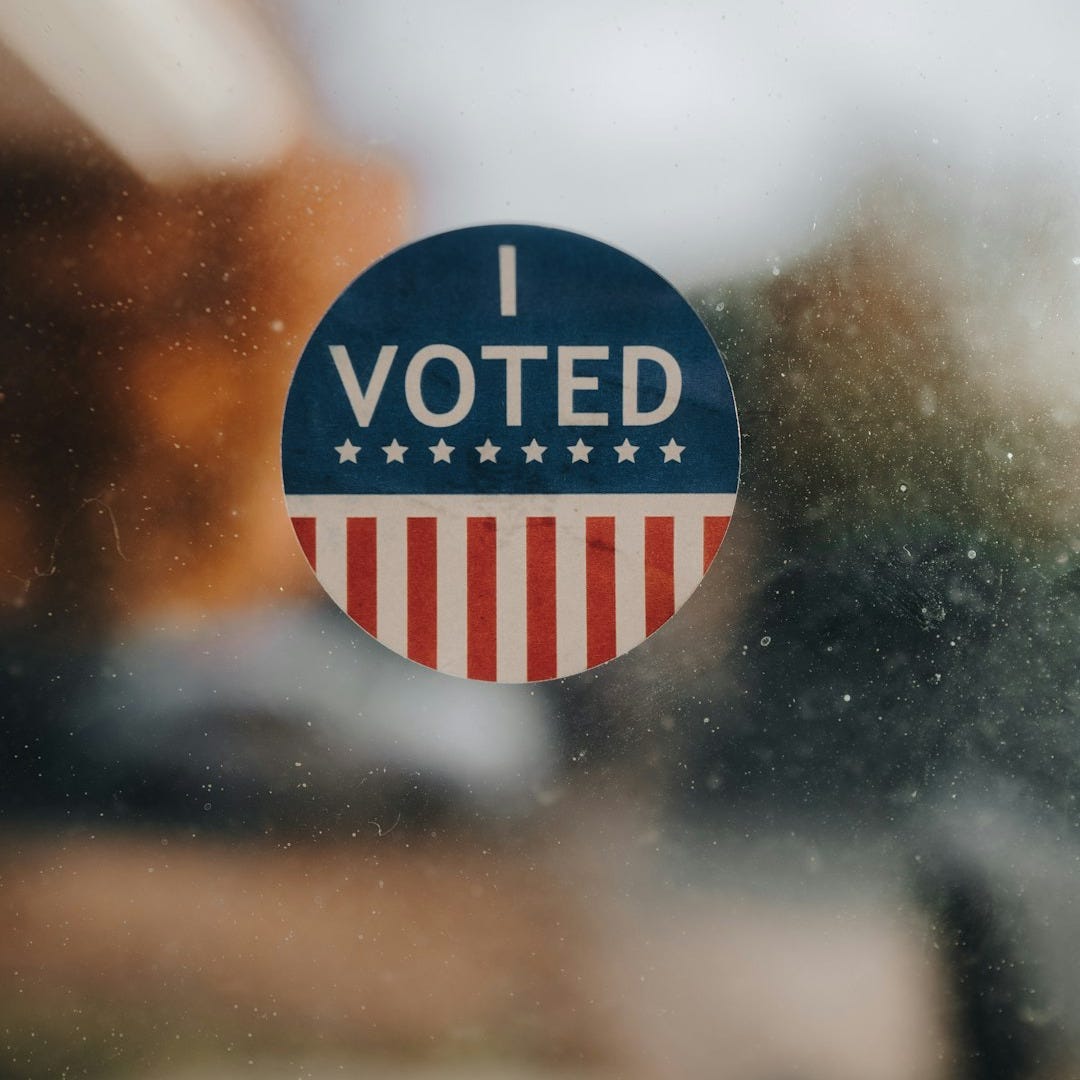
There is a bill moving through Congress called the SAVE Act.1 It is often described as a voter ID law. That description is not wrong, but it is incomplete.
The bill would require documentary proof of citizenship, such as a passport or birth certificate, presented in person when registering to vote. It would also require states to remove voters from registration rolls if citizenship cannot be verified through federal databases.
Supporters of the bill argue that it addresses a fundamental issue: trust. They believe that elections must not only be secure, but widely perceived as secure. In their view, even the possibility of noncitizen voting undermines public confidence. Requiring documentary proof of citizenship is seen as a clear, enforceable standard, one that removes ambiguity and strengthens legitimacy.
That argument rests on a particular understanding of what stabilizes a democracy. Clarity. Verification. Enforcement. In a time when many Americans no longer trust institutions, that instinct is not difficult to understand.
But there is another reality that must be held alongside it.
Noncitizen voting in federal elections is already illegal and vanishingly rare. The problem this bill seeks to solve is not widely evidenced in the data.
What is widely evidenced is something else.
Millions of American citizens do not have ready access to the kinds of documents this law would require. Passports are unevenly distributed. Birth certificates are not always easily accessible. Names change. Records are lost. Bureaucratic systems are not neutral in how they function. This bill does not simply verify identity. It redefines access.
This is not a law that requires identification at the point of voting. It imposes documentation requirements at the point of registration, backed by database verification systems that are known to be incomplete and error-prone. In practice, that shifts the burden. Participation becomes contingent on navigating administrative systems that do not function equally for all people.
This is where the debate becomes more than procedural. It becomes historical.
The United States has always wrestled with who is allowed to participate in its democracy. Property requirements, poll taxes, literacy tests: each was justified in its time as necessary to protect the integrity of the system. Each one introduced a threshold. Each one narrowed the circle.
The SAVE Act emerges from a different political moment, but it raises similar questions:
What kind of threshold is being created?
And who will be most affected by it?
This is not a simple matter of intention. It is a matter of effect. Supporters of the bill are not wrong to care about legitimacy. A democracy cannot function without trust. But trust is built in more than one way.
It is built through clear rules. It is also built through broad participation. When those two come into tension, a society has to decide which risk it is more willing to bear. The risk of a system that is not fully secure, or the risk of a system that is less accessible.
That is the real decision being made here. It is, at its core, a theological question. Beneath the policy is a deeper issue:
Who belongs?
Who is trusted?
Who is required to prove themselves before they are allowed to participate?
Scripture returns to this again and again, not in the language of modern democracy, but in the moral architecture it assumes. The test of a community is not only how it defines order. It is how it distributes burden.
When systems require additional proof, additional effort, additional navigation, those requirements do not fall evenly. They fall on those who have the least margin to absorb them.
That does not make every threshold unjust. But it does require us to ask, carefully and honestly: Who carries the weight of this decision?
I find myself holding that question as this debate unfolds, not so much as a partisan response, but as a moral one. The long arc of history suggests that restrictions introduced in the name of order often reveal their consequences only over time. Once participation narrows, it rarely widens without struggle.
People of faith are not asked to resolve every policy debate.
We are asked to see clearly, to recognize when competing goods are in tension, to name the trade-offs being made, and to remain attentive to those who will bear the cost.
Justice is not served by slogans. It is served by clarity, by the courage to ask who is still standing inside the circle, and who is being asked, once again, to prove that they belong.
What are your thoughts?
We are in this together,
Cameron
Reflection Questions
What does “trust in elections” mean to you, and how is that trust built or eroded?
Where do you see tension between security and accessibility in public life?
Who in your community would face the greatest burden under documentation requirements like these?
How do we discern when a policy protects a system and when it begins to narrow participation?
A Prayer for the Day
A Prayer for Wisdom in a Time of Decision
God of justice,

You call us to build communities
where truth and dignity hold together.

In a time of competing claims and contested trust,
give us wisdom.

Help us to see clearly what is being proposed,
to understand what is at stake,
and to recognize who will carry the burden of our decisions.

Guard us from easy answers.
Keep us attentive to those whose voices are hardest to hear.

Teach us to pursue justice with clarity,
and to hold power accountable with humility.

Amen.
Spiritual Practice
Tracing the Burden
Today, take one policy or public issue you care about and follow it one step further than you normally would.
Ask:
Who benefits from this?
Who carries the cost?
What does participation require?
Then go one level deeper: If this were implemented fully, who would find it easier to belong?
Who would find it harder?
Do not rush to judgment.
Stay with the question. Justice often reveals itself not in intention, but in where the weight finally lands.
Upcoming Events That Might Be of Interest…
My team and I launched a new experiment we are calling “The Commons.” It’s an online space centered around communities of practice: groups of people who share a common concern, set of problems, or passion for a topic, and deepen their knowledge and expertise by interacting on an ongoing basis. Join the community here.
March 31 and April 7, 2026, 7-8:30pm ET - Rev. Dr. Matthew Fox and I will be hosting another 4-part series on “Visions for the Common Good.” This series will include sessions with David Abram (cultural ecologist), Lynne Twist (global activist), Randy Woodley (Cherokee scholar and wisdom-keeper), and yours truly! All sessions are recorded, and you will get the link if you can’t make it. Learn more here.
March 26, 2026, 7–8:30pm ET – FREE WEBINAR - I’ll be joined by Ruth Dearnley, OBE, Founder and President of Stop the Traffik (London), for “Stop the Exploitation of Children: Disrupting Human Trafficking at Its Source.” As Board Chair of Stop the Traffik USA, this work is deeply personal to me. We cannot rescue our way out of trafficking; we must prevent exploitation by disrupting the systems and financial flows that profit from vulnerability—and congregations can play a powerful role in building community resilience. Ruth will share how technology and data are exposing trafficking networks globally, and how congregations can lead local awareness and prevention campaigns that reduce vulnerability and protect children. I hope you’ll join us. Learn more and register here.
March 28, 2026 - No Kings Protest! We are marching again. Mark your calendars and find the nearest protest site. Make your protest signs. Knit your red hats. Get your water bottles and sunscreen ready. We head back into the streets for peaceful protest on behalf of a more just world. I'll see you out there. Register here.
I drafted a Strategic Framework for Congregations as we move into the coming years of increased authoritarianism around the world. If interested, you can download it here.
Fun Things My Friends Are Up To…
I get to work with such amazing, creative people. This section is my way of celebrating them—no paid promotions, just joy in what they’re creating.
Each spring, Jewish clergy, musicians, and community leaders gather at Hava Nashira, a long-running conference devoted to the sacred practice of communal singing in Jewish life. Participants learn how music, chant, and shared prayer can deepen spiritual life and strengthen community by helping whole communities lift their voices together. I love that this exists in the world, and that my friend, Cantor Rosalie Will, helps lead it. If your path is in the Jewish tradition, check it out.
The Congregation of the Sisters of Saint Joseph of Peace filed a shareholder resolution with Palantir asking the company to publish a human rights impact assessment. Palantir is the AI software behind ICE, predictive policing, algorithm-determined drone killings, merging of private health data, and more. The sisters released a video explaining why they filed the proposal. They are now reaching out to Faith Leaders and asking them to sign the petition in support. The signatures need to be collected by/before March 23.
I have just discovered the coolest group! The All We Can Save Project grew out of the powerful climate anthology All We Can Save and has become a growing network of people committed to climate courage and community leadership. Their work reminds us that responding to the climate crisis isn’t only about policy or technology; it’s also about cultivating the relationships, imagination, and moral courage needed to protect and restore the living world. Check them out here: https://www.allwecansave.earth/
If you are a leader or member of a congregation looking for consulting support in visioning, planning, hiring or staffing, please consider Convergence.
You can read the full bill here: https://www.congress.gov/bill/119th-congress/house-bill/22/text
I appreciate your attempts to present an unbiased summary. However……..
Our republic is in dire jeopardy…… the order of law is no longer a guiding principle……. there is no balance of power…..
This bill is another blatant attempt to exclude people of color and poverty.
There truly are no words to describe the dismantling…… the cruelty….. the fraud, deceit and corruption. I am heartsick….. frustrated and spiritually challenged.
I think about my adult kids...Who grew up in comfort and safety, and privilege, yes...and also who at various times contacted me with "mom, do you know where my birth certificate is," or "do you have a copy of my social security card?" And yes, i did, because i did live where i could drag this stuff around with me in a fairly organized system. So I could supply them yet again with a reminder to "keep this safe"...which they are learning to do. (When my youngest got married, he and bride navigated the system to get required documentations so he could change His name to hers! without needing my help! Progress)
I say this because for everyone who doesn't have a personal assistant, it IS complicated, and time and energy consuming, and requires in our day and age, enormous persistence, to keep track of these important papers. I can only imagine how hard it is for those who do not have a nice big filing cabinet, or a mom who kept papers, or worse yet, don't have a trail back to lives led and moved away from for whatever reason...so i ask if these folks still WANT TO PARTICIPATE IN OUR DEMOCRATIC PROCESS why shouldn't they be able to express themselves at the polls? I don't think my kids vote...it is a value of mine--alwzys has been, but somehow it wasn't been passed to them. Our (albeit bent or broken or even non-existent) systems still work for them on the surface.
I know i am preaching to the choir here, but I have huge compassion for the potential disenfranchised...and I do not support taking the vote away from anyone who wants to vote. Anyone.