

“Then the LORD said to Cain, ‘Where is your brother Abel?’ He said, ‘I do not know; am I my brother’s keeper?’” — Genesis 4:9, NRSVUE
Imagine someone you love is taken into government custody. You know they have been detained, but you do not know where they are. You type their name into the federal government’s online detainee locator. Yesterday, the system would have shown you where they were being held. Today, no location appears.
Your loved one has not vanished. The government knows their location. Somewhere, there is a detention facility, a bed, a case file, and a person wondering what will happen next. You simply cannot find them.
Since September 15, Immigration and Customs Enforcement has mostly stopped showing the detention locations of people with final removal orders in its Online Detainee Locator System. This change happened without any public notice. ICE says these people are still tracked internally and that the change helps with timely removals. Immigration lawyers say it has made some clients much harder to find and can make it more difficult to seek legal remedies that might still be possible. There are some exceptions, such as facilities affected by court orders.1
We can disagree about immigration policy, deportation, borders, and the authority of governments to enforce their laws. There is still a more fundamental question worth asking when the government knows where a person is and the people who love or represent that person do not.
It is one of the oldest questions in scripture. In the fourth chapter of Genesis, Cain kills his brother Abel. God comes to Cain and asks, “Where is your brother Abel?”
Cain responds, “I do not know; am I my brother’s keeper?”
God does not need Cain to say where Abel is. The question is about morality, not geography.
Where is your brother?
What happened to him?
What responsibility do you bear for his welfare?
Cain’s answer tries to break that responsibility. He acts as if his brother’s location is not his concern. But Genesis does not let him avoid it.
Another ancient phrase keeps coming to mind. It comes from law rather than scripture: habeas corpus.2 The Latin phrase is usually translated as “that you have the body.” Over time, the writ became a protection against unlawful detention by making the authority holding someone explain that custody in court. The current ICE policy brings up different legal questions, and changing the public locator alone does not mean there is a violation or suspension of habeas corpus.
Still, there is something morally powerful in those words. You have the body. Before we argue about what should happen to the person, we establish that there is a person to whom something is happening.
Someone who becomes hungry.
Someone who may need medication.
Someone whose child may be waiting for a phone call.
Someone whose lawyer may be trying to find them.
Someone who is frightened.
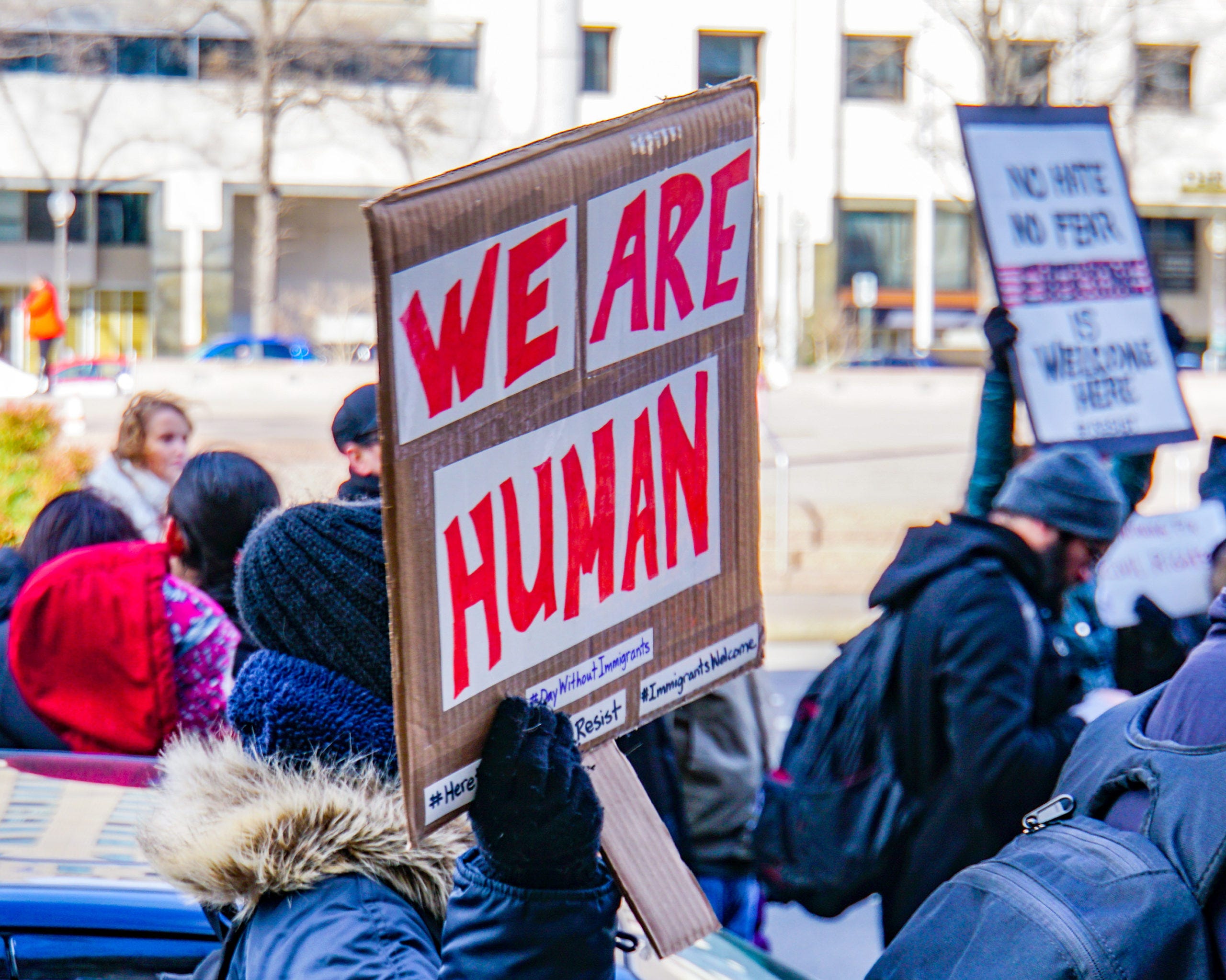
Governments need categories: detainee, final order, removal, case number. Bureaucracies depend on this kind of language to function. But living morally means remembering what these categories really stand for: Human beings.
This is one reason why visibility is important. When suffering is hard to see, it is easier to ignore. When someone disappears from our view, our sense of responsibility can fade too.
The biblical tradition often pushes back against narrowing our concern. The stranger, the prisoner, the widow, the orphan, the poor, and those left out are brought back to the center of the moral story. Their presence asks if we care about people whose lives are different from ours.
Other spiritual traditions ask this question in their own ways, but the challenge is the same. Buddhism teaches us to notice suffering, not ignore it. Islam insists on the dignity of every person and the duties we have to each other. Jewish ethics often returns to the stranger, reminding us that when someone is vulnerable, we have a responsibility to them.
Genesis gives us the simplest language: Where is your brother? The question does not tell us what immigration policy should be. It does not resolve whether a particular person should remain in the United States or be removed under the law. It asks something prior to those arguments. Will the person remain visible to us?
A fair society can enforce its laws and still make sure that everyone in its custody is someone we must account for. To me, that is a very basic moral standard. And an essential one.
So maybe our spiritual practice in times like these is simply to keep. We keep names. We keep watch. We keep asking where people have been taken. We keep those held behind walls connected to the human community outside them. And we reject the old temptation in Cain’s question: the temptation to think that another person’s location and well-being are not our concern.
God’s question remains: Where is your brother?
We are in this together,
Cameron
Reflection Questions
Who has become difficult for you to see as an individual human being because you primarily encounter them as part of a political, social, or religious category?
What happens to our moral responsibility when the suffering of another person becomes hidden from our view?
What might it mean for you to be another person’s “keeper” without controlling them, rescuing them, or assuming responsibility that belongs to them?
A Prayer for the Day
A Prayer To Keep Us From Looking Away
Holy One,

You asked Cain,
“Where is your brother?”

Ask us again.

When a name becomes a number,
help us remember the person.

When walls hide suffering,
keep our hearts from turning away.

When another human being
is placed outside our circle of concern,
widen the circle.

Make us keepers of names,
keepers of memory,
keepers of one another’s dignity.

And wherever someone is frightened,
forgotten, or difficult to find,
may there still be someone asking,

“Where are they?”

Amen.
Spiritual Practice: Keep a Name
Today, choose one person whose suffering you know mostly as part of a larger story. Perhaps it is someone detained by ICE, a person imprisoned in your state, someone living through a war, a refugee, a person experiencing homelessness, or someone whose life has been reduced in your mind to a category.
Find a name.
Learn one small thing about that person that has nothing to do with the category into which they have been placed. Learn what they loved, where they came from, what work they did, who misses them, or what they hoped their life might become.
Then write their name somewhere you will see it today.
You do not have to solve their situation. You may not even know what justice requires in their particular case.
The practice is simpler than that: Refuse anonymity. Let one human being emerge from the abstraction.
At the end of the day, speak their name aloud and ask whatever you understand the Sacred to be to hold them in care. Then notice what has changed in you. Cain’s question assumes that another person can somehow cease to be our concern. Keeping a name is one small way of answering differently.
Upcoming Events That Might Be of Interest…
My team and I launched a new experiment we are calling “The Commons.” It’s an online space centered around communities of practice: groups of people who share a common concern, set of problems, or passion for a topic, and deepen their knowledge and expertise by interacting on an ongoing basis. Join the community here.
September 29, 2026 - 12:30 - 1:30pm ET - FREE ONLINE BOOK CLUB - We are starting our next book in The Commons. For the next 5 weeks will we read Fr. Gregory Boyle’s, “Cherished Belonging: The Healing Power of Love in Divided Times.” Father Gregory Boyle, founder of Homeboy Industries, has spent decades building community among people whom society has often discarded. In Cherished Belonging, he draws on those relationships and stories to explore what might happen if we stopped sorting people into categories of worthy and unworthy, us and them. Don’t worry if you don’t have time to read the book. We always have incredibly rich conversations. All are welcome. RSVP Here.
October 6, 2026 - 7-8:30pm ET, ONLINE EVENT - Matthew Fox and I are teaming up again to launch a series called Journeying with the Mystics. The mystics have always emerged in times of uncertainty. They appear when old certainties are crumbling, when institutions no longer provide easy answers, and when people find themselves longing for a deeper experience of the Sacred. Join us for an 18-session exploration of the teachings of St. John of the Cross, Thomas Merton, Hildegard of Bingen, Kabir and Rumi, Meister Eckhart and more. This is more than a lecture series. It is an invitation into a living spiritual journey. REGISTER for the first session HERE!
October 15, 2026, 7-8:45pm ET - I will be joining Jackie Sussman for an online session on practicing eidetics as a part of our “Reclaiming the Power of Imagination” monthly series. Eidetic Imagery is a powerful tool for pastors, denominational leaders, coaches, and spiritual directors working with others, and for individuals seeking deeper integration and healing in their own lives. Jackie is a psychotherapist, author, and leading expert in Eidetic Image Psychology, and has spent over forty years helping leaders and individuals unlock creativity, uncover hidden strengths, and move through limiting patterns. During this session, she will lead a live Eidetic process shaped by mythic imagery, offering a direct experience of the work. REGISTER HERE.
October 18-21, 2026 - PREACH! 2026 Conference- I’ll be co-hosting PREACH in Minneapolis with Church Anew, a new gathering for preachers, storytellers, worship leaders, and spiritual communicators navigating what it means to speak with clarity, compassion, and courage in a changing world. If you’ve sensed that the preaching moment has changed and are longing for thoughtful community and renewed imagination for this work, I hope you’ll join us.
November 10, 7-8:30pm ET - I’ll be joined by theologian, writer, and professor Dr. Debra Rienstra for a special ONLINE conversation on Refugia Faith. In ecology, refugia are small places where life survives amid disruption, pockets of resilience from which life can eventually regenerate and spread. Debra invites us to consider what this might mean spiritually in an age of climate instability, political turmoil, institutional decline, and profound uncertainty. What if our congregations, communities, relationships, and even our own lives could become refugia, places where courage, compassion, beauty, wisdom, and possibility are protected and cultivated for whatever comes next? I hope you’ll join us for this timely and deeply hopeful conversation. REGISTER HERE!
December 15, 7-8:30pm ET - FREE WEBINAR - I will be joined by Dr. Charissa Mikoski, Assistant Professor of Research and Hartford Institute for Religion Research for a presentation on “The State of American Congregations: What the Latest Data Tell Us.” This webinar explores findings from the 2025 Faith Communities Today survey, including changes in worship attendance, congregational vitality, finances, volunteering, programming, and leadership. It will also examine what more than 24,000 individual attenders tell us about participation and their experiences of congregational life. Together, these findings offer a picture that is neither simply one of decline nor one of revival, but of significant change and uneven recovery. REGISTER HERE.
Fun Things My Friends Are Up To…
I get to work with such amazing, creative people. This section is my way of celebrating them—no paid promotions, just joy in what they’re creating.
The Convergence Music Project has scheduled the fall conference on October 7-10, 2026 in Louisville, Kentucky. We will sing new community songs created specifically for this time in our history and explore together how the songs we sing in worship (and beyond) can empower and encourage us as we live out the biblical call to “do justice, love kindness, and walk humbly with our God.” Learn more here.
Every Monday, 12pm ET - ONLINE WRITING GROUP - My dear friend, Meryl Marshall-Daniels, is leading a writing group open to all. This is a simple and spacious writing circle for people who want time to listen inwardly and put words on the page without overthinking, performing, or polishing. Meryl offers a prompt designed to invite reflection, imagination, and attunement to what is already alive within you. The practice honors writing as a way of listening, of letting images, memories, questions, and insights surface in their own time. Learn more here.
If you are a leader or member of a congregation looking for consulting support in visioning, planning, hiring or staffing, please consider Convergence.
https://apnews.com/article/c3329a70bce424879bc5880b286c019c
https://www.law.cornell.edu/wex/habeas_corpus