

“The first duty of a human being is to assume the right to see.” — James Baldwin
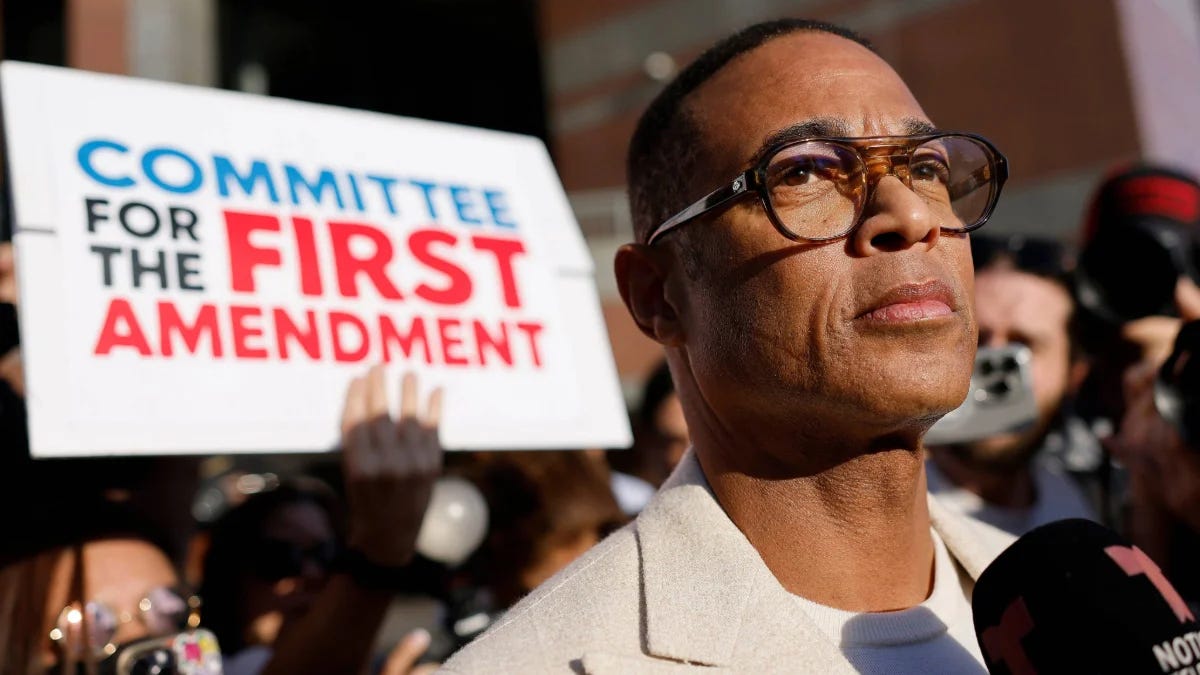
These weeks in Minneapolis have taught us something urgent about violence and visibility. People who stood in public spaces as legal observers — nurses, independent journalists, citizens — have found themselves targeted, arrested, labeled, and at times harmed by the very systems charged with public safety. Watching federal agents shoot, shove, and detain people who hold phones and press record isn’t just disturbing journalism techniques; it’s a moment that calls into question the fundamental conditions of public life and civic freedom in society.
In Minneapolis, independent journalist Georgia Fort livestreamed her own arrest while covering a protest. Don Lemon, too, was taken into custody after reporting on a demonstration. Both were there to observe and record, to hold power accountable with evidence — the essential work of a free press — and yet they were treated as criminals.
As a pastor, I have led worship services that were disrupted by protesters. People shouted. People refused to leave. Tensions ran high. I have stood at the pulpit with my heart racing, aware that the situation could turn volatile. There were moments when I wore a bulletproof vest beneath my vestments because prudence felt necessary in a world that has grown unpredictable.
And yet, no one was arrested. No federal agents stormed the sanctuary. No charges were filed. No one was labeled a terrorist. The disruption was treated for what it was: a conflict within civic life, handled with restraint and proportionality.
That contrast matters.
Don Lemon and Georgia Fort were arrested for doing what journalists have always done: bearing witness. Filming state power in motion. Arresting journalists and protestors is not crowd control. It is a clear escalation. It signals that visibility itself has become a threat.
What we are witnessing is not a renewed commitment to public safety. It is the consolidation of a political reality in which some disruptions are tolerated as free expression, while others are criminalized as existential danger, based not on behavior, but on whose presence unsettles power.
This is how propaganda works in practice.
It does not always rely on censorship. More often, it narrows who is allowed to be believed. It teaches the public to distrust its own eyes. It labels witnesses as extremists so the violence of the state can be reframed as defense. It creates a moral hierarchy in which certain lives are presumed innocent, while others must prove their humanity after they are already dead.
The arrests of independent journalists and activists are not isolated events. They sit alongside other truths we are being asked to ignore. More Epstein files have been released, reminding us—again—that the current president was deeply entangled with a convicted human trafficker. The record is not ambiguous. The system strains to normalize this, to minimize it, to treat it as background noise rather than a profound moral indictment.
This, too, is part of the pattern.
What is being enforced is not law, but unreality. A world in which power is insulated from consequence, while truth-tellers are disciplined. A world in which some crimes are endlessly investigated, while others are quietly absorbed. A world in which witnessing becomes dangerous, and silence becomes safer.
As a pastor, I am trained to take truth seriously as a moral commitment. In every tradition I know, truth is something we answer to, not something we manipulate when it becomes inconvenient. The Hebrew prophets warned of societies that “call evil good and good evil.” Jesus spoke of truth as that which sets people free. Buddhist teachers describe clear seeing as the beginning of liberation. None of these traditions imagine truth as optional.
So we must say this plainly: prosecuting witnesses while excusing state violence is not justice. Arresting journalists is not public order. It is the erosion of shared reality.
The danger we face is epistemic. It is the slow training of a population to stop trusting its own moral perception, to stop believing evidence, to stop insisting that our political leaders answer to truth. When that happens, violence no longer needs to hide. It simply needs to be repeated until it feels ordinary.
I am not interested in panic. I am interested in clarity.
Clarity tells us that grief is a sane response to what we are seeing. Clarity tells us that fear is understandable, but silence is not neutral. Clarity tells us that when witnesses are punished and lies are rewarded, the responsibility of the rest of us increases.
So today, I am asking us to do something deceptively simple and profoundly necessary, something I have asked of us before: refuse the distortion. Stay with what you know to be true. Trust the evidence. Name what is happening without theatrics and without surrender. Protect one another’s capacity to see clearly.
Authoritarian systems depend on isolation and doubt. They weaken when people remain grounded, connected, and unwilling to abandon reality.
Truth-telling is not extremism. Witnessing is not terrorism. Grief is not weakness.
And clarity—shared, steady, and embodied—remains one of the strongest forms of resistance we have.
We are in this together,
Cameron
Reflection Questions
Where have you felt pressure, external or internal, to doubt what you know to be true?
What helps you stay grounded in reality when public narratives feel distorted or manipulative?
Who are the truth-tellers and witnesses in your community right now, and how might you support them?
A Prayer for the Day
A Prayer for Clear Seeing
Holy One,
You who dwell in truth deeper than propaganda and stronger than fear,
steady us.

When the world asks us to doubt our eyes,
help us trust what we see.
When power demands our silence,
give us courage to speak plainly.
When grief feels heavy and confusing,
hold us close so we do not turn away from one another.

Protect those who bear witness.
Guard those who tell the truth at cost to themselves.
Preserve our shared reality when it feels under threat.

Make us people who refuse distortion,
who choose clarity without cruelty,
who love truth enough to defend it together.

Amen.
Spiritual Practice
Practicing Moral Clarity
Today, choose one intentional act of grounding in truth.
This might mean:
Watching primary-source footage rather than commentary (which is to say: other than corporate news sources like FOX News, CNN, MS Now, Facebook or Tiktok).
Reading journalism that names power honestly.
Speaking aloud what you know to be true with someone you trust.
Writing down what you witnessed this week so it cannot be rewritten later.
Do not rush to fix anything. Do not perform outrage. Simply practice staying present to reality.
Clarity is not passive. It is a discipline.
Upcoming Events That Might Be of Interest…
February 5, 2026 - Margaret Wheatley and and I are launching a new online course called “Leading with Spirit,” a six-session journey into soul-grounded leadership designed to deepen your trust in guidance, nurture perseverance, and rekindle imaginal wisdom for our fractured world. Take a look at the course outline. We are really excited and hope you can join! Scholarship are available if needed. Learn more here!
February 11th and 25, 2026 - Join Our “Building a Culture of Leadership Within Congregations” Cohort facilitated by Rabbi Benjamin Ross and me! A two-session course for ministers and faith leaders ready to strengthen how their congregations and ministries identify, develop, and support leaders. Learn more here.
March 17, 23, 31 and April 7, 2026 - Mark your calendars! Matthew Fox and I will be hosting another 4-part series on “Visions for the Common Good.” We are finalizing details now, and the registration page will open soon.
July 19-24, 2026 - Join me on retreat in the back-country of beautiful Wyoming. The Art of Wilding is a 5-Day Expedition for Women Leaders. We will spend the week reconnecting to nature, exploring our inner landscapes for change, and engage the wisdom of spiritual teachings. Click here to learn more.
I drafted a Strategic Framework for Congregations as we move into the coming years of increased authoritarianism around the world. If interested, you can download it here.
Fun Things My Friends Are Up To…
I get to work with such amazing, creative people. This section is my way of celebrating them—no paid promotions, just joy in what they’re creating.
The Pachamama Alliance is celebrating 30 years of extraordinary impact. I imagine I will have more to announce about this, but I am particularly appreciating this article on moving from “Me to We.”
I’ve recently discovered the work of Dr. Monica Gagliano who wrote “Thus Spoke the Plant.” Here is a great introduction to her work. I hope I can convince her to join us for an interview:
If you are a leader or member of a congregation looking for consulting support in visioning, planning, hiring or staffing, please consider Convergence.
Cameron, I read your column every day without fail. Your wisdom takes my breath away. How you can continue to come up with such deep and targeted reflections on a daily basis is beyond me. I first learned of you when our pastor began quoting from your columns and I now look forward to meeting you when you come to our church in Sonoma later this spring. Thank you for taking the time to share such insightful and wise reflections each day!
Thank you for sharing. Your words are very helpful.