

“Lord, make me an instrument of your peace. Where there is hatred, let me sow love.” — Prayer attributed to St. Francis of Assisi
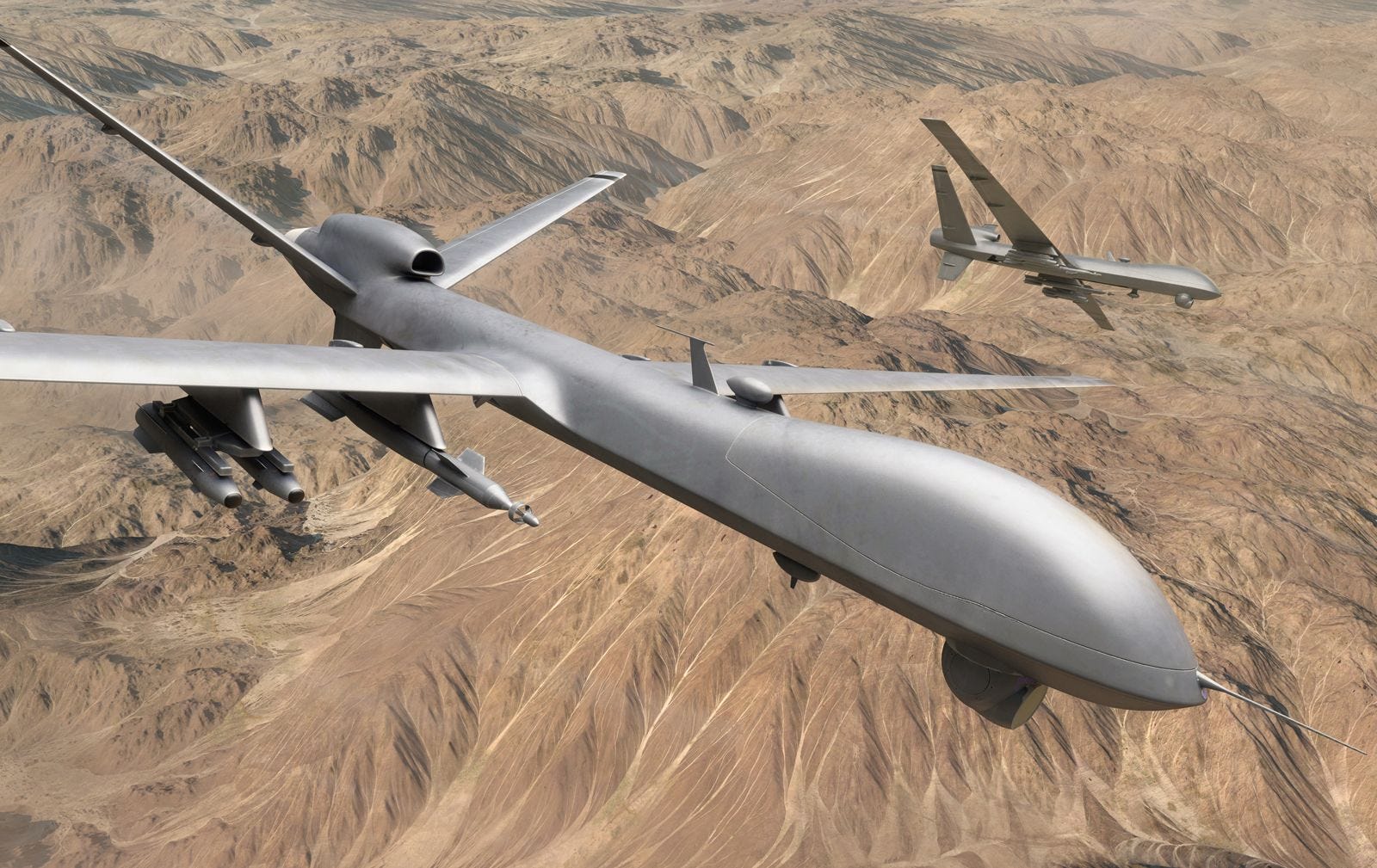
The war with Iran continues to expand, and with it comes a troubling realization. We are building a world where it has become cheaper to attack an enemy than to pursue peace.
Military spending across the globe has surged dramatically. Nations now spend roughly $2.7 trillion every year on their militaries. Analysts warn that number could climb to $6.6 trillion by 2035, nearly five times the peak of the Cold War.
Technology is accelerating the shift. A drone that costs $500 can destroy an $82.5 million fighter jet. In one recent strike, $234,000 in equipment caused $7 billion in damage. For every dollar spent on attack, defenders may lose tens of thousands in assets.
The economics of modern warfare are changing. It is becoming easier and cheaper to destroy than to protect.
But numbers only tell part of the story. Behind those calculations are bodies. A school in Minab reduced to rubble by a US military attack. One hundred sixty-five people killed, most of them children. A father standing in the dust holding what remained of his seven-year-old daughter, crying out to the sky in a language grief has spoken for centuries. Families in Tehran sleeping lightly, keeping their front doors unlocked so they can run to underground parking garages when the explosions return.
In just twelve days of fighting, more than 1,200 people in Iran have been killed, including hundreds of children. This is the real arithmetic of war.
We are creating a world where violence becomes economically efficient, where technology drives the cost of destruction lower and lower, while the patient work of peace—diplomacy, cooperation, trust-building—remains slow, expensive, and politically fragile.
Peace requires patience. War requires only a signal.
It can feel overwhelming to face a system this large. But spiritual traditions have always insisted that another way of being human remains possible.
Eight centuries ago, Francis of Assisi lived in a society that also believed power came through wealth and war. Francis himself was born into privilege. His father was a wealthy cloth merchant, and as a young man Francis dreamed of glory on the battlefield. He wanted to be a knight.
But war did something to him. After experiencing its brutality firsthand, Francis began to see the world differently. The suffering of the poor, the wounded, the forgotten—these realities pierced his heart. He walked away from the life his society expected him to live.
Francis gave away his wealth. He chose a life of radical simplicity. He embraced people others avoided. He believed the earth itself was a sacred family: Brother Sun, Sister Moon, Brother Wolf.
And during the Crusades, when Christians and Muslims were slaughtering each other in the name of God, Francis did something almost unthinkable. He crossed the battlefield. Unarmed. As a human being seeking to meet another human being.
Francis walked into the camp of Sultan Malik al-Kamil, expecting he might die for the attempt. Instead, the two men spoke. They listened. For a brief moment in the middle of a brutal war, two enemies chose relationship instead of domination.
Francis understood something that our modern systems still struggle to grasp.
Peace is not naïve.
Peace is courage.
The logic of our age insists that security comes through domination, through superior weapons, through faster and more efficient ways of destroying our enemies. But the witness of Francis, and of many other wisdom traditions, suggests true security begins when we recognize that every human life carries sacred worth.
The numbers in today’s headlines can make violence feel inevitable. Systems this powerful can make peace seem unrealistic. But history has never been shaped by systems alone. It has always been shaped by people whose moral imagination was strong enough to believe that violence was not the only option.
The world we are building today will be inherited by the children who survive it.
This raises a question we cannot avoid: Will we build a civilization where destruction is the cheapest option, or one where peace is worth the cost?
We are in this together,
Cameron
Reflection Questions
How do the economic incentives of modern warfare shape the choices nations make?
Why does peace often require greater political courage than war?
Where might we begin cultivating the moral imagination needed for a more peaceful world?
A Prayer for the Day
A Prayer for Peace
God of life,

In a world that measures power through weapons and destruction,
teach us the deeper strength of peace.

Open our hearts to the suffering hidden behind statistics.
Give us courage to challenge the systems that normalize violence.
And guide us toward relationships rooted in dignity, compassion, and justice.

May we become instruments of peace in a world that desperately needs it.

Amen.
Spiritual Practice
Walking the Way of Francis
Francis believed peace begins not with governments, but with the posture of the human heart.
Today, try a simple Franciscan practice.
1. Slow your pace.
Take a short walk outside if you can. Francis believed the earth itself was part of our spiritual family. As you walk, notice the life around you: the sky, the trees, the ground beneath your feet. Let the world remind you that life is interconnected and fragile.
2. Pray for those you have been taught to fear.
Francis crossed a battlefield to meet someone his society called an enemy. Take a moment to pray for people you have been told are “on the other side”—another nation, another religion, another political identity. Peace begins when we refuse to dehumanize one another.
3. Practice small peacemaking.
Before the day ends, do one small act that restores dignity or relationship. Offer kindness where tension exists. Listen where disagreement lives. Extend generosity where fear would normally close your hand.
Francis understood something that remains true today: Peace does not begin with treaties. It begins with people who decide to live as if every life is sacred.
Upcoming Events That Might Be of Interest…
My team and I launched a new experiment we are calling “The Commons.” It’s an online space centered around communities of practice: groups of people who share a common concern, set of problems, or passion for a topic, and deepen their knowledge and expertise by interacting on an ongoing basis. Join the community here.
STARTING THIS WEEK! March 17, 23, 31 and April 7, 2026, 7-8:30pm ET - Rev. Dr. Matthew Fox and I will be hosting another 4-part series on “Visions for the Common Good.” This series will include sessions with David Abram (cultural ecologist), Lynne Twist (global activist), Randy Woodley (Cherokee scholar and wisdom-keeper), and yours truly! All sessions are recorded, and you will get the link if you can’t make it. Learn more here.
March 26, 2026, 7–8:30pm ET – FREE WEBINAR - I’ll be joined by Ruth Dearnley, OBE, Founder and President of Stop the Traffik (London), for “Stop the Exploitation of Children: Disrupting Human Trafficking at Its Source.” As Board Chair of Stop the Traffik USA, this work is deeply personal to me. We cannot rescue our way out of trafficking; we must prevent exploitation by disrupting the systems and financial flows that profit from vulnerability—and congregations can play a powerful role in building community resilience. Ruth will share how technology and data are exposing trafficking networks globally, and how congregations can lead local awareness and prevention campaigns that reduce vulnerability and protect children. I hope you’ll join us. Learn more and register here.
March 28, 2026 - No Kings Protest! We are marching again. Mark your calendars and find the nearest protest site. Make your protest signs. Knit your red hats. Get your water bottles and sunscreen ready. We head back into the streets for peaceful protest on behalf of a more just world. I'll see you out there. Register here.
I drafted a Strategic Framework for Congregations as we move into the coming years of increased authoritarianism around the world. If interested, you can download it here.
Fun Things My Friends Are Up To…
I get to work with such amazing, creative people. This section is my way of celebrating them—no paid promotions, just joy in what they’re creating.
The Congregation of the Sisters of Saint Joseph of Peace filed a shareholder resolution with Palantir asking the company to publish a human rights impact assessment. Palantir is the AI software behind ICE, predictive policing, algorithm-determined drone killings, merging of private health data, and more. The sisters released a video explaining why they filed the proposal. They are now reaching out to Faith Leaders and asking them to sign the petition in support. The signatures need to be collected by/before March 23.
I have just discovered the coolest group! The All We Can Save Project grew out of the powerful climate anthology All We Can Save and has become a growing network of people committed to climate courage and community leadership. Their work reminds us that responding to the climate crisis isn’t only about policy or technology; it’s also about cultivating the relationships, imagination, and moral courage needed to protect and restore the living world. Check them out here: https://www.allwecansave.earth/
If you are a leader or member of a congregation looking for consulting support in visioning, planning, hiring or staffing, please consider Convergence.
I couldn’t help but think of Jimmy Carter reading this reflection and how differently he approached conflict with moral imagination. I know he’s not everyone’s favorite president but he is one of mine and for exactly that reason.
Thank you for sharing this powerful and very wise commentary. You touched my heart, mind, and soul. As a Congressional Appointee to the US Naval Academy, my dream was to serve our country as a career military officer. I grew up in a neighborhood of World War II and Vietnam War veterans. Through very unexpected circumstances initiated by my high school counselor, my life was put on a very different path and I was converted to pacifism through the American Friends Service Committee. "War is not the answer." There is a much better way to build strong, positive relationships across lines of difference. Your commentary is a word of truth.