

“You shall not oppress the stranger, for you know the heart of the stranger—having been strangers yourselves.”— Exodus 23:9
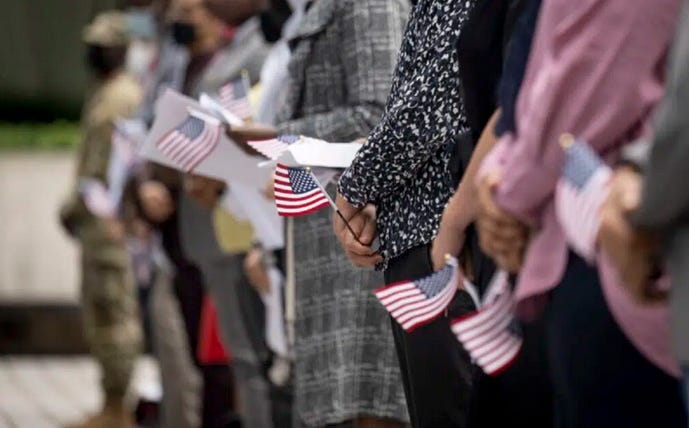
This week, the administration moved to revoke the legal residency of Haitian people who were granted protection after their country was devastated by natural disaster. Many of these families have lived in the United States for years. They have built lives, raised children, worked, paid taxes, and woven themselves into the fabric of their communities. They were invited here under the law. Now they are being told that their belonging was provisional all along.
This decision is being framed as policy. It is not. It is a moral act with a long history, and it deserves to be named honestly.
What is happening to Haitian communities is not an isolated immigration adjustment. It is a demonstration of how racism functions in this moment—both as a governing tool and as a governing value. It organizes power, legitimizes cruelty, and clarifies who is considered expendable.
As a tool, racism provides the administration with something it needs badly: distraction and cohesion. By directing public anxiety toward a racialized “other,” attention is pulled away—if we aren’t paying attention—from the consolidation of power and wealth happening elsewhere. Fear becomes the headline. Families become abstractions. Corruption recedes into the background while cruelty consumes the foreground. The two are not separate, but racism is the louder instrument, and it reliably works.
It also provides justification. When a group is framed as a threat—culturally, economically, demographically—the expansion of state violence can be narrated as protection. Deportations intensify. Surveillance grows. Civil liberties shrink. What is being built is not simply an immigration policy but a machinery of exclusion that strengthens executive power and normalizes its reach.
And racism mobilizes. It binds a political base by offering a simple promise: protection for “us” from “them.” Loyalty is secured not through shared flourishing, but through shared fear. Facts become negotiable. Harm becomes acceptable. Identity overrides conscience.
But to stop there would be to miss the deeper truth. Racism is not only being used. It is being affirmed.
For many within this movement, hierarchy is not a tactic; it is a worldview. The sorting of human worth is seen as natural order. Policies that exclude, punish, or uproot are not experienced as cruel but as corrective. They restore what is imagined to be rightfully owned by a chosen in-group.
From within that worldview, Haitian families are not neighbors who put down roots. They are permanently foreign. Their labor can be used. Their presence can be tolerated. But their belonging is never secure. Their lives remain conditional. When power decides it no longer needs them, disposability feels justified.
This is why the language around “temporary protection” is so dangerous. It teaches people to live for years under the illusion of safety while denying the possibility of permanence. It allows a nation to benefit from people’s contributions while withholding the moral recognition that makes those contributions matter. It is hospitality without covenant. Welcome without commitment.
The connection to corruption is not incidental. When a system trains itself to see whole groups of people as lesser or alien, empathy erodes. Rules loosen. Extraction becomes easier. The same imagination that permits self-enrichment also permits disposability. If some lives do not fully count, then the damage done to them does not fully register.
This is why racism functions like an operating system. It runs beneath the surface, shaping what policies feel reasonable, what suffering feels tolerable, and whose lives are protected when power is challenged. Corruption is not a contradiction to this system. It is one of its applications.
For people of faith, the spiritual danger here is not only injustice, but deformation. A society that repeatedly teaches itself that belonging can be revoked, that roots can be erased, and that families can be sacrificed for political gain eventually forgets how to recognize its own humanity. It learns to confuse dominance with order and cruelty with strength.
Grief is an appropriate response to this. So is anger. But beneath both lies a deeper call: to refuse the lie that some lives are provisional and others permanent; some protected and others expendable; some worthy of grief and others merely inconvenient.
What is being tested in this moment is not only immigration policy. It is the moral imagination of the nation. It is whether we will accept a world in which belonging is racialized and revocable, or whether we will insist—again and again—that dignity is not a favor granted by power but a truth that precedes it.
The Haitian families being targeted are not abstractions. They are teachers, caregivers, neighbors, and friends. They are living evidence that a different story is possible—one rooted in shared life rather than exclusion.
And that is precisely why they are being threatened.
The question before us is not whether this move is legal. The question is what kind of people we are becoming as it unfolds, and whether we will allow racism to continue operating as the moral engine of our public life.
This is not a peripheral issue. It sits at the center of who is allowed to belong, who is allowed to stay, and whose lives are treated as collateral.
What we do with that knowledge will shape more than policy. It will shape the soul of the nation.
We are in this together,
Cameron
Reflection Questions
Where have you noticed belonging becoming conditional—in policy, in language, or in everyday life?
What emotions arise in you as you consider families being uprooted after years of contribution and stability?
What practices help you resist becoming numb to cruelty while staying grounded and engaged?
A Prayer for the Day
A Prayer for Unconditional Belonging
Holy One,
You who crossed borders before we ever built them,
You who hear the cries of those made temporary in a world hungry for control,
Stay near to those whose lives are being uprooted by fear and power.

Strengthen our moral imagination when it is tempted to shrink.
Guard our hearts from learning to accept what should never be normal.
Teach us to see our neighbors clearly—not as threats, but as kin.

Give us courage to speak when silence feels safer,
and wisdom to act without becoming hardened by the very forces we resist.
May our communities become places where dignity is practiced,
and where belonging is not revoked when it becomes inconvenient.

Amen.
Spiritual Practice
The Unrevokable Circle
Take a piece of paper and draw a wide circle. Inside it, write the names of people, communities, or groups you consider part of “us.” Do not censor yourself.
Then ask, honestly:
Who did I include without hesitation?
Who did I hesitate to include?
Who did I leave outside the circle entirely?
Now, draw a second circle around the first. This outer circle represents belonging that cannot be revoked by policy, fear, or power.
Write into this second circle the names you initially hesitated to include—or left out.
Sit with the discomfort. Do not resolve it. Let your body notice what changes when belonging is widened rather than earned.
This is not about being “good.”
It is about retraining the imagination away from conditional worth.
Upcoming Events That Might Be of Interest…
TODAY! February 5, 2026 - Margaret Wheatley and and I are launching a new online course called “Leading with Spirit,” a six-session journey into soul-grounded leadership designed to deepen your trust in guidance, nurture perseverance, and rekindle imaginal wisdom for our fractured world. Take a look at the course outline. We are really excited and hope you can join! Scholarship are available if needed. Learn more here!
February 10, 2026, 12pm ET - My team and I are launching a new experiment we are calling “The Commons.” It’s an online space centered around communities of practice: groups of people who share a common concern, set of problems, or passion for a topic, and deepen their knowledge and expertise by interacting on an ongoing basis. I will be leading a book study on Brian McLaren’s book, Life After Doom. Register here for the onboarding call and to learn more.
February 11th and 25, 2026 - Join Our “Building a Culture of Leadership Within Congregations” Cohort facilitated by Rabbi Benjamin Ross and me! A two-session course for ministers and faith leaders ready to strengthen how their congregations and ministries identify, develop, and support leaders. Learn more here.
March 17, 23, 31 and April 7, 2026 - Mark your calendars! Matthew Fox and I will be hosting another 4-part series on “Visions for the Common Good.” We are finalizing details now, and the registration page will open soon.
July 19-24, 2026 - Join me on retreat in the back-country of beautiful Wyoming. The Art of Wilding is a 5-Day Expedition for Women Leaders. We will spend the week reconnecting to nature, exploring our inner landscapes for change, and engage the wisdom of spiritual teachings. Click here to learn more.
I drafted a Strategic Framework for Congregations as we move into the coming years of increased authoritarianism around the world. If interested, you can download it here.
Fun Things My Friends Are Up To…
I get to work with such amazing, creative people. This section is my way of celebrating them—no paid promotions, just joy in what they’re creating.
The Pachamama Alliance is celebrating 30 years of extraordinary impact. I imagine I will have more to announce about this, but I am particularly appreciating this article on moving from “Me to We.”
Tripp Fuller is hosting a book group on the work of Hartmut Rosa, a German sociologist first introduced to me by Dr. Andrew Root. Rosa’s work gets at the heart of why our culture feels so out of control and why slowing down won’t help. Watch a recording of Tripp and Matthew Segall nerd out about this here.
If you are a leader or member of a congregation looking for consulting support in visioning, planning, hiring or staffing, please consider Convergence.
Racism-fear cycle
feeds cruel acts, extracts, distracts.
While greed pulls strong strings.
...
That’s where true threats live.
Conditional communing,
disposable kin.
...
Will faith compass fail?
Will belonging be bargained?
Will our souls pass test?
It saddens me deeply that we as one of the most prosperous and secured nations on earth have let ourselves be driven by fear and scarcity.
I like your thoughts about Temporary Protected Status. That TPS leaves people in limbo about being fully integrated and accepted into community, fellowship and society. I hadn't thought about it like that. It keeps people in a condition of insecurity, wariness. Instability and fear for their future. What a sad way to have to live.