

“We are not called to be successful, but to be faithful.” — Mother Teresa
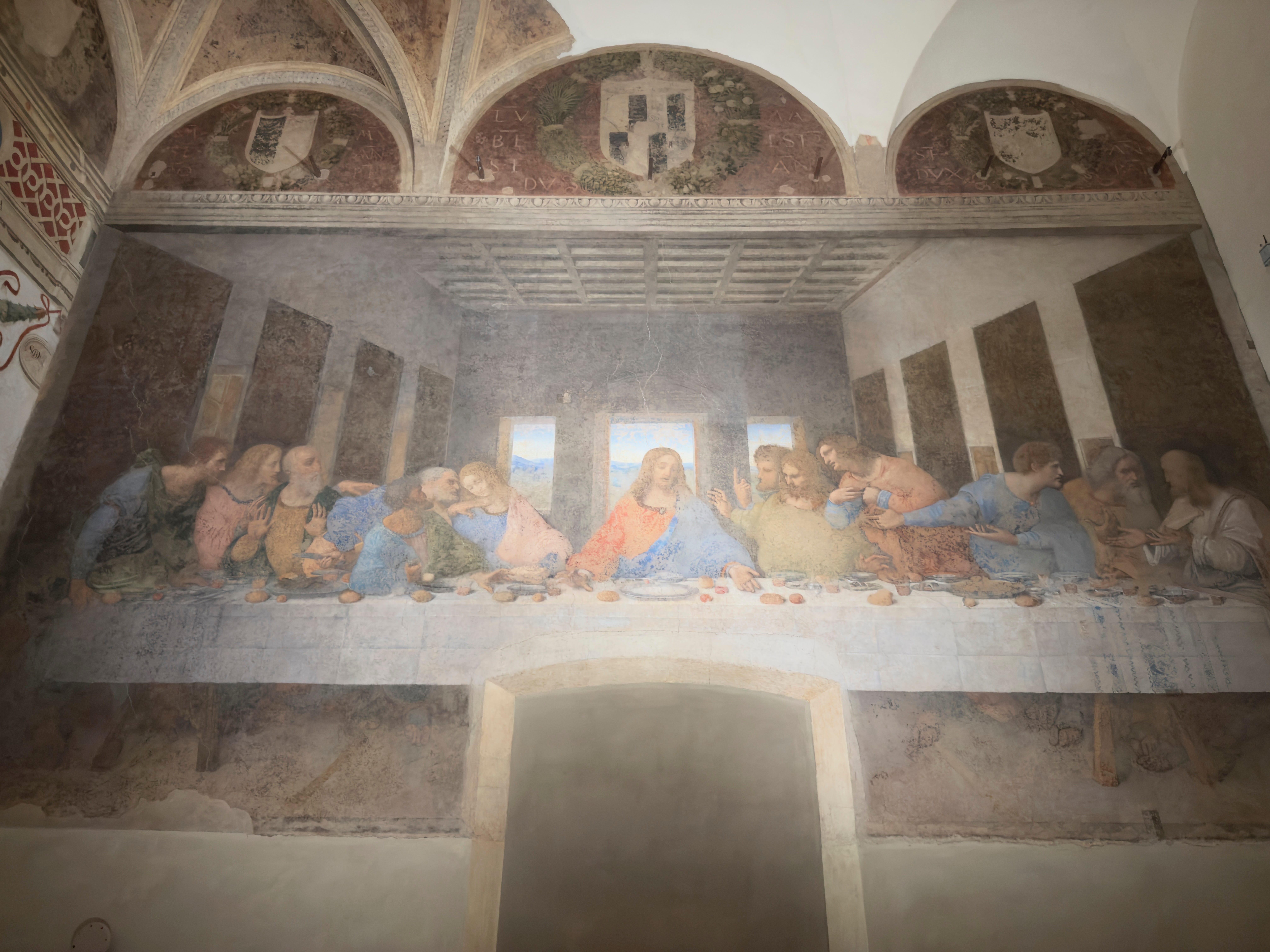
Over the weekend, I stood in front of Leonardo da Vinci’s “The Last Supper” painting in Milan, Italy.
This painting has been closed off for more than 20 years while restoration expert, Pinin Brambilla Barcilon1 restored and protected it. Being able to see it now feels special. I walked in feeling excited and respectful, ready to see one of the world’s most famous paintings.
But what I saw was not exactly what Leonardo painted. My guide called it a “ghost” of the original.
Leonardo tried a painting method that did not stick well to the plaster. The paint started to degrade sooner than he expected. Over time, the colors faded and details disappeared. What is left has been made stable, but not completely restored.
Then there is the door.
Years after it was painted, monks living in the monastery wanted easier access to the kitchen, so they cut a doorway right through the painting. Because of this, the lower part is missing, and you can no longer see the feet of Jesus.
You can still make out the scene: the way the disciples move, the tension in the room among them. The center of the painting still catches your attention.
But it is not whole.
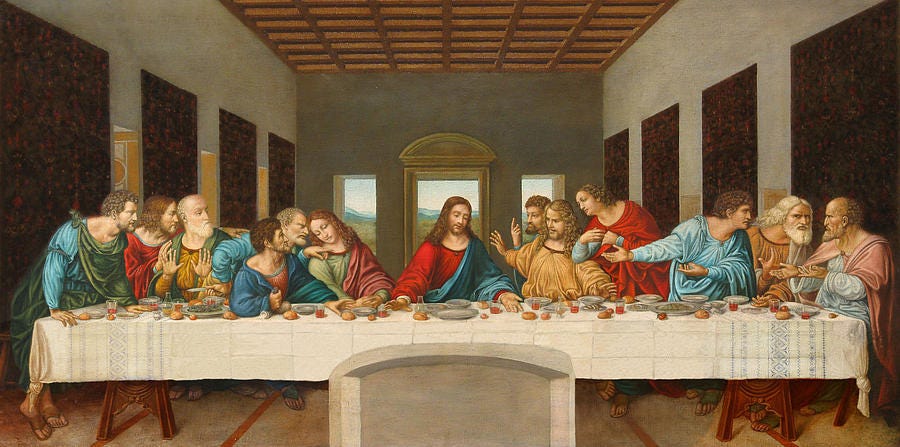
We know a bit about the original because Leonardo’s students made copies. These copies help us picture the rich colors, sharp details, and how complete the painting once looked.
But the original has been changed in ways that cannot be undone.
Standing there, I found myself thinking about how much of our theological imagination still depends on wholeness.
We are taught to look for purity, coherence, completion. We assume that what is most true is what is least altered. We imagine that the sacred is best encountered in what has not been touched by time, loss, or interruption.
But that is not the witness of the tradition. The central image of the Christian faith is not an untouched body. It is a broken one.
The resurrected Christ is not restored to an earlier state. The wounds remain. The body is changed, recognizable and yet not the same. The story does not move backward into perfection. It moves forward, carrying the marks of what has happened.
In other words, loss is not outside the life of God. It is taken up into it.
Julian of Norwich wrote, “All shall be well, and all shall be well, and all manner of thing shall be well.”2 She wrote this in a world that was far from whole. Her hope did not depend on things going back to how they were, but on the belief that meaning and goodness are not gone just because something has been lost.
That is what I felt in that room.
I did not feel a longing to restore the painting to its original form. Instead, I recognized that it still offers something real. The loss is clear. The damage cannot be denied. But the scene remains. It still brings people together. It still speaks.
There is a kind of incarnation in that. It is not about the divine entering a perfect form. Instead, it is about the divine staying present in a form changed by time, by human need, by carelessness, and by devotion.
We tend to imagine that God is most present where things are intact. But the tradition keeps pointing us elsewhere…toward bread that is broken, toward bodies that carry wounds, toward communities that are fractured and still called into being.
We do not encounter God by escaping what has been altered. We encounter God within it. This does not make loss easy. It does not remove grief. It does not ask us to pretend that what has been cut away does not matter. The missing feet matter. The lost color matters. What was once whole is no longer whole.
But the presence of God is not limited to what remains intact. It is found in what remains. And what remains is not simply something to preserve. It is something to tend, to be with in relationship.
This is how we take part in the ongoing work of creation. It has never been about keeping things perfect and unchanged. It is about bringing life forward through change, loss, and time.
Leonardo’s original painting will not return. But the story has not ended. What remains keeps shaping us. It keeps inviting us to respond. It becomes the ground where new beauty, meaning, and faithfulness can grow.
The same is true for us. We tend what remains as an act of trust. We care for what is still here, even as we make room for what has not yet taken shape. That is where God meets us.
That is where the new artistry begins.
We are in this together,
Cameron
A Note from Cameron
I am away for the next two weeks on a trip to Italy. A little work and a little fun. I will do my best to send out meditations, but if I miss some days, don’t worry. I will be back in the swing when I return.
Reflection Questions
What in your life feels like a “ghost” of what it once was?
Where are you tempted to dismiss something because it is no longer whole?
What remains that is still worth your attention and care?
A Prayer for the Day
A Prayer For What Remains
God of truth,
we long for things to be whole.

We grieve what has been lost,
what has changed,
what cannot be restored.

Help us not turn away.

Teach us to see what remains.
To honor what still carries life.
To care for what has endured.

Even in fragments,
even in altered form,
help us recognize what is still sacred.

Amen.
Spiritual Practice
Standing Before What Is Still Here
Set aside twenty minutes if you can. This is not a quick exercise. It is a way of seeing.
Begin by bringing to mind something in your life that has changed in a way you did not choose. It could be a relationship that is no longer what it was. A community that has shifted. A part of your own identity that feels altered. Something that once felt whole and now does not. Name it specifically. Do not edit it. Do not rush past it.
Now, stay with it long enough to feel the loss.
What is no longer here?
What has been cut away?
What do you miss?
Let yourself grieve it honestly. This matters. Do not skip this step. When you are ready, shift your attention.
Ask a different question: What remains?
Be precise. Not what you wish remained. Not what you hope will return. What is actually still here? Name it. It may be small. It may feel partial. It may not look like enough. Stay with it anyway.
Now, take one more step. Place yourself in relationship to what remains.
Ask: What does this ask of me now?
What kind of attention does it require?
What kind of care?
What kind of presence?
Sit with that question until something concrete emerges.
Then, if it helps, open your hands physically in front of you. In one hand, imagine what has been lost. In the other, what remains. Hold both. Do not try to resolve the tension between them. This is the place where most of us want to rush forward, to move on, to make meaning too quickly. Stay here instead. This is where faith deepens.
Finally, close with a simple commitment: I will tend what remains.
Carry that into the day as a way of moving through the world. Return to it when you feel the pull to compare the present to the past or to dismiss something because it is no longer whole.
This is how we participate in the ongoing work of creation.
Upcoming Events That Might Be of Interest…
My team and I launched a new experiment we are calling “The Commons.” It’s an online space centered around communities of practice: groups of people who share a common concern, set of problems, or passion for a topic, and deepen their knowledge and expertise by interacting on an ongoing basis. Join the community here.
May 27, 2026, 12pm ET - FREE WEBINAR - I will be hosting an online experience titled “Reclaiming the Power of Imagination: A live experiential webinar with Jackie Sussman." Jackie, a psychotherapist, author, and leading expert in Eidetic Image Psychology, has spent over forty years helping leaders and individuals unlock creativity, uncover hidden strengths, and move through limiting patterns. During this session, she will lead a live Eidetic process shaped by mythic imagery, offering a direct experience of the work. REGISTER HERE.
On July 19-24, 2026, I’ll be leading a Women’s Wellness Retreat in the Wind River Mountains of Wyoming, and I’d love to extend the invitation to you. We’ll spend five days off the grid, riding horses through wide open landscapes, sharing meals, and creating space to slow down enough to hear ourselves think again. This retreat is about returning to yourself, settling your nervous system, letting go of what you’ve been carrying, and getting clearer about what matters now. The group will be small (no more than 10 women), and we’ll move at a steady, spacious pace, with plenty of room for both conversation and quiet. I hope you’ll consider joining us.
I drafted a Strategic Framework for Congregations as we move into the coming years of increased authoritarianism around the world. If interested, you can download it here.
Fun Things My Friends Are Up To…
I get to work with such amazing, creative people. This section is my way of celebrating them—no paid promotions, just joy in what they’re creating.
My colleague, the amazing Rev. Anna Golladay, is hosting another online training in Protest and Action Chaplaincy. This course offers a framework for providing compassionate, grounded spiritual care during protests, advocacy gatherings, and social movements. Drawing from a variety of faith traditions and critical social justice theory, it equips chaplains, pastors, and spiritual leaders to respond with integrity, purpose, and preparedness. LEARN MORE HERE.
If you are a leader or member of a congregation looking for consulting support in visioning, planning, hiring or staffing, please consider Convergence.
https://en.wikipedia.org/wiki/Conservation-restoration_of_Leonardo_da_Vinci%27s_The_Last_Supper#Pinin_Brambilla_Barcilon
Julian of Norwich, Revelations of Divine Love, trans. Elizabeth Spearing (London: Penguin Classics, 1998).
Broken, parts missing...
goodness stays, story goes on.
Holy whole enough.
Have a wonderful time!