

“Be joyful though you have considered all the facts.” — Wendell Berry, “Manifesto: The Mad Farmer Liberation Front”
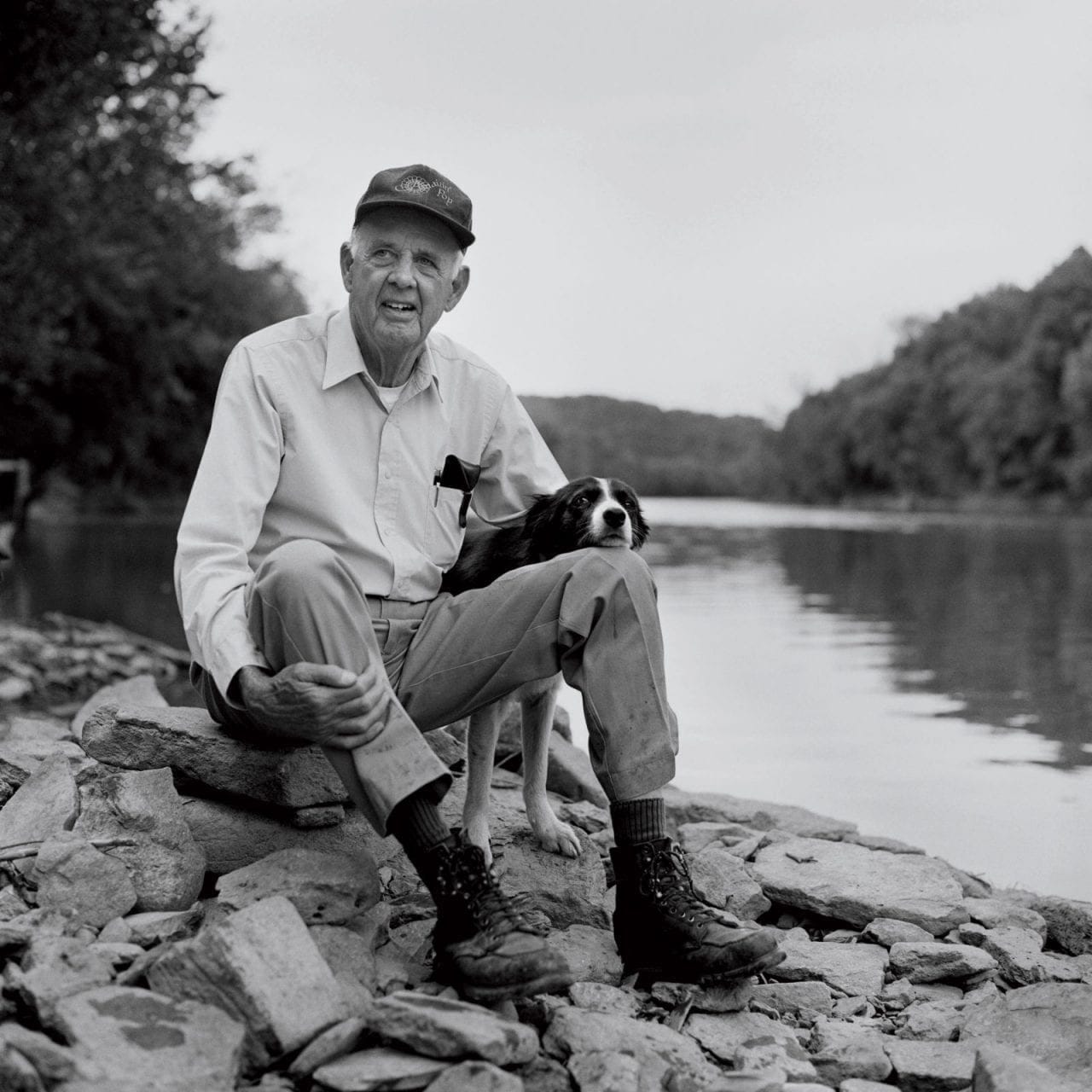
Wendell Berry passed away this week at his home in Port Royal, Kentucky. He was ninety-two. His daughter Mary confirmed his death and said, “There’s not enough I could say about him to do him justice.”1
I understand that feeling myself. Berry has been a companion to me for years. He was a poet, novelist, essayist, farmer, activist, and teacher. I would also call him a theologian, even if he never used that title. He spent his life asking important questions about how we live on this Earth, how we treat each other, what our economies say about our values, and whether we can see creation as a gift instead of just a resource. Berry’s theology had dirt under its fingernails.
After spending years studying, traveling, and teaching elsewhere, he came back to Kentucky and settled on a farm near Port Royal. He stayed there, farming, writing, raising a family, walking the same woods, and watching the same river. Many years later, he said life there moved “from one revelation to another,” because the place was still “inexhaustibly beautiful and wonderful.”
From his small part of Kentucky, Berry saw something our culture still seems to miss: we cannot separate the problems facing people from what we do to the Earth. In his 1970 essay “Think Little,” he wrote about war, racism, and environmental destruction, and said that “the separation of these three problems is artificial.” He believed their common source was “the mentality of greed and exploitation.” More than fifty years later, that sounds less like a comment and more like a prediction.
Berry saw industrial culture separate things that should stay connected. Food lost its link to soil. Consumers lost touch with farmers. Wealth lost its tie to responsibility. People lost their connection to the places that support them. He also believed Christianity often lost its connection to the material world.
In The Unsettling of America, he said modern industrial society is built on “radical disconnections” between body and soul, marriage and community, and community and Earth.2 His life’s work was putting the relationships back together.
He famously wrote, “Eating is an agricultural act.”3 With those words, dinner becomes a kind of theology. The food on our plate connects us to soil, water, weather, farmers, animals, labor, transportation, and choices about how we treat the Earth.
Berry thought Christianity should make us pay attention to those relationships. In a 2004 interview, he said that if Christians really believed the scriptures teach we live by God’s breath and exist in God, the effects on our economy would be “just devastating.” He argued that faith should lead to “an entirely generous and careful economic life.”4
If the world shares in the breath of God, then no decision is just about economics. How we farm matters. How we work matters. How we spend money matters. What we take from the Earth matters. What we throw away matters.
Berry also learned something important from Buddhism. He once said that learning about the Buddhist idea of Right Livelihood filled “a huge hole” in the Christianity he knew. Your spiritual life cannot be separated from how you make a living or what your work asks of the world.
His prophetic voice was sometimes fierce because he saw what exploitation leads to. “Exploitation leads, with perfect logic, to exhaustion,” he said.
We know that exhaustion now. We see it in soil worn out by industrial farming, in warming oceans, and in mountains stripped bare. We see it in tired workers and parents, in communities that have lost their strength, and in lives focused on consuming but never feeling satisfied.
Berry didn’t give us a big plan to fix everything. His answers were always local. Grow something. Get to know your neighbors. Care for a place. Protect the soil. Make things with care. Accept limits. Do work that doesn’t harm the things life depends on. And when despair came, he went outside.
In “The Peace of Wild Things,” Berry admitted that he too sometimes woke at night frightened about the world and his children’s future. His response was to go where the heron fed and the wood drake rested. There, beneath what he called the “day-blind stars,” he could “rest in the grace of the world.” He wasn’t running from reality. He was returning to a reality bigger than despair.
That may be the Berry teaching I need most now. He spent decades warning us about what was coming, lived to see much of it happen, and kept planting anyway. He kept farming. He kept writing. He kept loving one particular place. He kept insisting that another way of living remained possible.
He also left us with a message that feels almost like a blessing for this moment: “Practice resurrection.”5
Wendell Berry has returned to the Earth he loved. Now his work belongs to us. And there is still planting to do.
We are in this together,
Cameron
Reflection Questions
What place has formed you, and what responsibilities come with belonging to that place?
Where in your life have you accepted exhaustion of yourself, other people, or the Earth as simply the price of getting what you want?
What would it mean for you to “practice resurrection” in the particular place and community where you live?
A Prayer for the Day
A Prayer For the Grace of the World
Holy Mystery,

Today we give thanks for Wendell Berry.

For the Kentucky soil he loved, the words he gave us, the questions he would not stop asking, and the stubborn hope that kept him farming, writing, protesting, planting, and paying attention.

We give thanks for a life that reminded us that creation is not scenery. It is our home.

Forgive us for the ways we have forgotten.

We have treated soil as dirt, forests as timber, mountains as minerals, animals as commodities, and people as labor.

We have built economies that exhaust the very lives upon which they depend.

Teach us another way.

Help us become faithful to particular places and particular people. Teach us to know where our food comes from and where our water goes. Give us the patience to repair rather than discard, to cultivate rather than consume, to stay long enough for a place to become beloved.

When despair for the world grows in us, lead us back to the living world.

May we find still water.

May we notice the heron.

May we remember the stars.

And having rested for a while in the grace of the world, may we return to the work that love requires.

May Wendell Berry rest now in the Earth he loved.

And may those of us who remain become worthy members of this beautiful community of life.

Amen.
Spiritual Practice: Practicing Resurrection
Berry’s spirituality was never primarily abstract. He kept returning to the particular: this farm, this river, this meal, this neighbor, this patch of soil.
So today, don’t try to save the world. Choose one small piece of it to love. Go outside and walk slowly through the place where you actually live. Leave your phone behind if you can. Don’t count your steps. Don’t listen to anything. Don’t turn the walk into exercise.
Pay attention.
Find one living thing you normally pass without noticing. Perhaps it is a tree, a creek, a patch of weeds, a bird, a garden, an insect, or the soil beneath your feet. Stay there for a while.
Ask yourself what you actually know about it. Do you know the tree’s name? Do you know where the creek begins or where it goes? Do you know what birds live near your house? Do you know what grew on this land before your neighborhood was built? Do you know whose ancestors lived here before yours arrived? Let curiosity become relationship.
Then ask a more Berry-like question: What does this place need from me?
Maybe the answer is nothing dramatic. Pick up some trash. Plant something native. Learn where your food comes from. Support a local farmer. Repair something instead of replacing it. Meet a neighbor. Use less poison on your lawn. Sit outside long enough to notice who else lives there. Or perhaps the answer is simply to love the place more consciously.
Berry spent a lifetime teaching that care grows from affection. We protect what we have learned to love.
Before you go inside, stop once more. Look around. This is not the environment. This is where you live. And for whatever years you are given here, you belong to it.
Practice resurrection by helping something live.
Upcoming Events That Might Be of Interest…
My team and I launched a new experiment we are calling “The Commons.” It’s an online space centered around communities of practice: groups of people who share a common concern, set of problems, or passion for a topic, and deepen their knowledge and expertise by interacting on an ongoing basis. Join the community here.
September 8, 2026, 12:30 - 1:30pm ET, ONLINE EVENT with NY Times Best-Selling author and journalist, Sarah Wilson!!! Sarah has just published her latest book I Eat The Stars: How to Live Fully and Beautifully in a Collapsing World. Join us for this one hour conversation where we will talk with Sarah about how we face collapse, how we find beauty and who we can become in these challenging times. Scholarships are available. REGISTER HERE.
September 8, 2026, 7-9pm ET, ONLINE EVENT - I’ll be hosting a powerful online gathering on The Black Madonna: Sacred Wisdom for a World in Crisis with Matthew Fox, Alessandra Belloni, and Christena Cleveland. We will explore the Black Madonna as a symbol of resilience, liberation, sacred feminine wisdom, and healing in a fractured world through conversation, story, music, and spiritual reflection. If you feel drawn toward a deeper encounter with the Divine Feminine and the ancient traditions that continue to nourish movements for justice and wholeness, I hope you’ll join us. Learn more and REGISTER HERE.
September 14, 7-8:30pm ET ONLINE EVENT - I’m delighted to share that Dr. Margaret Wheatley is releasing a newly updated edition of her beloved book Perseverance: A Companion for the Journey this October. Written for those committed to serving the world with compassion in difficult times, the book offers daily wisdom and practical guidance for navigating grief, anger, exhaustion, and uncertainty while remaining rooted in love, courage, and presence. Meg and I will be in conversation to explore what perseverance looks like in this moment of history and how we can sustain ourselves for the long work ahead. I hope you’ll join us for what promises to be a deeply meaningful conversation. REGISTER HERE.
September 17, 2026, 7-8:45pm ET - I will be joining Jackie Sussman for an online session on practicing eidetics as a part of our “Reclaiming the Power of Imagination” monthly series. Eidetic Imagery is a powerful tool for pastors, denominational leaders, coaches, and spiritual directors working with others, and for individuals seeking deeper integration and healing in their own lives. Jackie is a psychotherapist, author, and leading expert in Eidetic Image Psychology, and has spent over forty years helping leaders and individuals unlock creativity, uncover hidden strengths, and move through limiting patterns. During this session, she will lead a live Eidetic process shaped by mythic imagery, offering a direct experience of the work. REGISTER HERE.
October 6, 2026 - 7-8:30pm ET, ONLINE EVENT - Matthew Fox and I are teaming up again to launch a series called Journeying with the Mystics. The mystics have always emerged in times of uncertainty. They appear when old certainties are crumbling, when institutions no longer provide easy answers, and when people find themselves longing for a deeper experience of the Sacred. Join us for an 18-session exploration of the teachings of St. John of the Cross, Thomas Merton, Hildegard of Bingen, Kabir and Rumi, Meister Eckhart and more. This is more than a lecture series. It is an invitation into a living spiritual journey. REGISTER for the first session HERE!
October 18-21, 2026 - PREACH! 2026 Conference- I’ll be co-hosting PREACH in Minneapolis with Church Anew, a new gathering for preachers, storytellers, worship leaders, and spiritual communicators navigating what it means to speak with clarity, compassion, and courage in a changing world. If you’ve sensed that the preaching moment has changed and are longing for thoughtful community and renewed imagination for this work, I hope you’ll join us.
November 10, 7-8:30pm ET - I’ll be joined by theologian, writer, and professor Dr. Debra Rienstra for a special ONLINE conversation on Refugia Faith. In ecology, refugia are small places where life survives amid disruption, pockets of resilience from which life can eventually regenerate and spread. Debra invites us to consider what this might mean spiritually in an age of climate instability, political turmoil, institutional decline, and profound uncertainty. What if our congregations, communities, relationships, and even our own lives could become refugia, places where courage, compassion, beauty, wisdom, and possibility are protected and cultivated for whatever comes next? I hope you’ll join us for this timely and deeply hopeful conversation. REGISTRATION COMING SOON!
Fun Things My Friends Are Up To…
I get to work with such amazing, creative people. This section is my way of celebrating them—no paid promotions, just joy in what they’re creating.
My dear friend, Rev. Shawna Bowman has just launched a new podcast with musician Jennifer Knapp called “My Wise Friend Podcast.” They talk about it this way: “You might know Jennifer from her years as a touring musician and songwriter, weaving stories and songs together across the country. You might know Shawna from their work as an artist, speaker, and community leader exploring the intersection of spirituality, justice, and creativity. While our daily work looks different, we share a deep love for real talk, deep questions, and finding wisdom in unexpected places.” I am so excited about this! I hope you will check it out and support them. https://www.patreon.com/cw/mywisefriendpodcast
I’m delighted to celebrate the upcoming release of Wisdom Church: Abundant Life for Aging Congregations by my colleague, Rev. Dr. Anna Hall. Rather than seeing aging congregations as communities in decline, Anna invites us to recognize them as communities rich with wisdom, purpose, and possibility. Her book offers a hopeful vision for moving beyond anxiety about the future and embracing the unique gifts of older adults as beloved children of God. If your congregation is navigating these questions, this is a resource well worth reading. You can preorder the Kindle edition now, with delivery on August 17: https://www.amazon.com/Wisdom-Church-Abundant-Aging-Congregations-ebook/dp/B0HBXGYTWC
Starting again on September 7 for every Monday, 12pm ET - ONLINE WRITING GROUP - My dear friend, Meryl Marshall-Daniels, is leading a writing group open to all. This is a simple and spacious writing circle for people who want time to listen inwardly and put words on the page without overthinking, performing, or polishing. Meryl offers a prompt designed to invite reflection, imagination, and attunement to what is already alive within you. The practice honors writing as a way of listening, of letting images, memories, questions, and insights surface in their own time. Learn more here.
If you are a leader or member of a congregation looking for consulting support in visioning, planning, hiring or staffing, please consider Convergence.
https://apnews.com/article/wendell-berry-obit-d20b66bb8a1d298153f760f30662a4f7
Wendell Berry, “The Body and the Earth,” in The Unsettling of America: Culture & Agriculture (Sierra Club Books, 1977), p. 143
Wendell Berry, “The Pleasures of Eating,” originally published in What Are People For? (North Point Press, 1990).
Wendell Berry, interview with Rose Marie Berger, Sojourners, July 2004.
Wendell Berry, “Manifesto: The Mad Farmer Liberation Front,” Farming: A Hand Book (1970); later collected in Collected Poems: 1957–1982, pp. 151–152.
This is a beautiful tribute and a refreshing read. Thank you so much. What a thought that Wendell, Dolly, and Gloria are now all resting in the peace of wild things, leaving us with their wildness, their wisdom, and their courage, I pray.
Thank you Cameron for your tribute to Wendell Berry. Coming from a farming background I have appreciated his work over the years. Gloria Steinem just died at 92 too...there must have been something in the water in those days that had created these activists who had such an affect on my life.