

“I promise to serve humanity in the name of God. I promise to refrain from violence and from taking revenge.” — Oath of the Khudai Khidmatgar
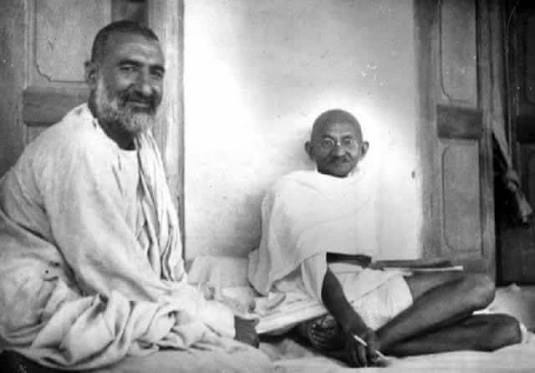
Today is October 2, which marks both the birthday of Mohandas Gandhi and the International Day of Non-Violence. While Gandhi is rightly remembered, I am thinking about one of his closest friends—a Muslim leader whose remarkable experiment in nonviolence is much less known to most Americans.
Khan Abdul Ghaffar Khan was born in 1890 among the Pashtuns living in the mountains between what are now Pakistan and Afghanistan.1 His culture valued courage, honor, loyalty, and hospitality, but also had deep-rooted feuds and traditions of revenge that kept violence going for generations. British colonial rule brought its own violence and humiliation.
Ghaffar Khan realized that freeing his people meant more than ending British rule. They needed education, social change, and a new idea of strength. He opened schools and went from village to village, urging people to end feuds, educate their children, and help their communities. In 1929, this work became the movement he is best known for: the Khudai Khidmatgar, or “Servants of God.”
Eventually, about 100,000 people joined. They wore uniforms, marched, and drilled, organizing themselves into disciplined groups. In photos, they look like an army, but they carried no weapons.
Before joining, members made serious promises about how they would live. The wording of the oath changed at times, but the meaning stayed the same. They pledged to serve humanity in God’s name, to avoid violence and revenge, to forgive those who hurt them, to stay out of feuds, to live simply, and to serve without expecting anything in return.
When I first heard about this group, what impressed me most was their discipline and practice. They drilled, prepared, and took action.
We know why soldiers drill. No army sends people into battle with just a pamphlet about courage and hopes for the best. Soldiers practice because fear affects everyone. When chaos breaks out and there is no time to think, people rely on what they have practiced until it becomes instinct.
Ghaffar Khan saw that peace works in a similar way. It is easy to believe in nonviolence when no one is hurting you. It is much harder when someone humiliates you, scares your children, kills someone you love, or threatens what matters most to you. In those moments, a general wish for peace may not last against the rush of anger and fear.
So the Servants of God prepared themselves ahead of time. Their discipline came from Ghaffar Khan’s Muslim faith. Some people say his commitment to nonviolence came from Gandhi, but Ghaffar Khan understood it through Islam. He drew on sabr, the Quranic value of patience and steadfastness, as well as forgiveness, service, courage, and submission to God. The name Khudai Khidmatgar showed what the movement was about: serving God’s creation was serving God.
This is a Muslim story I wish more people knew. In the West, we often connect organized nonviolence with Gandhi or Martin Luther King Jr., while Islam is too often seen through stories of extremism and terrorism. Yet here were tens of thousands of Muslim Pashtuns promising before God to refuse revenge, even when they were beaten, jailed, or attacked.
Their nonviolence was active, not passive. They stood up to British colonial rule, organized communities, and built schools. They cleaned villages, settled disputes, and challenged customs that kept people in poverty and cycles of revenge. Ghaffar Khan was jailed many times and spent years behind bars. He knew that refusing violence can take more courage than committing it.
The setting of his story feels especially meaningful this week. Pakistan has once again launched airstrikes across the Afghan border in Kunar and Helmand provinces.2 Pakistan says it was targeting militants after deadly attacks inside its borders. Afghan officials report civilian deaths, and the United Nations says children were among those killed.
Almost a hundred years after the Khudai Khidmatgar started organizing in this border region, people there still live with violence, fear, revenge, grief, and ongoing struggles over security.
I do not want to suggest that Ghaffar Khan gives us a simple answer to the conflict happening there now. The history and politics are much too complex for that, and people living through war deserve more than easy moral lessons from afar. Still, his life leaves us with a question:
What are we practicing before the provocation comes?
Most of us practice something every day, even if we do not call it practice. We replay arguments in our minds, hold onto resentments, and revisit stories that confirm our dislike for others. We take in media that keeps us on edge. Over time, these reactions become habits. Then, when something happens, we wonder why anger comes so fast.
Spiritual traditions teach that we must build character before we are tested. That is why people pray every day instead of waiting for disaster to start. It is why Buddhists practice compassion, Christians practice forgiveness, Muslims fast, Jews keep Sabbath, and contemplatives return to silence again and again. We are training ourselves in ways of living that we hope will help us when life gets hard.
Maybe this is what Ghaffar Khan teaches us on the International Day of Non-Violence: peace cannot last on admiration alone.
If I want to have patience when someone makes me angry, I need to practice patience when things are easier. If I want courage when I am afraid, I need to build courage before a crisis. If I hope to resist revenge after being hurt, I need a deeper commitment already inside me.
The Servants of God understood this so well that they practiced for it. They knew challenges would come and wanted to be ready for them. That seems like good advice for us too.
We are in this together,
Cameron
Reflection Questions
What response have you been practicing so regularly—anger, contempt, patience, curiosity, forgiveness—that it is becoming increasingly automatic?
When you feel attacked or humiliated, what usually happens inside you before you have time to think?
What quality would you want available to you in your next moment of genuine conflict, and how could you begin practicing it now?
A Prayer for the Day
A Prayer To Train Us in Peace
Merciful God,

We pray for peace
while practicing so many things
that make peace impossible.

Teach our bodies another way.

Train us in patience
before anger arrives,
in courage before fear takes hold,
in mercy before we are wounded.

When revenge feels righteous,
give us strength enough to refuse it.

When another becomes our enemy,
help us remember their humanity
without surrendering truth or justice.

Make us servants of what gives life.

May the peace we desire
become the peace we practice.

Amen.
Spiritual Practice: Rehearse Another Response
Choose one situation that reliably provokes you. Do not choose your deepest wound. Choose something ordinary enough to practice with: a difficult colleague, a political conversation, a family tension, someone whose social-media posts reliably raise your blood pressure.
Imagine the next encounter in some detail. Notice the response you usually rehearse in your head.
Then rehearse another one.
Decide beforehand how you want to enter the conversation. Perhaps you will slow your breathing before answering. Maybe you will ask one sincere question before making your argument. You might decide not to use the sentence you know will wound the other person even though it would feel satisfying to say it.
Practice the response several times before you need it. This is not pretending conflict does not exist. Ghaffar Khan trained people precisely because conflict was real.
The point is to decide who you want to be before provocation makes the decision for you.
Upcoming Events That Might Be of Interest…
My team and I launched a new experiment we are calling “The Commons.” It’s an online space centered around communities of practice: groups of people who share a common concern, set of problems, or passion for a topic, and deepen their knowledge and expertise by interacting on an ongoing basis. Join the community here.
October 6, 2026 - 12:30 - 1:30pm ET - FREE ONLINE BOOK CLUB - For the next 5 weeks, I am hosting a book club where we will read Fr. Gregory Boyle’s “Cherished Belonging: The Healing Power of Love in Divided Times.” Father Gregory Boyle, founder of Homeboy Industries, has spent decades building community among people whom society has often discarded. In Cherished Belonging, he draws on those relationships and stories to explore what might happen if we stopped sorting people into categories of worthy and unworthy, us and them. Don’t worry if you don’t have time to read the book. We always have incredibly rich conversations. All are welcome. RSVP Here.
October 6, 2026 - 7-8:30pm ET, ONLINE EVENT - Matthew Fox and I are teaming up again to launch a series called Journeying with the Mystics. The mystics have always emerged in times of uncertainty. They appear when old certainties are crumbling, when institutions no longer provide easy answers, and when people find themselves longing for a deeper experience of the Sacred. Join us for a 24-session exploration of the teachings of St. John of the Cross, Thomas Merton, Hildegard of Bingen, Kabir and Rumi, Meister Eckhart and more. This is more than a lecture series. It is an invitation into a living spiritual journey. REGISTER for the first session HERE!
October 15, 2026, 7-8:45pm ET - I will be joining Jackie Sussman for an online session on practicing eidetics as a part of our “Reclaiming the Power of Imagination” monthly series. Eidetic Imagery is a powerful tool for pastors, denominational leaders, coaches, and spiritual directors working with others, and for individuals seeking deeper integration and healing in their own lives. Jackie is a psychotherapist, author, and leading expert in Eidetic Image Psychology, and has spent over forty years helping leaders and individuals unlock creativity, uncover hidden strengths, and move through limiting patterns. During this session, she will lead a live Eidetic process shaped by mythic imagery, offering a direct experience of the work. REGISTER HERE.
October 18-21, 2026 - PREACH! 2026 Conference- I’ll be co-hosting PREACH in Minneapolis with Church Anew, a new gathering for preachers, storytellers, worship leaders, and spiritual communicators navigating what it means to speak with clarity, compassion, and courage in a changing world. If you’ve sensed that the preaching moment has changed and are longing for thoughtful community and renewed imagination for this work, I hope you’ll join us.
November 10, 7-8:30pm ET - I’ll be joined by theologian, writer, and professor Dr. Debra Rienstra for a special ONLINE conversation on Refugia Faith. In ecology, refugia are small places where life survives amid disruption, pockets of resilience from which life can eventually regenerate and spread. Debra invites us to consider what this might mean spiritually in an age of climate instability, political turmoil, institutional decline, and profound uncertainty. What if our congregations, communities, relationships, and even our own lives could become refugia, places where courage, compassion, beauty, wisdom, and possibility are protected and cultivated for whatever comes next? I hope you’ll join us for this timely and deeply hopeful conversation. REGISTER HERE!
December 15, 7-8:30pm ET - FREE WEBINAR - I will be joined by Dr. Charissa Mikoski, Assistant Professor of Research and Hartford Institute for Religion Research for a presentation on “The State of American Congregations: What the Latest Data Tell Us.” This webinar explores findings from the 2025 Faith Communities Today survey, including changes in worship attendance, congregational vitality, finances, volunteering, programming, and leadership. It will also examine what more than 24,000 individual attenders tell us about participation and their experiences of congregational life. Together, these findings offer a picture that is neither simply one of decline nor one of revival, but of significant change and uneven recovery. REGISTER HERE.
Fun Things My Friends Are Up To…
I get to work with such amazing, creative people. This section is my way of celebrating them—no paid promotions, just joy in what they’re creating.
The Convergence Music Project has scheduled the fall conference on October 7-10, 2026 in Louisville, Kentucky. We will sing new community songs created specifically for this time in our history and explore together how the songs we sing in worship (and beyond) can empower and encourage us as we live out the biblical call to “do justice, love kindness, and walk humbly with our God.” Learn more here.
Every Monday, 12pm ET - ONLINE WRITING GROUP - My dear friend, Meryl Marshall-Daniels, is leading a writing group open to all. This is a simple and spacious writing circle for people who want time to listen inwardly and put words on the page without overthinking, performing, or polishing. Meryl offers a prompt designed to invite reflection, imagination, and attunement to what is already alive within you. The practice honors writing as a way of listening, of letting images, memories, questions, and insights surface in their own time. Learn more here.
If you are a leader or member of a congregation looking for consulting support in visioning, planning, hiring or staffing, please consider Convergence.
https://khanabdulghaffarkhan.com/pages/khudai-khidmatgar.html
https://www.reuters.com/world/asia-pacific/pakistani-airstrikes-afghanistan-kill-nine-kabul-says-2026-10-01/