
“The fathers have eaten sour grapes, and the children’s teeth are set on edge.” — Ezekiel 18:2

Two days ago, an all-white Texas jury sentenced Karmelo Anthony, a young 17 year old Black youth, to 35 years in prison for murder.
A few weeks before that, the Supreme Court decided Louisiana v. Callais, which didn't "weaken" the Voting Rights Act. They inverted it. Racially discriminatory maps are now legal if lawmakers claim partisan intent. Now, it is much harder to challenge voting maps that reduce Black political representation if lawmakers claim partisan reasons instead of racial ones.
Many people will see these as unrelated events. I do not.
One event happened in a courtroom. The other happened through changes to voting maps and court decisions. Both are part of a bigger story about power, race, and who is protected by American institutions. Karmelo's all-white jury exists because of gerrymandering. Collin County's demographics didn't produce that jury by accident. Voting rights and criminal justice are the same fight.
Peter Turchin, a complexity scientist, has studied long cycles of instability in American history. He believes that times of social unrest often come from deeper problems that have built up over many years.1 When I look at America’s racial history, I believe we are seeing something like this now.
The 1870s brought the collapse of Reconstruction. Black political gains were met with racial terror, disenfranchisement, and the systematic dismantling of newly won rights.
The 1920s brought the resurgence of the Ku Klux Klan, racial massacres, and the destruction of thriving Black communities.
After the Civil Rights Movement, the 1970s saw the Voting Rights Act expand access to voting. Black political participation increased. But new forms of backlash appeared, like mass incarceration, felony disenfranchisement, and policies that kept racial inequality without using openly racist language.
Now we find ourselves in the 2020s.
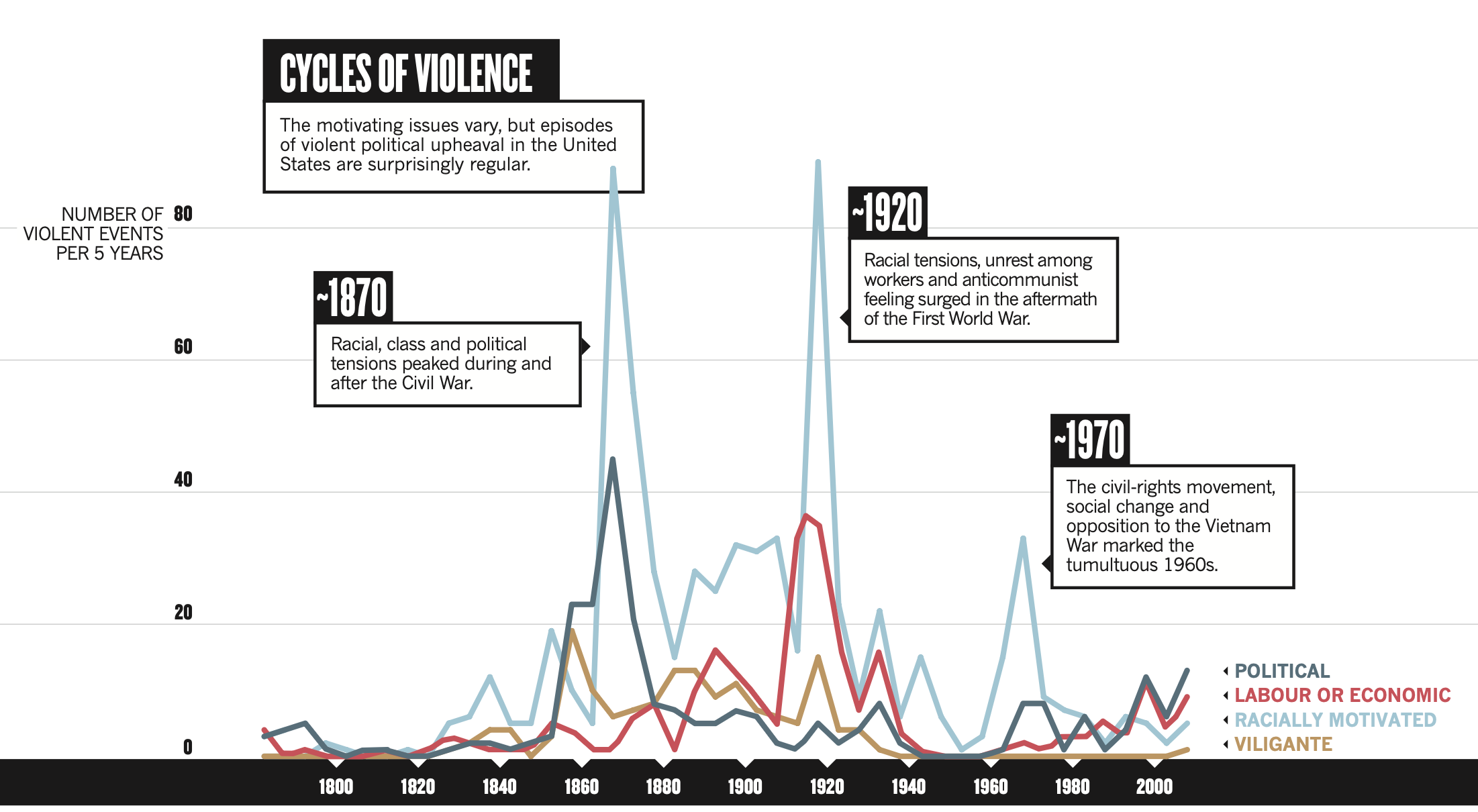
History does not repeat itself in the same way. The tools and legal arguments change, and the language becomes more complex. Still, some patterns are easy to recognize.
Again and again, periods of expanding Black political power are followed by efforts to contain it.
That observation makes many Americans uncomfortable. It should. It forces us to confront a possibility far messier than individual prejudice. Racism is not simply an attitude. It is not merely ignorance. It is not only a matter of individual hostility. Racism is most powerful when it becomes part of institutions and works without anyone having to name it. Racism in America is deeply systemic.
The prophet Isaiah spoke out against those who “make unjust laws” and those who create oppressive rules. Amos warned against systems that treated people as things to be used. The biblical prophets knew that evil does not stay personal for long. Over time, it becomes part of larger systems: It enters courts. It enters economies. It enters governments. It enters religion.
Eventually it becomes normal. Once it becomes normal, people stop seeing it.
This is why I keep returning to Pharaoh. The problem with Pharaoh was not merely cruelty. Egypt’s wealth was built on enslaved labor. The empire’s success came from the suffering of others. But Pharaoh could not see what was right in front of him. He saw suffering and called it necessary. He saw injustice and called it order.
The Bible calls this a hardened heart. A hardened heart is not just hatred. A hardened heart is the inability to be changed by another person’s suffering. It means refusing to let reality change the story we want to believe. This may be one of the greatest spiritual dangers our country faces.
Black Americans look at a jury, a sentence, a redistricting map, a court decision, and see a pattern that stretches back generations. Many white Americans see isolated events.
The gap between these experiences is also part of the story. Racism depends upon forgetting. It asks us to forget how wealth was accumulated. It asks us to forget how political power was distributed. It asks us to forget who was excluded, who was dispossessed, whose labor built the nation, and whose communities paid the cost. Once people forget, the inequalities that remain seem natural. The struggle for justice has always been a struggle over memory.
This is why the Hebrew scriptures repeatedly command the people to remember.
Remember that you were slaves in Egypt.
Remember the widow.
Remember the stranger.
Remember the poor.
Remember.
Memory interrupts the stories that power tells about itself. It restores context. It reveals patterns. Memory stops wounds from being covered up by patriotic stories or legal words.
The question before us is not whether racism still exists. That question was answered long ago. The question is whether we possess the courage to recognize the forms it takes in our own time, whether our hearts remain capable of being moved, whether we are willing to remember.
We are in this together,
Cameron
Reflection Questions
What histories have shaped your understanding of race, justice, and belonging in America?
When you encounter stories about racial inequality, do you tend to see isolated incidents or larger patterns? Why?
What would it mean to practice memory as a spiritual discipline rather than merely a historical exercise?
A Prayer for the Day
A Prayer For Courage to Remember
God of the living and the dead,
We inherit stories we did not choose,
wounds we did not create,
and responsibilities we cannot escape.
Keep us from the comfort of forgetting.
When history is rewritten,
give us memory.
When suffering is minimized,
give us honesty.
When fear tempts us toward silence,
give us courage.
Break open every hardness of heart
that keeps us from seeing one another clearly.
Teach us to remember
not for the sake of guilt,
but for the sake of truth.
And let truth become the soil
from which justice can grow.
Amen.
Spiritual Practice
The Work of Memory
Today, spend fifteen minutes learning a story from American history that was never fully taught to you.
Read about Reconstruction. Read about the Wilmington Coup of 1898. Read about Tulsa. Read about the Black Codes. Read about the original purpose of the Voting Rights Act.
Do not approach the exercise as a student gathering information. Approach it as a spiritual practice.
Notice what emotions arise. Notice what surprises you. Notice what becomes easier to understand about the present.
The biblical command to remember was never about nostalgia. It was about truth. A people who forget their history become vulnerable to repeating it.
Upcoming Events That Might Be of Interest…
My team and I launched a new experiment we are calling “The Commons.” It’s an online space centered around communities of practice: groups of people who share a common concern, set of problems, or passion for a topic, and deepen their knowledge and expertise by interacting on an ongoing basis. Join the community here.
TODAY!!! June 11, 18, 24, 2026, 12:30pm ET - I will be joining Jackie Sussman on The Commons for a three-part series on practicing eidetics as a part of our “Reclaiming the Power of Imagination” series. Jackie, a psychotherapist, author, and leading expert in Eidetic Image Psychology, has spent over forty years helping leaders and individuals unlock creativity, uncover hidden strengths, and move through limiting patterns. During these sessions, she will lead a live Eidetic process shaped by mythic imagery, offering a direct experience of the work. REGISTER HERE.
June 16, 2026, 12:30-1:30pmET - Book Club in The Commons - FREE - We are starting our next book, The Glorians by Terry Tempest Williams. We will meet each Tuesday for 6 weeks. It’s such great fun. I hope you will be a part. All are welcome! RSVP HERE.
September 8, 2026, 7-9pm ET, ONLINE EVENT - I’ll be hosting a powerful online gathering on The Black Madonna: Sacred Wisdom for a World in Crisis with Matthew Fox, Alessandra Belloni, and Christena Cleveland. We will explore the Black Madonna as a symbol of resilience, liberation, sacred feminine wisdom, and healing in a fractured world through conversation, story, music, and spiritual reflection. If you feel drawn toward a deeper encounter with the Divine Feminine and the ancient traditions that continue to nourish movements for justice and wholeness, I hope you’ll join us. Learn more and REGISTER HERE.
October 18-21, 2026 - PREACH! 2026 Conference- I’ll be co-hosting PREACH in Minneapolis with Church Anew, a new gathering for preachers, storytellers, worship leaders, and spiritual communicators navigating what it means to speak with clarity, compassion, and courage in a changing world. If you’ve sensed that the preaching moment has changed and are longing for thoughtful community and renewed imagination for this work, I hope you’ll join us.
I drafted a Strategic Framework for Congregations as we move into the coming years of increased authoritarianism around the world. If interested, you can download it here.
Fun Things My Friends Are Up To…
I get to work with such amazing, creative people. This section is my way of celebrating them—no paid promotions, just joy in what they’re creating.
June 15, 2026, 12pm ET - ONLINE WRITING GROUP - My dear friend, Meryl Marshall-Daniels, is leading a writing group open to all. This is a simple and spacious writing circle for people who want time to listen inwardly and put words on the page without overthinking, performing, or polishing. Meryl offers a prompt designed to invite reflection, imagination, and attunement to what is already alive within you. The practice honors writing as a way of listening, of letting images, memories, questions, and insights surface in their own time. Learn more here.
June 16, 2026, 12pm ET - My friends at the Franciscan Federation are launching a new online community called “The Piazza.” This is a place for all Franciscan-hearted people to gather, connect with one another and build community together. They are launching the community on June 16. I hope you can be a part of their launch event. I will be there, for sure!
June 20, 2026 – ONLINE EVENT – Margaret Wheatley and Mary Daniels will lead a special three-hour online gathering titled Fierce Compassion: The Power of the Sacred Feminine. In a time marked by fragmentation, fear, and exhaustion, this program explores compassion not as passive kindness, but as a courageous force that protects life, tells the truth, and remains deeply rooted in love. Drawing from spiritual traditions, contemplative practice, and the imagery of fierce feminine wisdom figures such as Kali and Durga, they will reflect on what it means to stay human and spiritually grounded in difficult times. LEARN MORE + REGISTER.
JULY 12, 2026, 8AM–8PM ET in NYC - My friend Monika Son is helping lead a powerful Buddhist-led, interfaith pilgrimage across New York City titled “Day of Remembering Our Interdependence.” Inspired by the Buddhist monks’ 2,300-mile Walk for Peace and grounded in the wisdom of Thich Nhat Hanh, participants will gather for walking meditation, prayer, chanting, ceremony, and collective reflection across all five boroughs, including stops at the African Burial Ground and the Metropolitan Detention Center where ICE detainees are being held. The day will culminate in a joyful community gathering in Queens with music, poetry, movement, and food. Participants are welcome to join for the full pilgrimage or any portion of the day. LEARN MORE HERE.
If you are a leader or member of a congregation looking for consulting support in visioning, planning, hiring or staffing, please consider Convergence.
https://peterturchin.com/
The US has and probably will be extremely prejudice. My first encounter in 1977 at Fort Gordon, Georgia was an eye opener. It showed me the true colour of America. My opinion has never changed and it’s not just black and white, it’s a superiority complex about being American. It’s why America is where it is today. The fallen empire that has eaten itself and will never come back from it…
What a powerful reflection....REMEMBER, REMEMBER, REMEMBER...what we remember births us, and reality. I believe that Remembering IS A SPIRITURAL ENERGY that can dissolve Pharaoh's blindness homed within all of us.