

“Justice, and only justice, you shall pursue, so that you may live and occupy the land that the Lord your God is giving you.” — Deuteronomy 16:20, NRSVUE
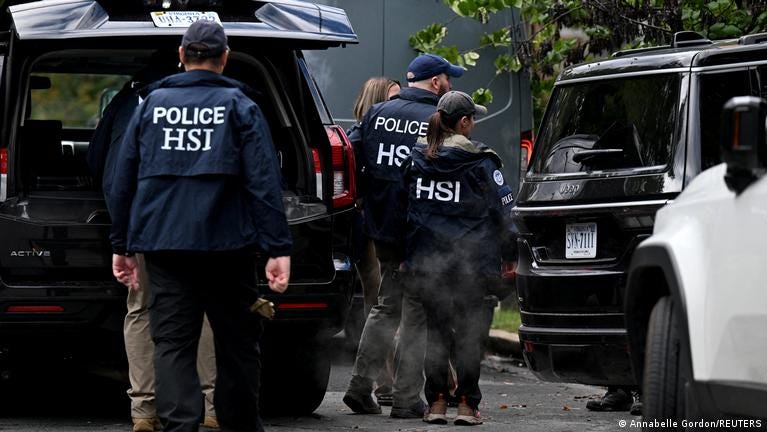
Consider waking to federal agents at your door. They have a warrant to search your home. You stand aside while strangers enter the rooms where you sleep, eat dinner, and spend time with your family. They examine your belongings and search through the private spaces of your life. Whatever happens afterward, you will remember the morning the government came to your house.
On October 12, federal agents searched the Washington, D.C. home of Representative Ilhan Omar from Minnesota.1 A judge approved the search as part of a criminal investigation. News reports say investigators are looking into claims about immigration documents linked to Omar’s family history. Authorities have shared little about the evidence, and no charges have been filed. Omar says she did nothing wrong and calls the search political intimidation.
In other situations, this might just be seen as a question about an elected official’s actions. Members of Congress must follow the law, and serious accusations should be investigated. But we can’t look at this search without considering the political climate around it.
Omar is a Black Muslim woman who came to the United States as a refugee from Somalia. She became a citizen and was later elected to Congress. President Trump has often singled her out in speeches and on social media, attacking her personally and pointing to her Somali background. His words have sometimes suggested that people like Omar do not really belong in America.
These attacks happen in a political climate where threats against elected officials are more common than before. In 2025, the U.S. Capitol Police looked into almost 15,000 concerning messages, behaviors, and threats involving members of Congress, their families, staff, and the Capitol. That’s nearly 60 percent more than the year before.2 Earlier this year, Omar was physically attacked while speaking at a public meeting in Minneapolis.
I wonder what it’s like to serve in public office under these conditions. You know your words might lead to threats against your family. You have to question whether the next person who approaches you in public wants to ask something or do you harm. The president keeps saying you don’t belong, and then one day, federal agents show up at your door.
We should be very concerned about how this environment affects people who serve and those who might want to serve. Political intimidation doesn’t mean everyone gets arrested. It just takes enough fear to make people worry about what could happen if they speak up.
Today is the 120th birthday of Hannah Arendt, the German Jewish political philosopher who spent much of her life studying how political communities can become vulnerable to unchecked power.
Arendt escaped Nazi Germany in 1933 and later came to the United States. As a refugee, she learned that the protections we expect from citizenship can become very fragile if the institutions created to defend them stop working independently. She called this the problem of the “right to have rights.”3
Arendt knew that rights depend on being part of a political community that can make those rights real. A constitution can promise freedom of speech, equal protection, and due process. But these promises become shaky when the institutions designed to enforce them start treating some people as less worthy of protection than others.
Omar is not without a country, and her situation is not the same as Arendt’s experience under Nazism. Still, Arendt’s questions matter whenever people start to wonder if their citizenship protects them as much as it should.
There’s another part of this situation that worries me even more. When elected officials fear for their safety, when public criticism turns into personal attacks, and when federal investigations happen in a hostile political climate, the effects can reach far beyond the person at the center.
Other people are paying attention. They are deciding if they should run for office, speak out, challenge a government policy, or defend someone targeted for political reasons. Some will keep going despite the risks. Others might decide it’s just too costly.
This is one way political freedom can slowly disappear, even if it’s never officially taken away.
The Hebrew scriptures set a high standard for judging how power is used.
In Deuteronomy 16, the people of Israel are told to appoint judges who will be fair and impartial.4 They must not twist justice, favor the powerful, or take bribes that would affect their honesty. The passage ends with the command tzedek, tzedek tirdof, which is often translated as “Justice, justice shall you pursue.”
The repetition is important. The biblical tradition teaches that justice is not only about the result. The way decisions are made must also be fair.
This is especially important when people in power believe they are doing the right thing. It’s easy to think that good intentions make any method acceptable. But the government’s moral legitimacy can’t just depend on what its leaders say about themselves.
An investigation should be based on evidence. A prosecutor needs to be able to drop a case that isn’t supported. A judge must stay independent. Citizens’ rights should hold up even in tough political times. And people need to trust that the same standards apply to everyone, not just those favored by those in power.
When people start to think that investigations are driven by politics, every prosecution looks suspicious. Supporters of the government assume its critics are guilty. Those who don’t trust the government think its investigations are corrupt. Evidence stops settling arguments because the institutions that should establish facts are no longer trusted.
In the end, even a fair investigation might not convince the public.
That’s a terrible situation for any society.
Arendt knew that political freedom relies on strong institutions, but she also stressed the moral responsibility of the people working inside them. Her thoughts on Adolf Eichmann made her look at what happens when people give up their own judgment to follow rules and authority.
Her warning is a canary call to us today. Justice Department leaders must keep questioning what they’re being asked to do. They should ask if their actions advance justice or just the interests of those in charge.
The rest of us must keep asking these questions too. I think many Americans are scared by what they see. There are threats against elected officials, attacks on political opponents’ legitimacy, and more doubt about whether institutions can be trusted to act on their own. This is especially troubling for people whose race, religion, immigration history, or minority status already puts them at risk of being left out. That fear is real and should be taken seriously. But it shouldn’t be the last word.
There are still people working to keep public institutions honest. Judges demand evidence, accountability and compliance with rulings. Lawyers protect constitutional rights and fight for the rule of law. True journalists look into abuses and follow the facts wherever they lead. Public servants say no to improper requests. Citizens organize, speak out, and take part in civic life, even when it’s risky. Their work is important because political freedom lasts only as long as people are willing to defend it.
Today, as we remember Hannah Arendt, maybe we should think about what it means to defend the right to have rights in a society where trust is so fragile.5
It means making sure the law protects people we distrust just as much as those we admire. It means requiring accountability when public power is abused. It means refusing to treat political opponents as enemies whose rights can be taken away for our own convenience. It means understanding that the safety of people who speak in public is tied to everyone’s freedom to speak.
When a member of Congress is too afraid to challenge the president, when a journalist fears payback for telling the truth, or when a citizen worries that disagreeing with the government could bring trouble to their door, the effects go far beyond just those people.
The real question is whether we can keep a society where people can disagree without being afraid of personal ruin. That’s a question worth asking as we remember Arendt’s birthday, and it’s one we can’t leave to future generations to solve.
We are in this together,
Cameron
Reflection Questions
How has the growing climate of political intimidation affected your own willingness to speak publicly, challenge authority, or stand alongside people who have become targets of hostility?
Hannah Arendt wrote about the “right to have rights.” What does citizenship mean if the protections it promises become unreliable when someone challenges those holding power?
Who in your community is especially vulnerable to intimidation because of their race, religion, immigration history, identity, or political convictions? What would meaningful solidarity with them require of you?
A Prayer for the Day
A Prayer For When Power Comes to the Door
God of Peace,

You know the sound of fear
when power comes knocking,
the trembling of those
whose safety has become uncertain.

Remember those who speak
while threats gather around them,
and those whose families
carry the cost of their courage.

Guard the vulnerable
from the cruelty of unchecked power.

Give integrity to those entrusted
with the authority of law,
and courage to those
who must refuse its misuse.

When silence becomes tempting,
strengthen our voices.
When fear begins to isolate us,
draw us into solidarity.

May justice remain a shelter
for every person,
and may we become guardians
of the dignity we share.

Amen.
Spiritual Practice: Keeping the Light
Find a candle and place it somewhere quiet. Beside it, set a small stone to represent the weight of fear and intimidation that so many people carry.
Light the candle and sit quietly for a few minutes. Think of someone who has spoken courageously in the face of threats or hostility. Imagine the courage it takes to continue speaking when silence would offer greater safety.
Hold the stone in your hand and consider the people whose freedom has become fragile because of their identity, beliefs, or willingness to challenge power.
Then speak these words aloud: May those who live in fear find protection. May those entrusted with power remember justice. May those who speak the truth find companions in their courage. May we never abandon one another to intimidation.
Place the stone beside the candle and sit for another minute, allowing the light to become a symbol of the freedom and dignity we are called to protect.
When you extinguish the flame, make a quiet commitment to stand beside someone whose courage is costing them something.
Let the stone remain where you can see it for the rest of the day, a reminder that the rights we cherish must also be protected for those whose voices others would silence.
Upcoming Events That Might Be of Interest…
My team and I launched a new experiment we are calling “The Commons.” It’s an online space centered around communities of practice: groups of people who share a common concern, set of problems, or passion for a topic, and deepen their knowledge and expertise by interacting on an ongoing basis. Join the community here.
October 15, 2026, 7-8:45pm ET - I will be joining Jackie Sussman for an online session on practicing eidetics as part of our “Reclaiming the Power of Imagination” monthly series. Eidetic Imagery is a powerful tool for pastors, denominational leaders, coaches, and spiritual directors working with others, and for individuals seeking deeper integration and healing in their own lives. Jackie is a psychotherapist, author, and leading expert in Eidetic Image Psychology, and has spent over forty years helping leaders and individuals unlock creativity, uncover hidden strengths, and move through limiting patterns. During this session, she will lead a live Eidetic process shaped by mythic imagery, offering a direct experience of the work. REGISTER HERE.
October 20, 2026 - 12:30 - 1:30pm ET - FREE ONLINE BOOK CLUB - For the next 3 weeks, I am hosting a book club where we will read Fr. Gregory Boyle’s “Cherished Belonging: The Healing Power of Love in Divided Times.” Father Gregory Boyle, founder of Homeboy Industries, has spent decades building community among people whom society has often discarded. In Cherished Belonging, he draws on those relationships and stories to explore what might happen if we stopped sorting people into categories of worthy and unworthy, us and them. Don’t worry if you don’t have time to read the book. We always have incredibly rich conversations. All are welcome. RSVP Here.
November 10, 7-8:30pm ET - I’ll be joined by theologian, writer, and professor Dr. Debra Rienstra for a special ONLINE conversation on Refugia Faith. In ecology, refugia are small places where life survives amid disruption, pockets of resilience from which life can eventually regenerate and spread. Debra invites us to consider what this might mean spiritually in an age of climate instability, political turmoil, institutional decline, and profound uncertainty. What if our congregations, communities, relationships, and even our own lives could become refugia, places where courage, compassion, beauty, wisdom, and possibility are protected and cultivated for whatever comes next? I hope you’ll join us for this timely and deeply hopeful conversation. REGISTER HERE!
November 4, 2026 - 7-8:30pm ET, ONLINE EVENT - Theologian Matthew Fox and I are teaming up again in a series called Journeying with the Mystics. The mystics have always emerged in times of uncertainty. They appear when old certainties are crumbling, when institutions no longer provide easy answers, and when people find themselves longing for a deeper experience of the Sacred. Join us for a 24-session exploration of the teachings of St. John of the Cross, Thomas Merton, Hildegard of Bingen, Kabir and Rumi, Meister Eckhart and more. This is more than a lecture series. It is an invitation into a living spiritual journey. Learn more and REGISTER HERE!
December 15, 7-8:30pm ET - FREE WEBINAR - I will be joined by Dr. Charissa Mikoski, Assistant Professor of Research and Hartford Institute for Religion Research for a presentation on “The State of American Congregations: What the Latest Data Tell Us.” This webinar explores findings from the 2025 Faith Communities Today survey, including changes in worship attendance, congregational vitality, finances, volunteering, programming, and leadership. It will also examine what more than 24,000 individual attenders tell us about participation and their experiences of congregational life. Together, these findings offer a picture that is neither simply one of decline nor one of revival, but of significant change and uneven recovery. REGISTER HERE.
Fun Things My Friends Are Up To…
I get to work with such amazing, creative people. This section is my way of celebrating them—no paid promotions, just joy in what they’re creating.
My dear friend Brian McLaren has a new novel coming in November, and I’m excited about this one. The Great Rift is the second book in his Last Voyage trilogy, imagining ten pioneers leaving a dying Earth for a fragile human settlement on Mars. The story weaves together ecological imagination, spirituality, art, survival, and the possibility of creating a genuinely different future. Brian is one of the most thoughtful and imaginative writers I know, and I love seeing him use fiction to explore questions he has spent a lifetime asking. The Great Rift comes out November 3 and is available for preorder now.
My friends at Church Anew have been building a terrific library of resources for congregations and church leaders navigating ministry in these strange and demanding times. You’ll find thoughtful worship and preaching resources, practical tools, and material designed to help communities engage the questions actually shaping our lives right now. I deeply appreciate the imagination and theological depth Church Anew brings to its work, so if you’re a pastor or congregational leader looking for fresh resources, spend a little time exploring what they’re creating.
Every Monday, 12pm ET - ONLINE WRITING GROUP - My dear friend, Meryl Marshall-Daniels, is leading a writing group open to all. This is a simple and spacious writing circle for people who want time to listen inwardly and put words on the page without overthinking, performing, or polishing. Meryl offers a prompt designed to invite reflection, imagination, and attunement to what is already alive within you. The practice honors writing as a way of listening, of letting images, memories, questions, and insights surface in their own time. Learn more here.
If you are a leader or member of a congregation looking for consulting support in visioning, planning, hiring or staffing, please consider Convergence.
https://apnews.com/article/8e18c2aea948bd90f4d7a4eb32b9ec3a
https://www.uscp.gov/media-center/press-releases/uscp-threat-assessment-cases-2025
The Origins of Totalitarianism (1951), Part II, Chapter 9, “The Decline of the Nation-State and the End of the Rights of Man.”
https://www.sefaria.org/Deuteronomy.16.18-20
Hannah Arendt, Eichmann in Jerusalem: A Report on the Banality of Evil (1963)