

“There is no such thing as an isolated act of violence. Every blow we strike against life returns to us as a wound.”—Rev. Dr. Pauli Murray, the first African-American woman to be ordained as an Episcopal priest
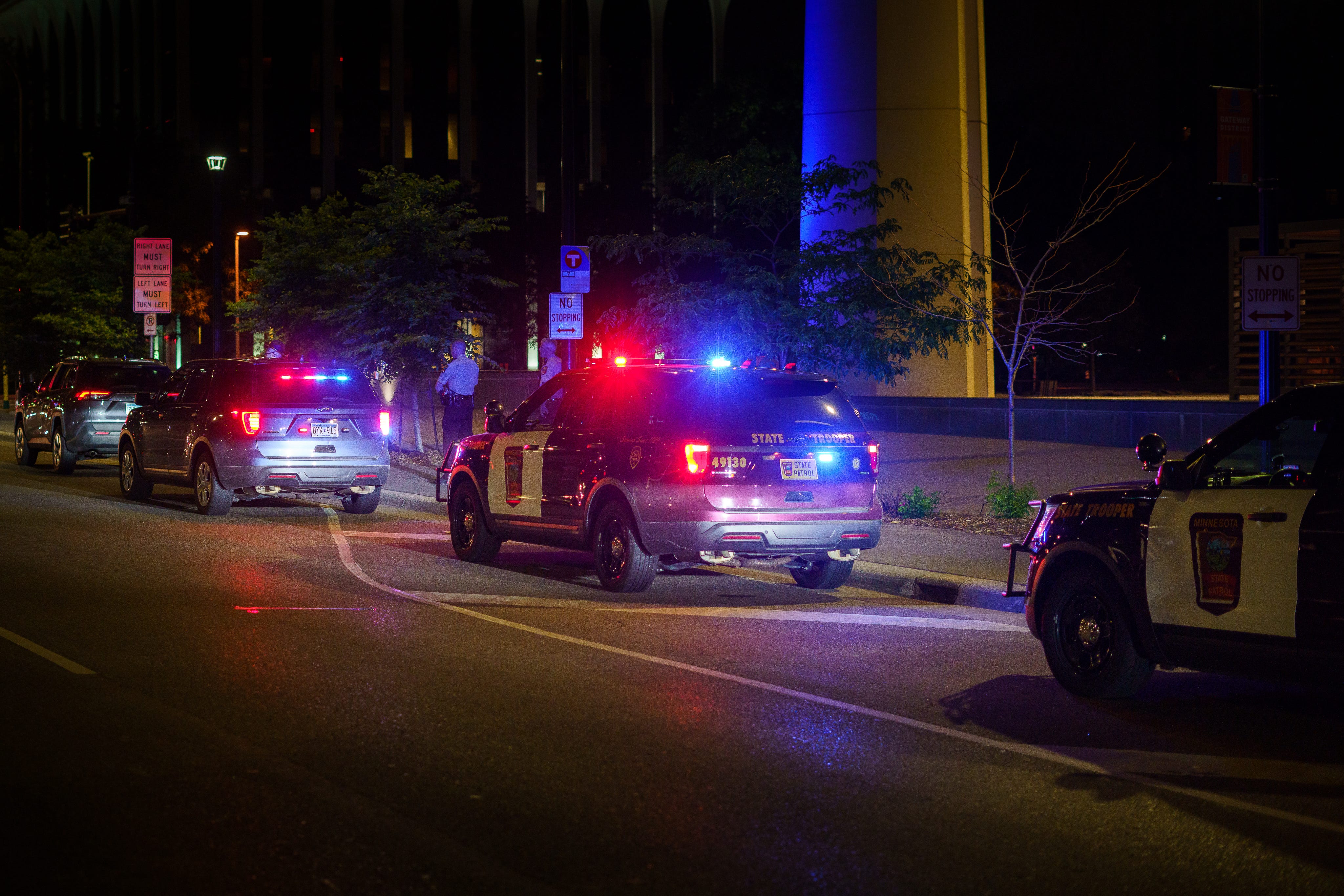
We start our week, once again, with grief. At Brown University, a gunman opened fire on a quiet campus. In Sydney, sixteen people were killed during a Hanukkah celebration. In Syria, three Americans were murdered in an attack by Islamic State militants. Three continents. Three different faiths. The same vibration of fear.
We keep waking up to blood.
The question that rises from the silence after every tragedy is not simply why, but why again?
In moments like this, the mind reaches for explanations — ideology, mental illness, religion, politics. But what we are witnessing is deeper and older than any of those. This is cultural violence, a civilization-wide distortion of power that has taught us to see domination as strength and separation as safety.
Every nation tells itself a version of the same story: that violence can secure peace, that control can produce love, that fear can keep us safe. Yet each bullet, each bomb, each act of terror only widens the wound of our disconnection.
We criminalize the immigrant while arming the citizen. We name enemies abroad while ignoring the quiet wars we wage against our neighbors, our ecosystems, our own hearts. Violence, in all its forms, has become our common tongue, the grammar of empire repeated across borders and centuries.
What ties these events together is not ideology, but idolatry. The worship of power over relationship. The substitution of control for communion. The belief that some lives matter more than others. That is the oldest heresy on earth — the one we keep reenacting.
Mystic Fr. Thomas Merton once wrote that “compassion is the keen awareness of the interdependence of all things.” When we forget that interdependence, compassion collapses, and the human project begins to rot from the inside.
We see that rot in mass shootings and refugee camps, in drone strikes and domestic abuse. Violence is not merely what happens “out there.” It is the internalization of disconnection — the forgetting that we belong to one another.
If every act of violence is a wound, then our work is to become healers, not only of victims, but of the imagination that makes victims possible. That means telling new stories about power. It means forming children — and adults — who can feel without destroying, grieve without vengeance, and protect without possession.
The opposite of violence is not peace as absence, but relationship as presence. It is the courage to live in mutuality even when fear would make us retreat. It is the daily, deliberate practice of refusing to feed the fire, in our words, our politics, our consumption, our prayers.
We are all born into a culture of violence. The question is whether we will continue to serve it.
We are in this together,
Cameron
Reflection Questions
When you hear of violence, what narratives immediately rise in you to explain it?
How has violence — cultural, emotional, or systemic — shaped your own understanding of safety and belonging?
What practices in your life help you break cycles of domination and choose relationship instead?
A Prayer for the Day
A Prayer For Those We Have Lost and Those We Are Losing
Spirit of Life,
Hold the names we cannot bear to list.
Those killed in classrooms and sanctuaries,
in marketplaces and streets,
in deserts and forests where no camera watches.

Forgive us for the ways we keep feeding the fire —
with our silence, our cynicism, our numbness.
Remind us that to be alive is to be responsible
for the life around us.
Teach us to become healers,
to bear witness, to tend what can still be saved.

Amen.
Spiritual Practice
Starving the Fire
This week, notice how violence hides in ordinary forms: in your speech, your news scrolling, your imagination.
Each time you feel the impulse to dominate, to dismiss, to despair — pause. Breathe. Step back. Ask, What would repair look like here?
Then act in small ways to starve the fire: Refuse a cruel joke. Offer softness in a hard conversation. Turn off the news when it becomes spectacle and turn toward a neighbor instead.
The smallest act of mercy is a withdrawal of fuel from the machinery of harm.
Upcoming Events That Might Be of Interest…
January 6, 13, 20, 2026 - Protest and Action Chaplaincy Training with Rev. Anna Galladay. This live, online training offers a framework for providing compassionate, grounded spiritual care during protests, advocacy gatherings, and social movements. Learn more here.
January 15, 2026, 7-8pm EST - FREE Online Webinar: When the Internet Hurts: The Hidden Online Dangers Facing Our Teens and How Faith Communities Can Respond, Join me in conversation with Sharon Winkler, survivor parent and nationally respected youth online-safety advocate. Sharon’s son, Alex, died at age 17 after experiencing cyberbullying and algorithmically targeted pro-suicide content. Since then, Sharon has dedicated her life to helping parents, educators, and faith leaders recognize online dangers and build safer communities for young people. Register here.
February 11th and 25, 2026 - Join Our “Building a Culture of Leadership Within Congregations” Cohort facilitated by Rabbi Benjamin Ross and me! A two-session course for ministers and faith leaders ready to strengthen how their congregations and ministries identify, develop, and support leaders. Learn more here.
July 19-24, 2026 - Join me and amazing co-facilitator, Victoria, on retreat in the back-country of beautiful Wyoming. The Art of Wilding is a 5-Day Expedition for Women Leaders. We will spend the week reconnecting to nature, exploring our inner landscapes for change, and engage the wisdom of spiritual teachings. Click here to learn more.
I drafted a Strategic Framework for Congregations as we move into the coming years of increased authoritarianism around the world. If interested, you can download it here.
Fun Things My Friends Are Up To…
I get to work with such amazing, creative people. This new section is my way of celebrating them—no paid promotions, just joy in what they’re creating.
Dr. Luther E. Smith, Jr. is the Professor Emeritus of Church and Community at Emory University (and was my seminary professor a long time ago). He has a new book out that I’m excited about: Hope Is Here! Spiritual Practices for Pursuing Justice and Beloved Community.
James Finley is one of our great teachers of the mystics. His podcast, hosted by the Center for Action and Contemplation, is a deep-dive into the mystical teachings of saints like St. Teresa of Avila, Brother Lawrence, St. John of the Cross, and Julian of Norwich, just to name a few. Check it out here.
If you are a leader or member of a congregation looking for consulting support in visioning, planning, hiring or staffing, please consider Convergence.
So true!!!
Yesterday, I made a negative comment on Facebook. After thinking, I went back to apologize explain that we need to talk with and listen to each other. We appear to be losing our humanity. Thanks Cameron.
How do we drown out the loud voices calling for cultural dominance? Perhaps 'drown out' is also violent language: smother, dampen, tackle (like the Muslim who tackled the Bondi Beach shooter) - all violent. 'A soft answer turneth away wrath'? Doesn't seem to at all....