

“But the midwives feared God; they did not do as the king of Egypt commanded them, but they let the boys live.” — Exodus 1:17, NRSVUE
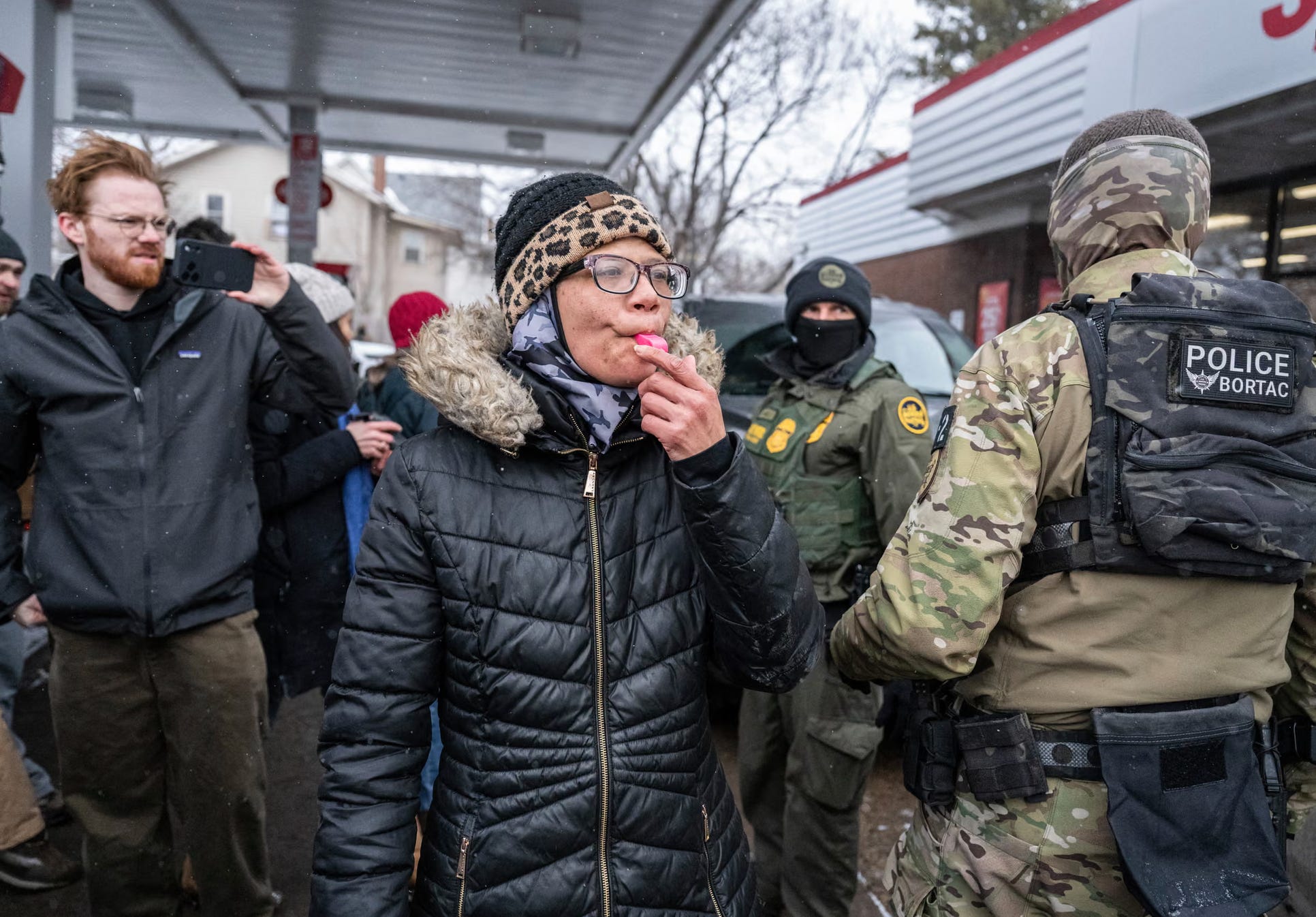
This week, I am in Minneapolis, helping lead a conference and meeting with faith groups and other organizations. Everywhere I visit, people share stories about what they experienced during the recent surge in federal immigration enforcement. I’ve heard about neighbors coming together to protect each other, families too scared to leave home, children afraid to go to school, and everyday people doing things they never thought they would have to do.
People here carry a deep sense of exhaustion that’s hard to put into words. They hold memories they wish they didn’t have. At the same time, they are finding out they have more courage, generosity, and determination than they realized.
On Sunday evening, I heard a moving story from Flannery Clark, a brave mother from South Minneapolis who helped organize her neighbors during the immigration enforcement surge.
Last fall, Flannery started handing out whistles to her neighbors, hoping they could use them to warn each other if immigration agents showed up. She ordered 10,000 whistles, and they arrived just days before federal agents began working in her neighborhood in December.
On December 3, while driving home from work, she saw immigration agents in someone’s front yard with a man in handcuffs. A few neighbors had gathered, but no one had whistles yet.
She got out of her car and blew her whistle. Then she handed out whistles to everyone nearby. More neighbors showed up, and people started honking their car horns. She said the agents eventually left without taking the man away.
That was just the start. Soon, whistles became a regular sound in South Minneapolis. She heard them while walking her child to school, shopping, or even sitting at home. Sometimes, she even heard them in her sleep. By January, she wore a whistle all day, from getting dressed to going to bed.
On January 7, the day Renee Good was shot and killed by a federal immigration officer, Flannery had just finished helping kids get to school safely. When she got home, she joined a neighborhood rapid-response call. Minutes later, she heard that Good had been shot about a mile away.
Then she looked out her window and saw immigration agents stopping another car. She ran outside without even putting on shoes. In the freezing Minnesota cold, she stood on the ice in her socks, blowing her whistle as neighbors came outside. They recorded what was happening and tried to get attention for the detention. She remembers shouting at the agents, feeling both scared and angry about what had just happened nearby.
Later that day, she joined hundreds of people near Roosevelt High School after hearing that immigration agents were confronting students at dismissal. She remembers the shouting, the confusion, and the tear gas. But most of all, she remembers the sound of whistles.
Over ten weeks, she said, 170,000 whistles passed through her home. Many came from people far away. She, her husband, and their second-grade child helped hand them out across the community.
Then she said something that almost broke my heart. Her son is now in third grade. She knows he is part of a generation of Minneapolis kids who will never blow a whistle just for fun. For him, a whistle will always mean danger and bring fear.
Most of us remember whistles from when we were kids. We used them at birthday parties, sports games, and on playgrounds. They were loud toys that made us happy and sometimes annoyed our parents. We never thought that blowing a whistle could be an act of courage or a warning that someone was in danger.
But this child has learned that a whistle means people need to come outside. Someone might be scared. Someone might be taken away. His mother might suddenly run out the door, and he might not know when she’ll be back.
I wonder how it changes a child’s view of the world when the normal sounds of childhood turn into warnings of danger.
The Hebrew scriptures contain a remarkable passage in the book of Exodus about the Hebrew midwives, Shiphrah and Puah. Pharaoh has ordered them to kill newborn Hebrew boys, hoping to weaken a population he regards as threatening. The midwives refuse. The text says they feared God, and they allowed the children to live.
What stands out to me in this story is that the first people to resist Pharaoh’s violence were women whose everyday job was to protect life. They weren’t generals or politicians. They were caregivers who saw that following orders had crossed a moral line. Their resistance started when they refused to help harm the vulnerable.
I hear echoes of that ancient story in what people are telling me in Minneapolis. Parents, teachers, clergy, neighbors, and everyday people have started organizing care networks because they believe those around them are in danger. They watch school entrances, deliver groceries, walk with scared neighbors, and respond when they hear whistles.
Many of these people never thought of themselves as activists. They just wanted to live decent lives and care for their families. But the situation asked more of them.
Their courage is remarkable. But I hesitate to celebrate their resilience without also mourning the reasons it was needed.
Sometimes we talk about resilience as if suffering is valuable because it shows us how strong we can be. I find that troubling. People shouldn’t have to face terror to find their courage. Children shouldn’t have to learn to spot federal agents or join emergency networks before they finish elementary school.
The people I’ve met in Minneapolis have built strong bonds. They know their neighbors better now. They’ve learned to organize quickly, share what they have, and protect those who are vulnerable. Their care for each other is inspiring.
But their trauma is real as well.
I think we often misunderstand what it’s like for communities living with constant fear. From afar, we notice the dramatic moments—confrontations, arrests, protests, and violence. But we don’t always see how these experiences become part of daily life. People start checking the street before leaving home, memorize emergency numbers, sleep lightly, and teach their kids what to do if something scary happens.
At the end of her story, Flannery said that when she put on her coat for the first time this fall, she found one of the original 10,000 whistles she had ordered almost a year ago in the pocket. I wonder what memories came back to her. Maybe she remembered that first afternoon when neighbors gathered around a man in handcuffs. Maybe she thought of running barefoot into the January cold. Maybe she remembered the sound of hundreds of whistles outside her son’s school. And maybe she thought of her child who helped her hand them out.
The Hebrew midwives couldn’t stop Pharaoh’s oppression. All they could do was refuse to take part and protect the lives in their care. Still, Exodus remembers their names thousands of years later because their courage mattered.
I hope the same will be true for the ordinary people of Minneapolis who have spent these hard months protecting their neighbors.
I hope people remember their courage. I hope their communities keep growing. And I hope the children who went through this will one day live in a world where they don’t have to listen for whistles anymore.
For now, I’m grateful to be with people who have shown me what love looks like when it never gives up on a neighbor.
But I’m also grieving what this experience has taken from them, especially from the children.
I hope that someday, a little boy in Minneapolis will pick up a whistle, blow it just because he likes the sound, and find that nothing bad happens afterward.
Maybe that will be one small sign of how much healing we still have ahead of us.
We are in this together,
Cameron
Reflection Questions
Flannery Clark’s story reminds us that children absorb the fears and experiences of the adults around them. What experiences from your own childhood changed how you understood safety, belonging, or the world around you?
Where have you witnessed ordinary people discover extraordinary courage when someone in their community was threatened or vulnerable?
How might we honor the resilience of people living through frightening circumstances while also recognizing the trauma they carry and working to prevent others from experiencing the same harm?
A Prayer for the Day
A Prayer For the Children Who Hear the Whistles
Holy One,

Hear the whistles
rising through frightened streets,
the voices calling neighbors
out of their homes
and into one another's care.

Hold the children
who have learned too early
the sounds of danger.

Shelter the families
who sleep with fear nearby,
and strengthen those
who stand beside the vulnerable.

Bless the courage
of ordinary people
who refuse to abandon one another.

May the streets grow quiet
without becoming indifferent.

May doors open again
without fear.

And may every child
one day lift a whistle
to their lips
simply for the joy
of making a sound.

Amen.
Spiritual Practice: The People Who Answer
One of the most moving parts of Flannery Clark’s story is how quickly ordinary people learned to respond when a neighbor was in danger. They had not planned to become activists or emergency responders. They were people going about their lives who discovered that caring for one another sometimes required more than good intentions.
Today, take a few minutes to think about the people who would come if you needed help. Who would notice if something happened to you? Who would answer the phone in the middle of the night? Who knows enough about your life to recognize when something is wrong?
Now turn the question around. Whose life are you paying close enough attention to that you would notice if they needed help?
Choose one person who might be living with more uncertainty or fear than you realize. Reach out, not to offer advice or reassurance, but to ask how they are doing and what would help them feel more supported. Listen carefully, and resist the temptation to solve everything.
Then consider one practical way to strengthen the relationships around you. Perhaps you could exchange contact information with a neighbor, learn who lives alone on your street, or make a plan with friends to check on one another during difficult times.
Flannery’s story reminds us that communities capable of responding to danger are built through relationships that already exist before the danger arrives.
The spiritual practice is to become someone another person knows they can call.
Upcoming Events That Might Be of Interest…
My team and I launched a new experiment we are calling “The Commons.” It’s an online space centered around communities of practice: groups of people who share a common concern, set of problems, or passion for a topic, and deepen their knowledge and expertise by interacting on an ongoing basis. Join the community here.
October 20, 2026 - 12:30 - 1:30pm ET - ONLINE BOOK CLUB - For the next 3 weeks, I am hosting a book club where we will read Fr. Gregory Boyle’s “Cherished Belonging: The Healing Power of Love in Divided Times.” Father Gregory Boyle, founder of Homeboy Industries, has spent decades building community among people whom society has often discarded. In Cherished Belonging, he draws on those relationships and stories to explore what might happen if we stopped sorting people into categories of worthy and unworthy, us and them. Don’t worry if you don’t have time to read the book. We always have incredibly rich conversations. All are welcome. RSVP Here.
November 4, 2026 - 7-8:30pm ET, ONLINE EVENT - Theologian Matthew Fox and I are teaming up again in a series called Journeying with the Mystics. The mystics have always emerged in times of uncertainty. They appear when old certainties are crumbling, when institutions no longer provide easy answers, and when people find themselves longing for a deeper experience of the Sacred. Join us for a 24-session exploration of the teachings of St. John of the Cross, Thomas Merton, Hildegard of Bingen, Kabir and Rumi, Meister Eckhart and more. This is more than a lecture series. It is an invitation into a living spiritual journey. Learn more and REGISTER HERE!
November 10, 7-8:30pm ET - I’ll be joined by theologian, writer, and professor Dr. Debra Rienstra for a special ONLINE conversation on Refugia Faith. In ecology, refugia are small places where life survives amid disruption, pockets of resilience from which life can eventually regenerate and spread. Debra invites us to consider what this might mean spiritually in an age of climate instability, political turmoil, institutional decline, and profound uncertainty. What if our congregations, communities, relationships, and even our own lives could become refugia, places where courage, compassion, beauty, wisdom, and possibility are protected and cultivated for whatever comes next? I hope you’ll join us for this timely and deeply hopeful conversation. REGISTER HERE!
November 19, 2026, 7-8:45pm ET - I will be joining Jackie Sussman for an online session on practicing eidetics as part of our “Reclaiming the Power of Imagination” monthly series. Eidetic Imagery is a powerful tool for pastors, denominational leaders, coaches, and spiritual directors working with others, and for individuals seeking deeper integration and healing in their own lives. Jackie is a psychotherapist, author, and leading expert in Eidetic Image Psychology, and has spent over forty years helping leaders and individuals unlock creativity, uncover hidden strengths, and move through limiting patterns. During this session, she will lead a live Eidetic process shaped by mythic imagery, offering a direct experience of the work. REGISTER HERE.
December 15, 7-8:30pm ET - FREE WEBINAR - I will be joined by Dr. Charissa Mikoski, Assistant Professor of Research and Hartford Institute for Religion Research for a presentation on “The State of American Congregations: What the Latest Data Tell Us.” This webinar explores findings from the 2025 Faith Communities Today survey, including changes in worship attendance, congregational vitality, finances, volunteering, programming, and leadership. It will also examine what more than 24,000 individual attenders tell us about participation and their experiences of congregational life. Together, these findings offer a picture that is neither simply one of decline nor one of revival, but of significant change and uneven recovery. REGISTER HERE.
Fun Things My Friends Are Up To…
I get to work with such amazing, creative people. This section is my way of celebrating them—no paid promotions, just joy in what they’re creating.
My dear friend Brian McLaren has a new novel coming in November, and I’m excited about this one. The Great Rift is the second book in his Last Voyage trilogy, imagining ten pioneers leaving a dying Earth for a fragile human settlement on Mars. The story weaves together ecological imagination, spirituality, art, survival, and the possibility of creating a genuinely different future. Brian is one of the most thoughtful and imaginative writers I know, and I love seeing him use fiction to explore questions he has spent a lifetime asking. The Great Rift comes out November 3 and is available for preorder now.
My friends at Church Anew have been building a terrific library of resources for congregations and church leaders navigating ministry in these strange and demanding times. You’ll find thoughtful worship and preaching resources, practical tools, and material designed to help communities engage the questions actually shaping our lives right now. I deeply appreciate the imagination and theological depth Church Anew brings to its work, so if you’re a pastor or congregational leader looking for fresh resources, spend a little time exploring what they’re creating.
Every Monday, 12pm ET - ONLINE WRITING GROUP - My dear friend, Meryl Marshall-Daniels, is leading a writing group open to all. This is a simple and spacious writing circle for people who want time to listen inwardly and put words on the page without overthinking, performing, or polishing. Meryl offers a prompt designed to invite reflection, imagination, and attunement to what is already alive within you. The practice honors writing as a way of listening, of letting images, memories, questions, and insights surface in their own time. Learn more here.
If you are a leader or member of a congregation looking for consulting support in visioning, planning, hiring or staffing, please consider Convergence.
😞