

“By wisdom a house is built, and through understanding it is established; through knowledge its rooms are filled with rare and beautiful treasures.” — Proverbs 24:3–4
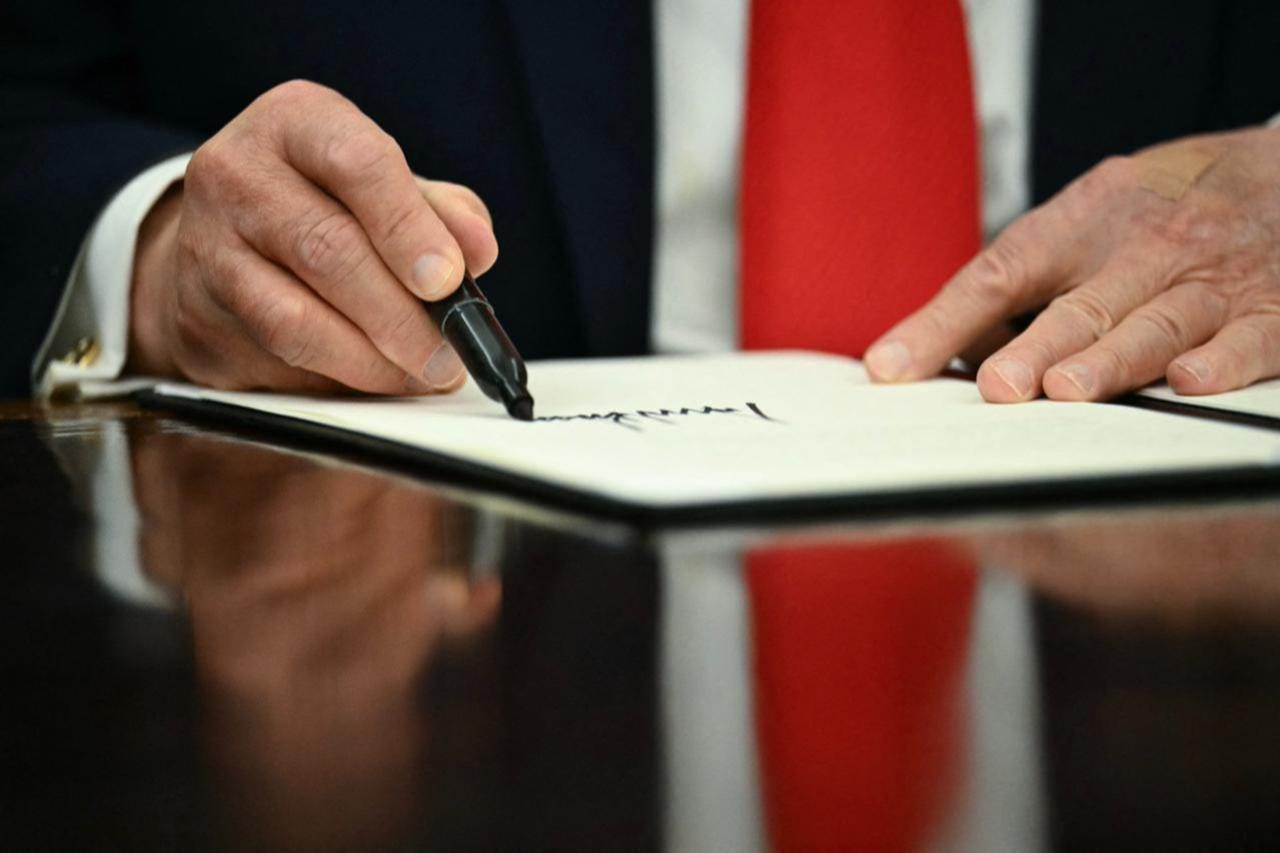
The United States administration released a fourteen-point memorandum of understanding with Iran this week.1 The agreement calls for a sixty-day ceasefire, reopening the Strait of Hormuz, ending the American naval blockade, releasing frozen Iranian assets, easing sanctions, future talks about Iran’s nuclear program, and a proposed $300 billion plan for Iran’s reconstruction and economic development.
All of this diplomatic language really boils down to something simple. The war did not work. The blockade did not break Iran. The bombs did not end the nuclear program. The sanctions did not produce capitulation. The display of American power did not force the world to bend.
Now, after all the threats, military escalation, oil shocks, and fear, the two countries have come back to the table with a document that feels more like a sign of exhaustion than a victory.
I don’t say this with any satisfaction. It’s hard to watch a nation spend lives, money, trust, and moral credibility, only to end up where it should have started. There is only grief.
There are also lessons here, if we’re willing to see them:
Sovereignty cannot be bombed away.
The memorandum says the United States and Iran will respect each other’s sovereignty and borders. That shouldn’t be remarkable. It should be the basic starting point for any mature relationship between countries. In this context, it reads almost like a confession.
Iran has always been a sovereign nation. Its people have always been real. Its history, grief, pride, politics, religion, and wounds never needed American permission to exist. One of the worst things about empire is treating other nations as problems to manage, instead of seeing them as communities with their own agency.
There is a theological violence in that too. It’s the old mistake of refusing to recognize another’s full existence. Scripture calls it hardness of heart. Empires call it strategy.
Leverage became an idol.
For decades, American foreign policy has often seen pressure as wisdom. Sanctions, blockades, threats, military escalation, and frozen assets are the tools of a country that believes holding things back is the way to stay in control.
This memorandum disturbs that story. Money comes first. Sanctions relief starts. Frozen assets are released. Safe passage is arranged. The toughest questions are left for later.
Maybe this is humility. Or maybe it’s just desperation pretending to be humility. I’m not sure yet. But something in the American theology of control is being forced to loosen its grip. The old story said: We will hold everything until you comply. This document says something more like: We’ll start giving back what we’ve held, and then we’ll talk. That doesn’t make the agreement noble, but it does make it revealing.
Sixty days is a strange kind of time.
The memorandum gives both sides sixty days to reach a final deal. That’s either wildly unrealistic or says something deeper. Perhaps both.
The 2015 Iran nuclear deal took years of talks, sanctions, diplomacy, verification, and political struggle. Now, this document suggests that some of the world’s hardest questions can be solved in just two months.
Part of me sees madness in that. Another part of me wonders if this is what happens when history speeds up beyond old diplomatic rhythms. Wars move faster than treaties. Markets move faster than governments. Fear moves faster than wisdom.
Sixty days might be less of a plan and more of a plea. A deadline can sometimes be wishful thinking. It can also admit that endless negotiation has become its own kind of harm.
Lebanon remains the shadow in the room.
The memorandum refers to the permanent termination of military operations on all fronts, including Lebanon. But Lebanon was not the primary party at the table. Neither was Hezbollah. Neither was Israel.
Proxy wars allow nations to disown their own violence. They fight through other people’s land, other people’s cities, other people’s children, and other people’s grief.
Mentioning Lebanon in the agreement without Lebanon fully present is both recognition and repetition. The wound is noted, but the people most affected are still talked about instead of truly included.
This is how powerful nations often deal with suffering. They turn it into a clause. The people live it as a wound.
The $300 billion question.
The memorandum speaks of at least $300 billion for reconstruction and economic development in Iran, to be undertaken by the United States with regional partners. The phrase sounds generous until you ask the obvious questions: Who has agreed to pay? Who benefits? Who decides what reconstruction means? Who profits from rebuilding what war destroyed?
There’s a real risk in promising what hasn’t been secured. There’s also a risk in thinking that money alone can fix what violence has broken.
Reconstruction isn’t just about infrastructure. It’s about trust, memory, grief, and slowly rebuilding relationships after power has caused harm. No memorandum can do all that in sixty days.
The biblical prophets understood this better than most diplomats do. They knew that peace is not simply the absence of open conflict. Peace is right relationship. Peace is justice. Peace is repair. Peace is truth told clearly enough that people can begin to live together again.
The Hebrew word shalom carries that deeper meaning. Shalom speaks to wholeness, not merely quiet.
That’s why this memorandum feels so thin to me. It may stop the fighting for now. That matters. Any pause in violence matters. But it also shows the weakness of the worldview that brought us here.
American power performed strength and discovered its limits. Iran endured pressure and remained. The region absorbed the consequences. Ordinary people have waited for leaders to stop making the world more dangerous. A memorandum of understanding has now been signed. What’s still unclear is how much real understanding has actually been gained.
That’s the deeper question we face: Can a nation learn from the failure of coercion? Can power become humble enough to tell the truth about its limits? Can we imagine diplomacy that begins before violence is unleashed instead of after its exhausted?
I do not know. But I do know this: the world can’t survive much more of the old story. The old story says peace comes only after domination. The old story says leverage creates trust. The old story says other people’s suffering is an acceptable policy. The old story has failed again.
Surely we can learn from this moment.
Surely we can build a world where understanding comes before any memorandum.
We are in this together,
Cameron
Reflection Questions
Where in your own life do you find yourself relying on pressure, leverage, or control rather than understanding?
What conflicts in your family, workplace, congregation, or community have lingered because the parties involved were trying to win rather than understand?
What would it mean for peace to be more than the absence of conflict? What would true repair require?
A Prayer for the Day
A Blessing for the Unknown
For the negotiators in Geneva, who will speak words that may not hold:
   May you know the weight of what you promise.

For the dead in Lebanon, in Iran, in the US bases, on the ships:
   May your names be spoken without being used.

For the Gulf states, who are asked to pay for a peace they did not negotiate:
   May your no be as sacred as your yes.

For the Earth, which metabolizes all of this at her own pace:
   May we learn to listen before we speak.

For the sixty days ahead:
   May they be long enough for truth, short enough to matter.

For us, who witness:
May we hold this without collapsing into cynicism or hope. May we compost what needs composting. May we tend what wants to grow.

Amen.
Spiritual Practice
Reading Between the Lines
Find a newspaper article, political speech,2 corporate statement, or public declaration. Read it slowly.
Then ask three questions:
What is being said?
What is not being said?
Who benefits from this story?
Spend a few minutes sitting with your answers.
The spiritual traditions teach us that wisdom begins when we learn to see beneath appearances. The prophets listened for what kings would not say. Jesus paid attention to those whom society ignored. The mystics learned to hear the silence beneath the noise.
Today, practice reading beyond the surface. Notice what becomes visible.
Upcoming Events That Might Be of Interest…
My team and I launched a new experiment we are calling “The Commons.” It’s an online space centered around communities of practice: groups of people who share a common concern, set of problems, or passion for a topic, and deepen their knowledge and expertise by interacting on an ongoing basis. Join the community here.
June 23, 2026, 12:30-1:30pmET - Book Club in The Commons - FREE - We are reading our next book, The Glorians by Terry Tempest Williams. We will meet each Tuesday for 6 weeks. It’s such great fun. I hope you will be a part. All are welcome! RSVP HERE.
June 24, 2026, 12:30pm ET - I will be joining Jackie Sussman on The Commons for a three-part series on practicing eidetics as a part of our “Reclaiming the Power of Imagination” series. Jackie, a psychotherapist, author, and leading expert in Eidetic Image Psychology, has spent over forty years helping leaders and individuals unlock creativity, uncover hidden strengths, and move through limiting patterns. During this session, she will lead a live Eidetic process shaped by mythic imagery, offering a direct experience of the work. REGISTER HERE.
September 8, 2026, 7-9pm ET, ONLINE EVENT - I’ll be hosting a powerful online gathering on The Black Madonna: Sacred Wisdom for a World in Crisis with Matthew Fox, Alessandra Belloni, and Christena Cleveland. We will explore the Black Madonna as a symbol of resilience, liberation, sacred feminine wisdom, and healing in a fractured world through conversation, story, music, and spiritual reflection. If you feel drawn toward a deeper encounter with the Divine Feminine and the ancient traditions that continue to nourish movements for justice and wholeness, I hope you’ll join us. Learn more and REGISTER HERE.
October 18-21, 2026 - PREACH! 2026 Conference- I’ll be co-hosting PREACH in Minneapolis with Church Anew, a new gathering for preachers, storytellers, worship leaders, and spiritual communicators navigating what it means to speak with clarity, compassion, and courage in a changing world. If you’ve sensed that the preaching moment has changed and are longing for thoughtful community and renewed imagination for this work, I hope you’ll join us.
I drafted a Strategic Framework for Congregations as we move into the coming years of increased authoritarianism around the world. If interested, you can download it here.
Fun Things My Friends Are Up To…
I get to work with such amazing, creative people. This section is my way of celebrating them—no paid promotions, just joy in what they’re creating.
June 20, 2026 – ONLINE EVENT – Margaret Wheatley and Mary Daniels will lead a special three-hour online gathering titled Fierce Compassion: The Power of the Sacred Feminine. In a time marked by fragmentation, fear, and exhaustion, this program explores compassion not as passive kindness, but as a courageous force that protects life, tells the truth, and remains deeply rooted in love. Drawing from spiritual traditions, contemplative practice, and the imagery of fierce feminine wisdom figures such as Kali and Durga, they will reflect on what it means to stay human and spiritually grounded in difficult times. LEARN MORE + REGISTER.
June 22, 2026, 12pm ET - ONLINE WRITING GROUP - My dear friend, Meryl Marshall-Daniels, is leading a writing group open to all. This is a simple and spacious writing circle for people who want time to listen inwardly and put words on the page without overthinking, performing, or polishing. Meryl offers a prompt designed to invite reflection, imagination, and attunement to what is already alive within you. The practice honors writing as a way of listening, of letting images, memories, questions, and insights surface in their own time. Learn more here.
JULY 12, 2026, 8AM–8PM ET in NYC - My friend Monika Son is helping lead a powerful Buddhist-led, interfaith pilgrimage across New York City titled “Day of Remembering Our Interdependence.” Inspired by the Buddhist monks’ 2,300-mile Walk for Peace and grounded in the wisdom of Thich Nhat Hanh, participants will gather for walking meditation, prayer, chanting, ceremony, and collective reflection across all five boroughs, including stops at the African Burial Ground and the Metropolitan Detention Center where ICE detainees are being held. The day will culminate in a joyful community gathering in Queens with music, poetry, movement, and food. Participants are welcome to join for the full pilgrimage or any portion of the day. LEARN MORE HERE.
If you are a leader or member of a congregation looking for consulting support in visioning, planning, hiring or staffing, please consider Convergence.
https://www.militarytimes.com/news/pentagon-congress/2026/06/17/read-the-14-point-memorandum-of-understanding-between-the-united-states-and-iran/
Here is a good one: Mayor Mamdani’s full speech at the Knicks championship parade.
What an astoundingly clear and deep analysis. Thank you, dear Cameron.
Thank you for clearly stating this in a way that we can clearly see the whole picture. The world is in such a mess and the mess keeps changing by the day. We can hardly keep up with it as we sort through it. I watched the Obama speech yesterday. After these past years with our current administration it was glaringly clear what we have lost. I grieved as I listened. We’ve become caught up in the trap of narcissism like an abused wife caught in her narcissistic husband’s trap. We are losing our identity as a nation of democracy. But there is always hope and it is with reflections like these that we must hold before us daily to light the way. Thank you for your encouraging words!